
Did I pack a poo bag? What do I do with the dog poo now? Is anyone watching? Or can I just leave it? Dog poo disposal is a topic that occupies every dog owner, daily, I'd say. And since environmental protection and waste sorting are important to me, I'd like to share some thoughts on the matter today and shed some light on the legal situation in Austria.
A Little Bag for a Big Problem: The Art of Dog Poo Disposal
I'll be completely honest: I love Murphy to bits, but his "big business" isn't exactly my favourite pastime. Even so, for me it's as much a part of everyday dog life as feeding, cuddling and going for walks.
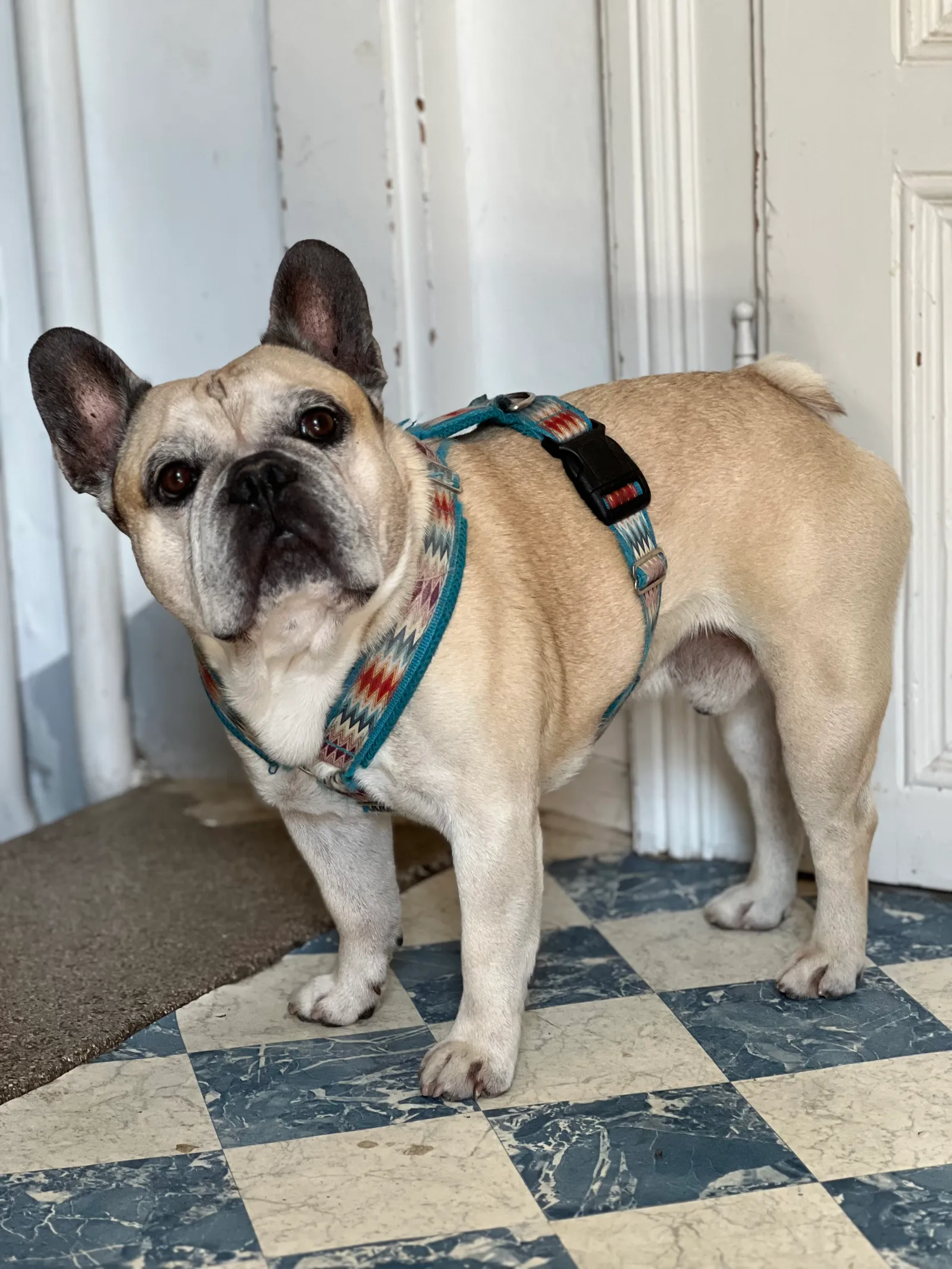
Let me tell you what one of these moments on our walks looks like: Murphy searches for the perfect spot to do his business. He prefers grass verges. Doing it directly on asphalt is reserved for absolute emergencies. So while he's busy, I'm rummaging around in my little handbag trying to find the bag. On some days you're already getting critical looks from passers-by, checking whether you're actually going to pull one out.
And I get it! Even I cringe when I see a huge pile right there on the pavement in front of us. You should see the look of disgust on Murphy's face and the wide arc he makes around it. He makes that arc around his own business too, mind you. Which is particularly entertaining when I'm trying to pick it up and he wants to get as far away from it as possible. My arms are getting longer by the day. One hand holding the lead with Murphy straining to escape, and the other hand trying to manoeuvre the bag over the pile, making sure it doesn't touch my hand! A sight to behold ;)
The Legal Situation in Austria Regarding Dog Poo Disposal
The obligation to clean up after your dog is not regulated by a single national law in Austria, but the message at state and municipal level is the same everywhere.
Whether in the Road Traffic Act, Vienna's Cleanliness Act or Lower Austria's Dog Keeping Act, all of them state that dog owners in public spaces must ensure that their four-legged friend's waste is removed. This includes pavements and public squares, as well as parks and meadows.
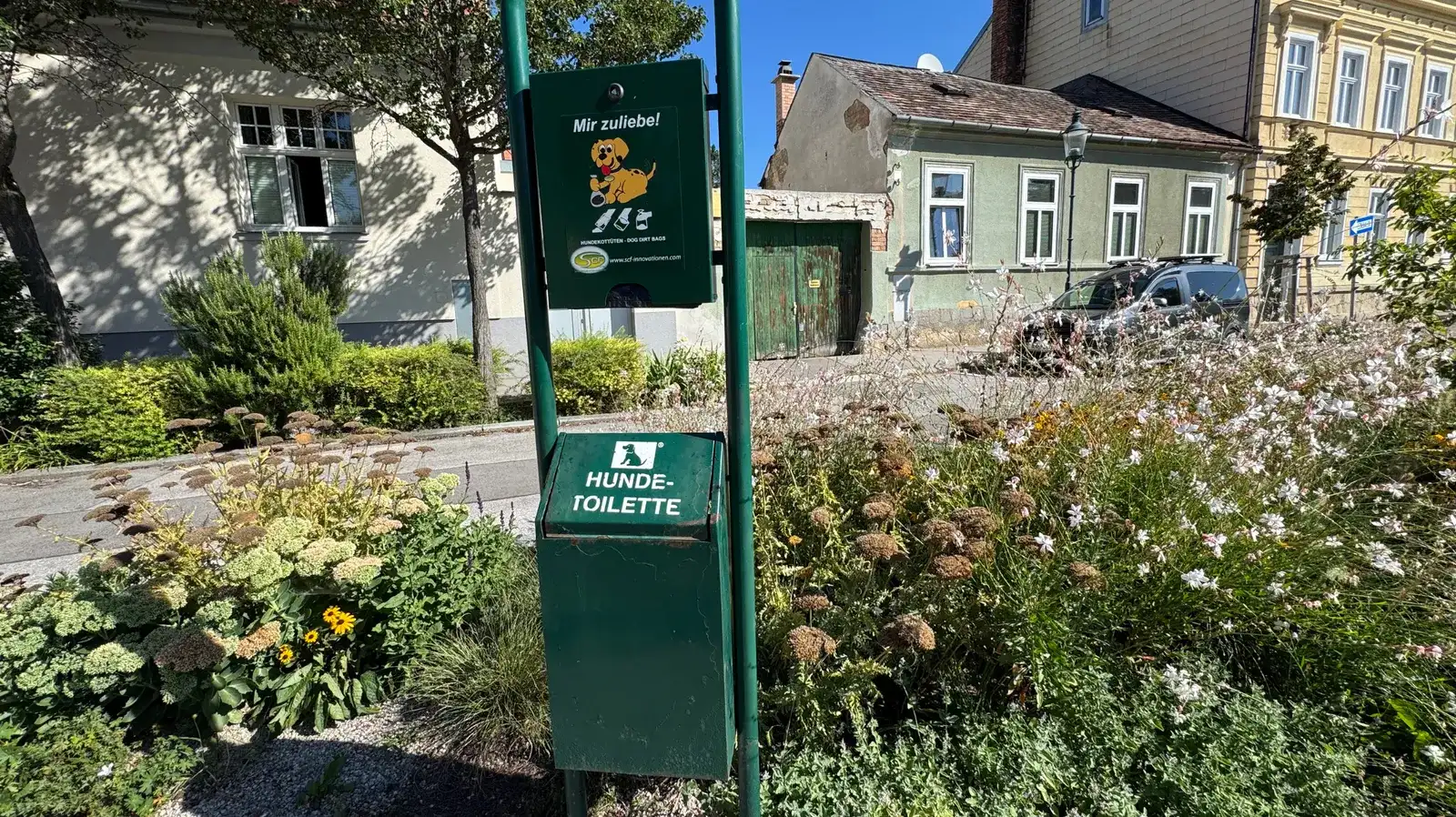
Vienna's "Reinhaltegesetz" (Cleanliness Act) regulates, among other things, that so-called "WasteWatchers" are out and about, authorised to issue on-the-spot fines if they catch someone in the act. Fines typically range from 50 to 90 euros. If a formal report is filed, it can get significantly more expensive. Around 3,900 dog waste bag dispensers have been installed across Vienna in recent years, meaning there is no shortage of bags.
And similar regulations exist in the other federal states too. In Lower Austria, for instance, violations of the Lower Austria Dog Keeping Act can be punished with fines of up to 7,000 euros! Finding a bag dispenser is certainly a lot cheaper, and keeps you fit too, doesn't it?
Why Is It So Important to Clean Up After Your Dog?
-
Hygiene and Health
Dog poo is not a pile of "natural fertiliser". It can be full of bacteria, viruses and parasites that are harmful to people and other animals. It can be particularly dangerous for small children who play in the grass or put dirty hands in their mouths. Livestock in fields can also become sick from the waste. -
Aesthetics and Quality of Life
A clean cityscape and an unspoilt natural landscape are simply more beautiful. Piles of dog mess lying around are not exactly a pretty sight. And who enjoys stepping in a stinking heap that then sticks to your shoe like chewing gum? Exactly, nobody.
And honestly, how many of us have seen a filled poo bag lying by the side of a path? Sadly, that happened to us just recently on the Rax. That is probably the most pathetic form of laziness. The whole issue of people tossing their used poo bags, that's a topic in itself! When accusations start flying, all dog owners unfortunately tend to get lumped together. -
Environmental Protection
Dog poo bags, especially those made from conventional plastic, are not biodegradable. They take forever to break down and put a strain on the environment. Even the "compostable" bags should be treated with caution. They need special industrial conditions to actually decompose, which you simply won't find in a forest or on a meadow.
So Where Does the Bag Go? Sorting Your Waste Properly
Now here's a point that often causes confusion: where exactly does the full bag belong?
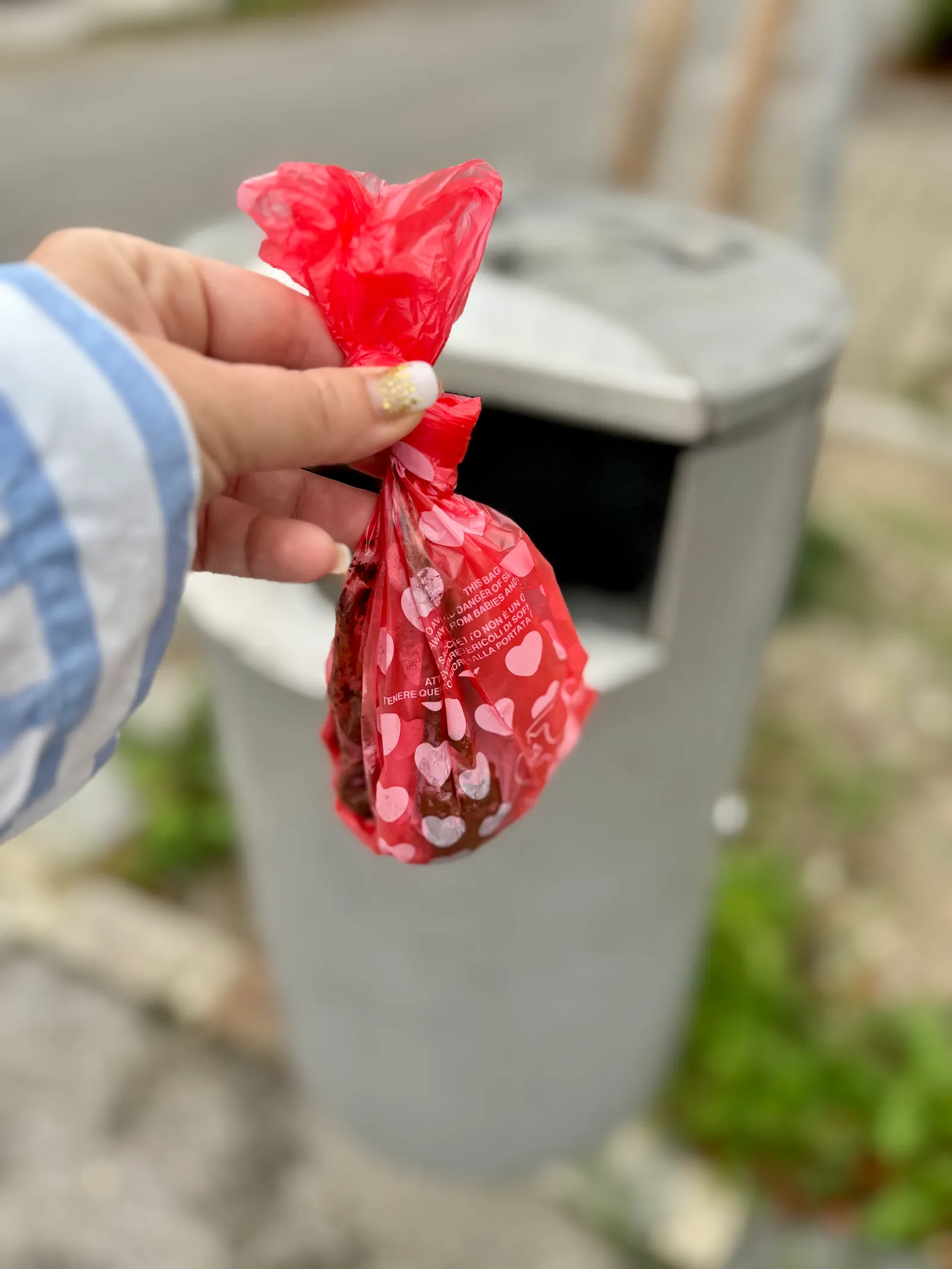
Many people think that because the contents are "organic", the bag belongs in the green bin or on the compost heap. But that's a big mistake! Poo bags must go in the residual waste bin. Why? Because the pathogens in dog poo are not completely destroyed during normal composting. Only through thermal treatment, that is, incineration in the residual waste stream, are they truly rendered harmless.
And this is where proper waste disposal comes in: please make sure not to just leave bags on the street or toss them into the landscape. In many towns and cities there are handy dog waste bag dispensers, often called "dog stations" or "dog toilets", where you can tear off and take a free bag. Once used, they belong in the bin attached to the dispenser or in the nearest rubbish bin.
My Conclusion: A Gesture of Fairness and Responsibility as a Dog Owner
Picking up after our dogs is a gesture of respect: for the environment, for other people and for other animals. It's a small but important contribution to a clean and liveable Austria. I believe that as dog owners we have a responsibility to lead by example and show that we care not only about our furry companions, but also about the world we share with them.
So on your next walk: remember the poo bags. And if you forget yours, the many dispensers in towns and cities will surely come to your rescue. Let's make Austria an even more dog-friendly country.