
Today I'm sharing the day trips we took during our holiday at the Packer Stausee in Styria:
- The Hundertwasser Church St. Barbara in Bärnbach
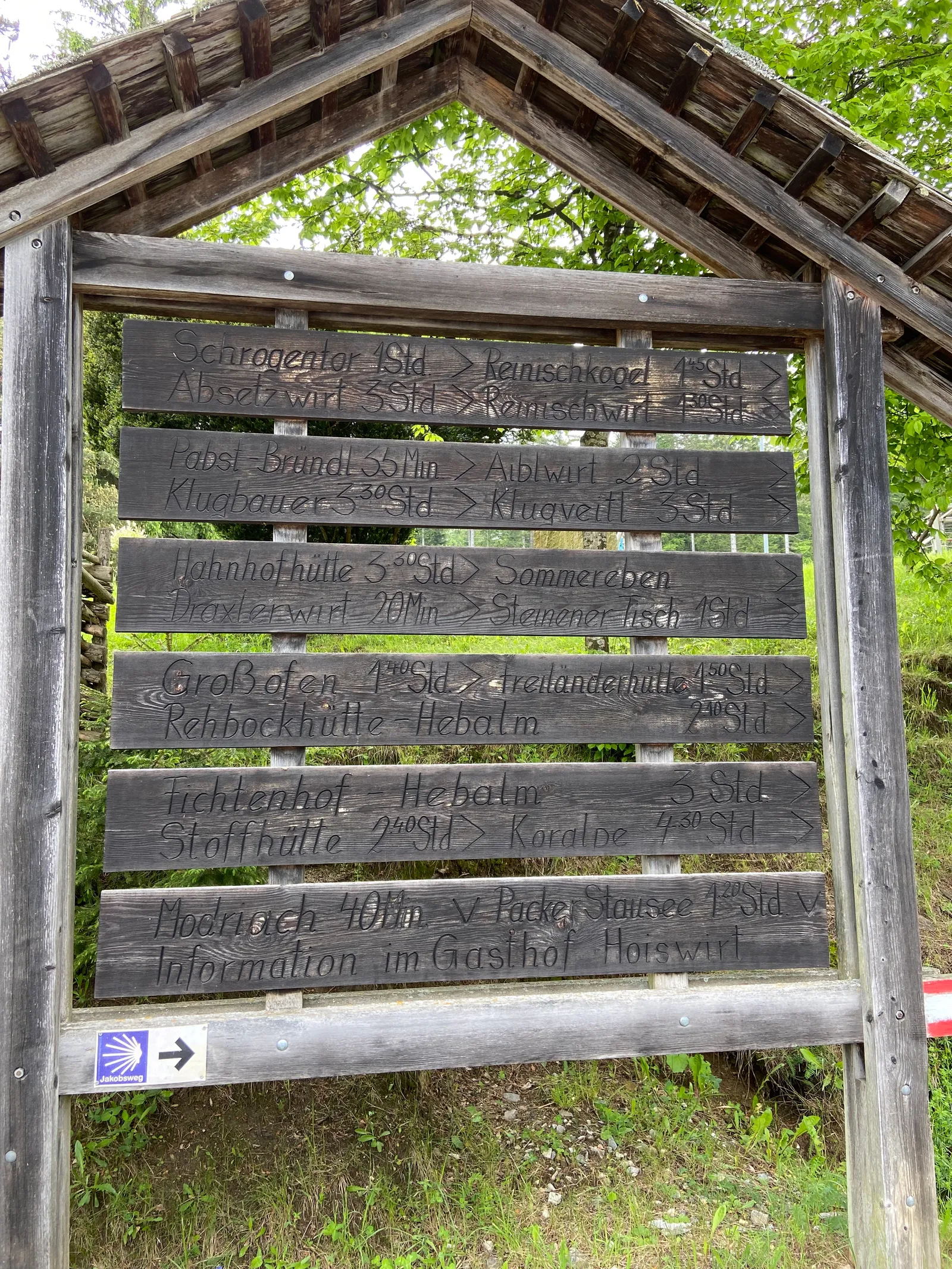
- The easy Hoiswirt walk near Modriach
- A short trip to the village of Pack
- The Hirzmann Stausee
The St. Barbara Church by Hundertwasser in Bärnbach
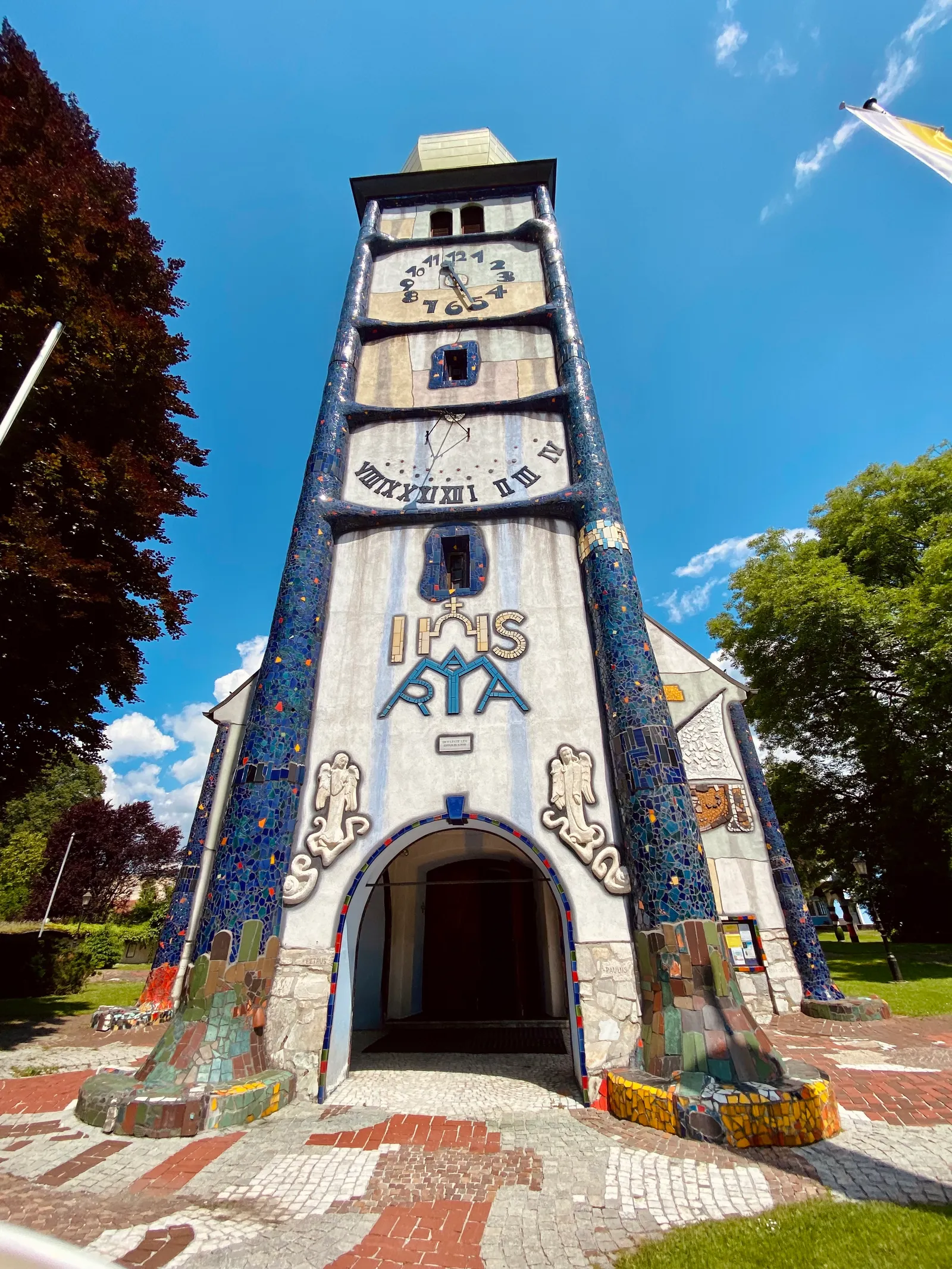
Bärnbach is a small town in Styria, Austria. It lies more or less between Voitsberg and Köflach and is known above all for one unique architectural gem: the Hundertwasser Church St. Barbara, designed by the renowned Austrian artist Friedensreich Hundertwasser.
Sharing a name with the church, we simply had to visit. St. Barbara is a Roman Catholic church and bears the unmistakable architectural style of Hundertwasser.
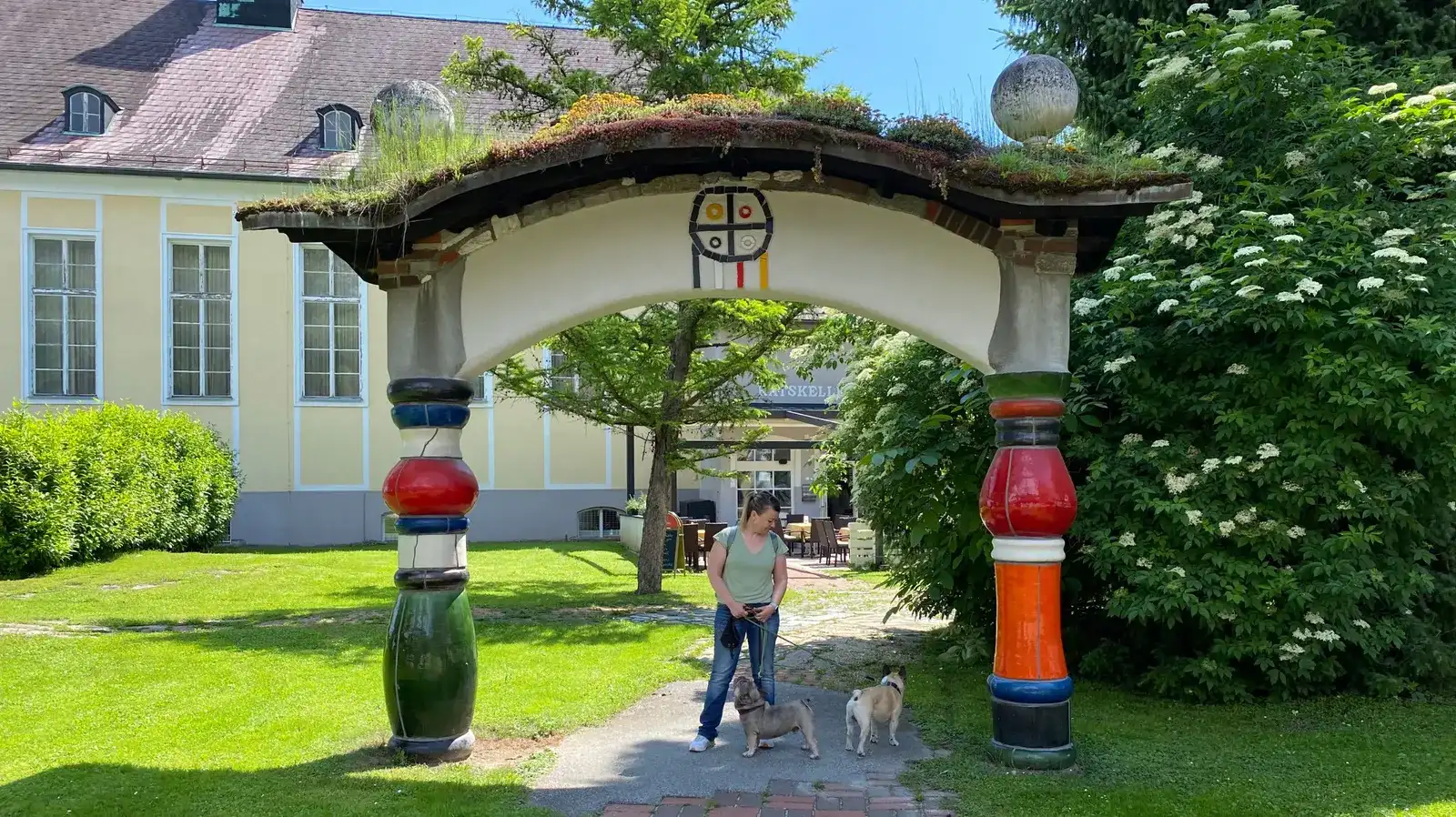
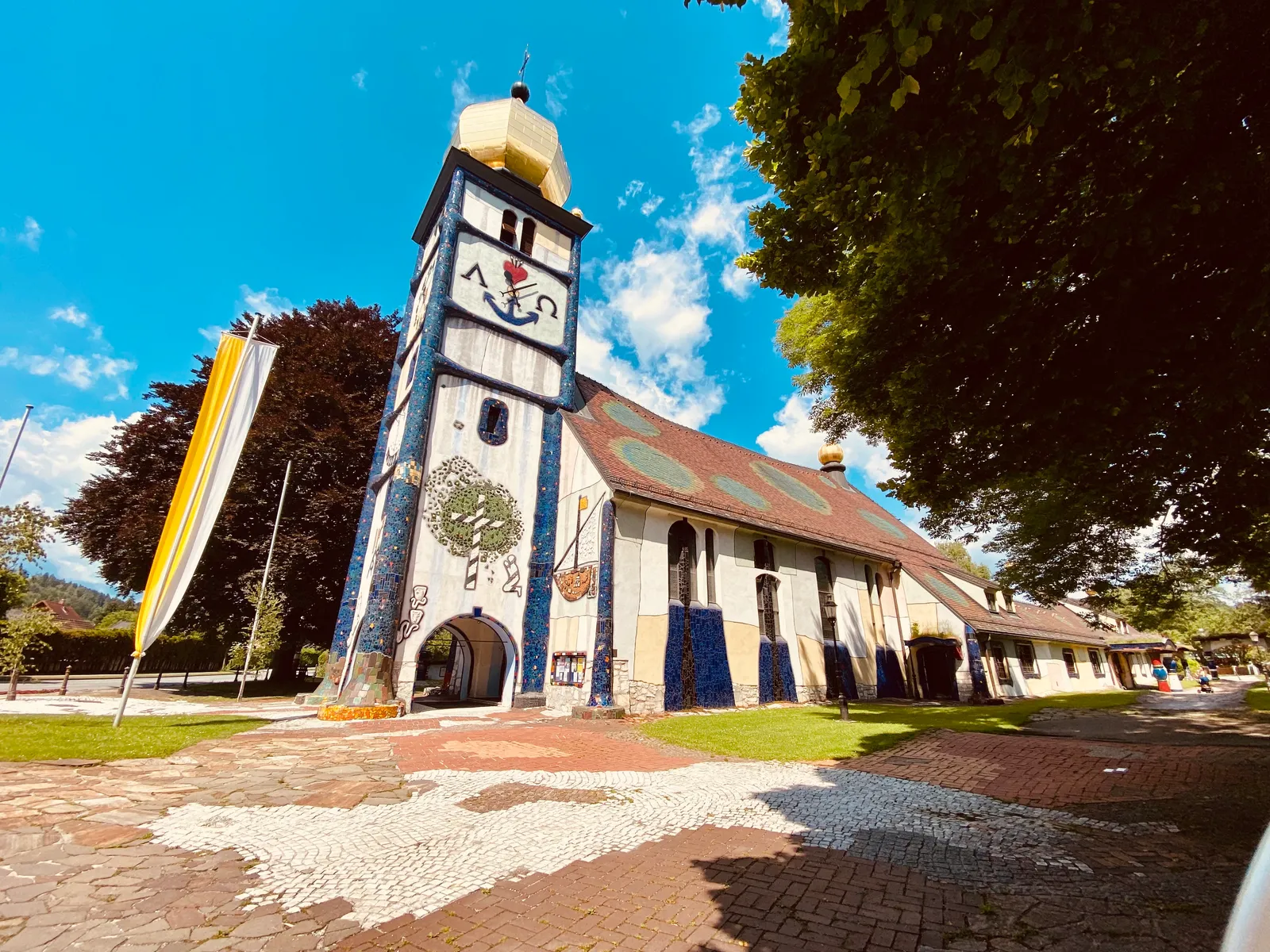
Vibrant and unconventional, the church greets us with its colourful exterior and irregular forms. The façade is adorned with brightly coloured ceramic tiles, and golden onion domes crown the towers. Through spirals, uneven floors, tree-like columns and green roofs, Hundertwasser manages to integrate nature in a truly unique way.
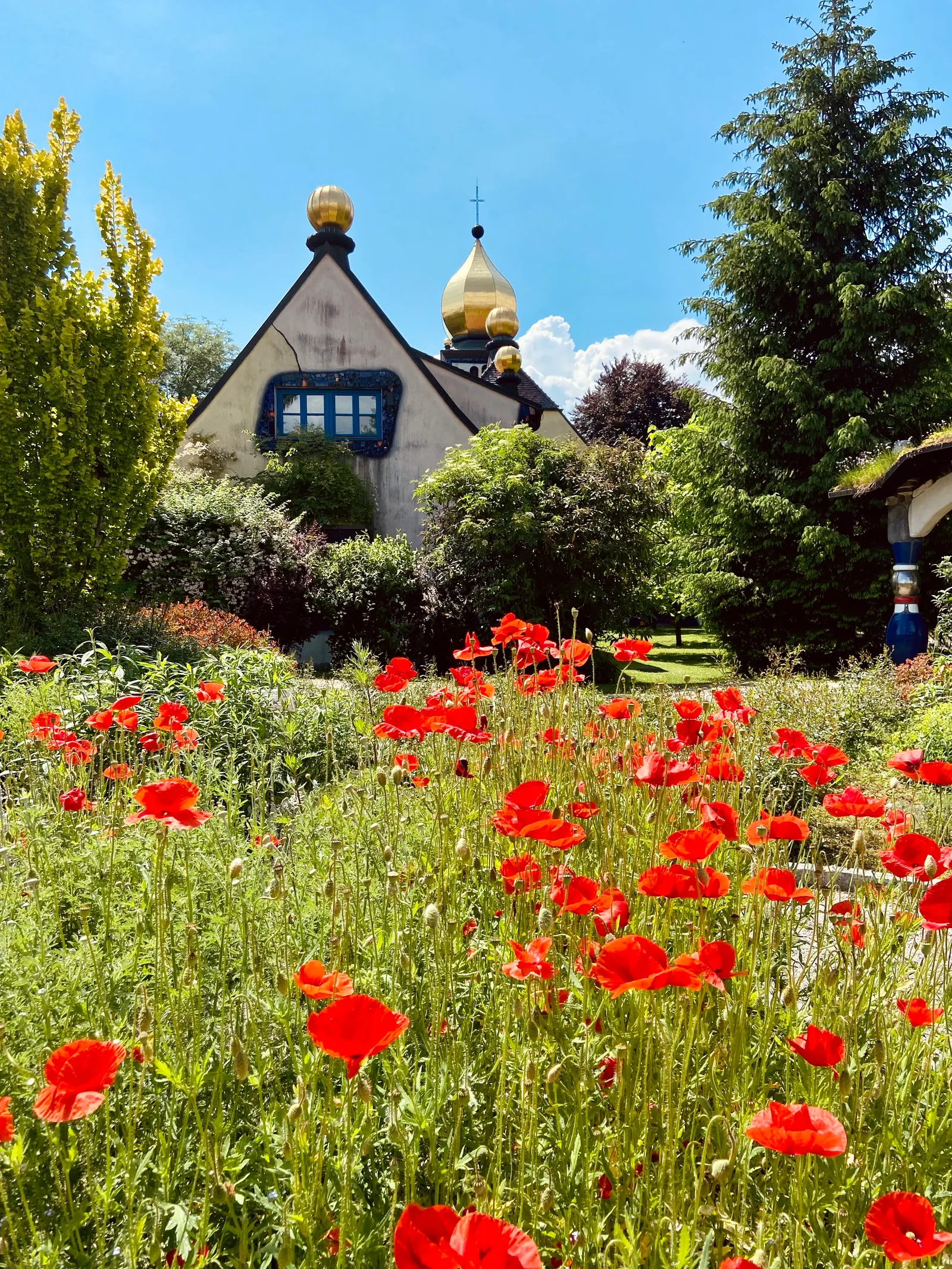
The church's design emphasises a harmonious relationship between man-made structures and the natural environment. This connection to nature is further underscored by the lovely flower garden on the north side of St. Barbara.
Construction of the St. Barbara Church
Construction of the Hundertwasser Church in Bärnbach began in 1987 and was completed in 1988. It was a collaborative project between the artist Friedensreich Hundertwasser and the architect Peter Pelikan. The church was officially consecrated and opened to the public in 1988.
Symbolism
The main dome of the Hundertwasser Church St. Barbara in Bärnbach features several symbolic elements. While Hundertwasser's works always invite personal reflection and individual interpretation, I'd like to share a few of the more widely recognised symbols found on the dome and the church, along with their general meaning:
- The golden onion towers represent a spiritual and celestial connection. They are often associated with Eastern Orthodox and Byzantine architecture and symbolise heavenly realms and divine presence.
- The large, colourful eyes symbolise the presence of God and serve as windows to the soul, a reminder of the divine gaze that encompasses all things.
- The spirals and labyrinth patterns represent the journey of life and self-discovery. They reflect the idea of personal growth, transformation and the continuous path towards spiritual enlightenment.
- Tree of Life: the depiction of trees and branches in the design represents the connection between humanity and nature. It symbolises the importance of environmental harmony and echoes Hundertwasser's concept of the "Green City".
- The mosaic patterns on the dome and throughout the church incorporate vivid colours and geometric shapes. They symbolise the diversity and unity of humankind, showcasing the beauty that arises from embracing individuality and collective harmony.
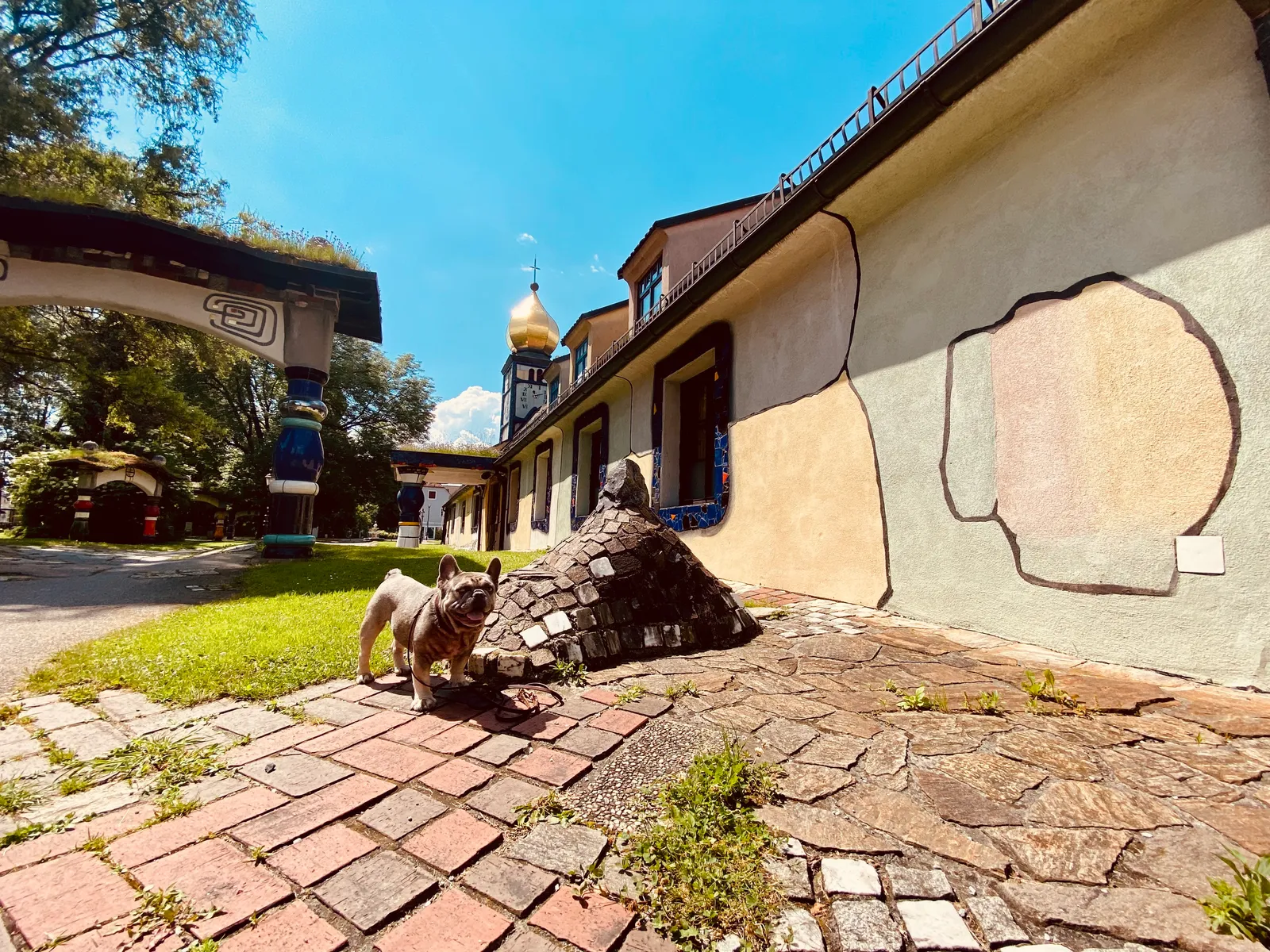
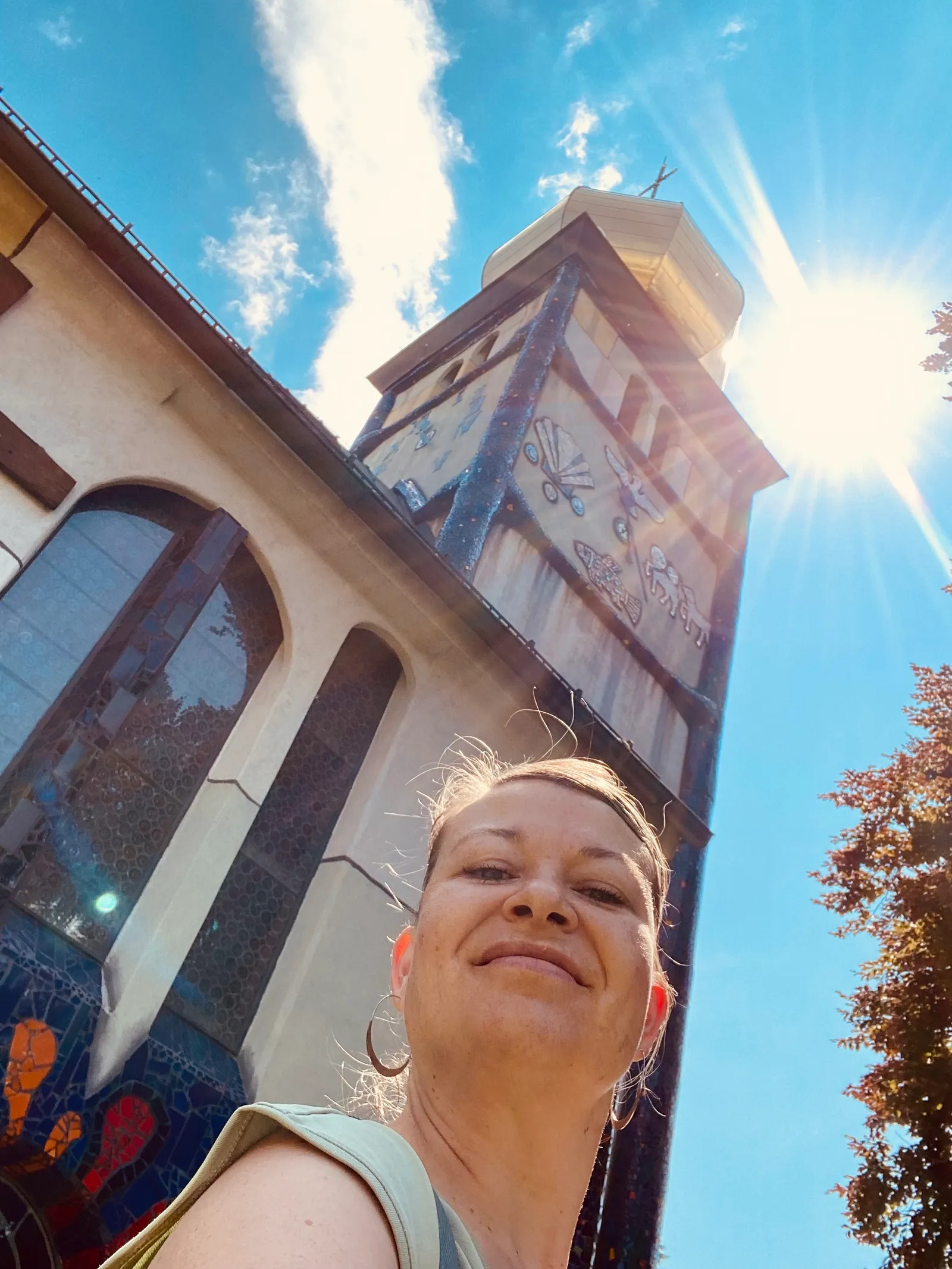
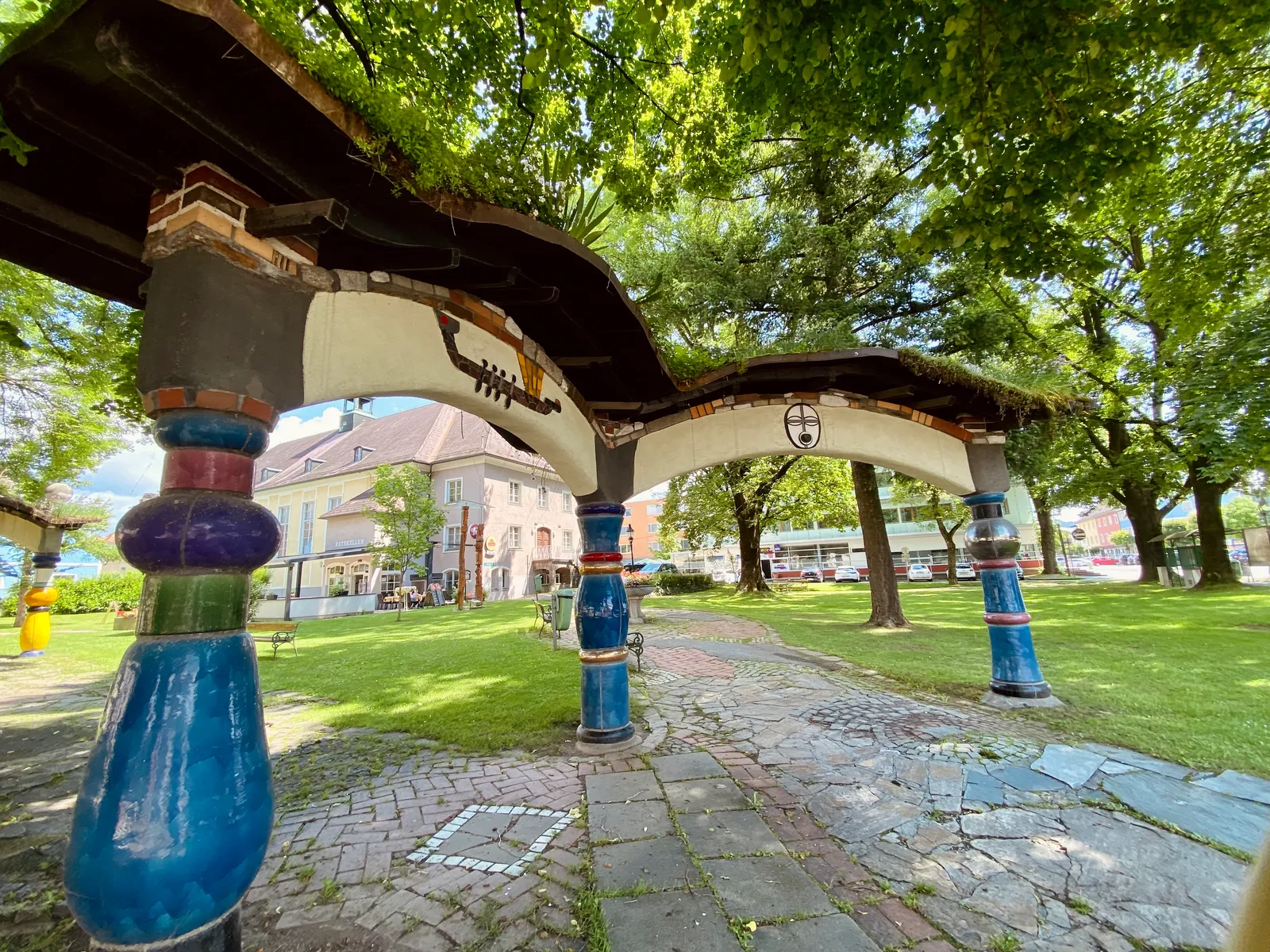
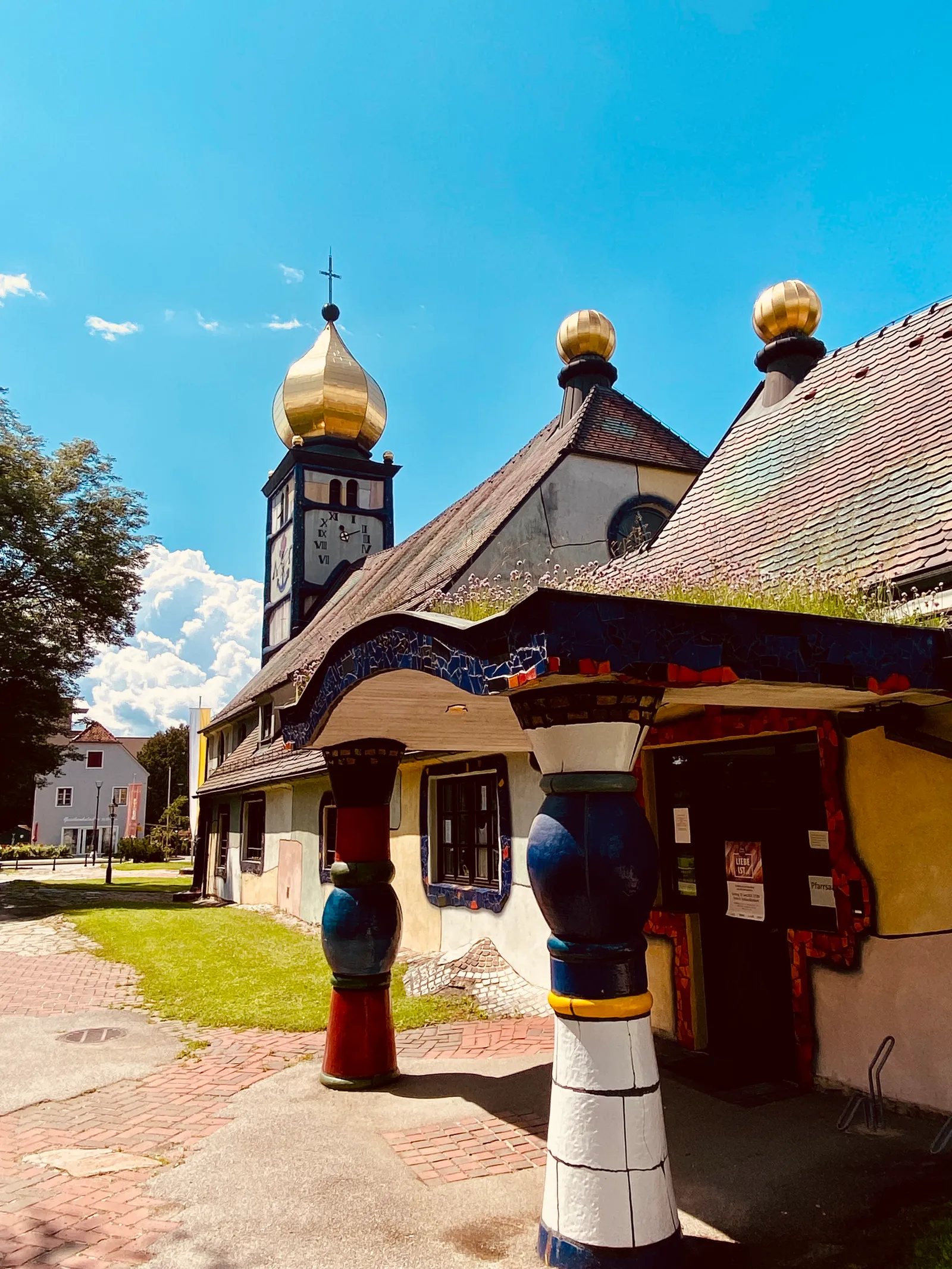
Our verdict
We stroll together around this extraordinary building and let ourselves be inspired. The church, its colours and its forms certainly leave a lasting impression.
We enjoy lunch on the terrace of the Ratskeller with a view of the Hundertwasser Church.
Hoiswirt Walking Trail 1 - an easy loop near Modriach
My husband found this route on Bergfex for us. Modriach is a small village right near our accommodation.
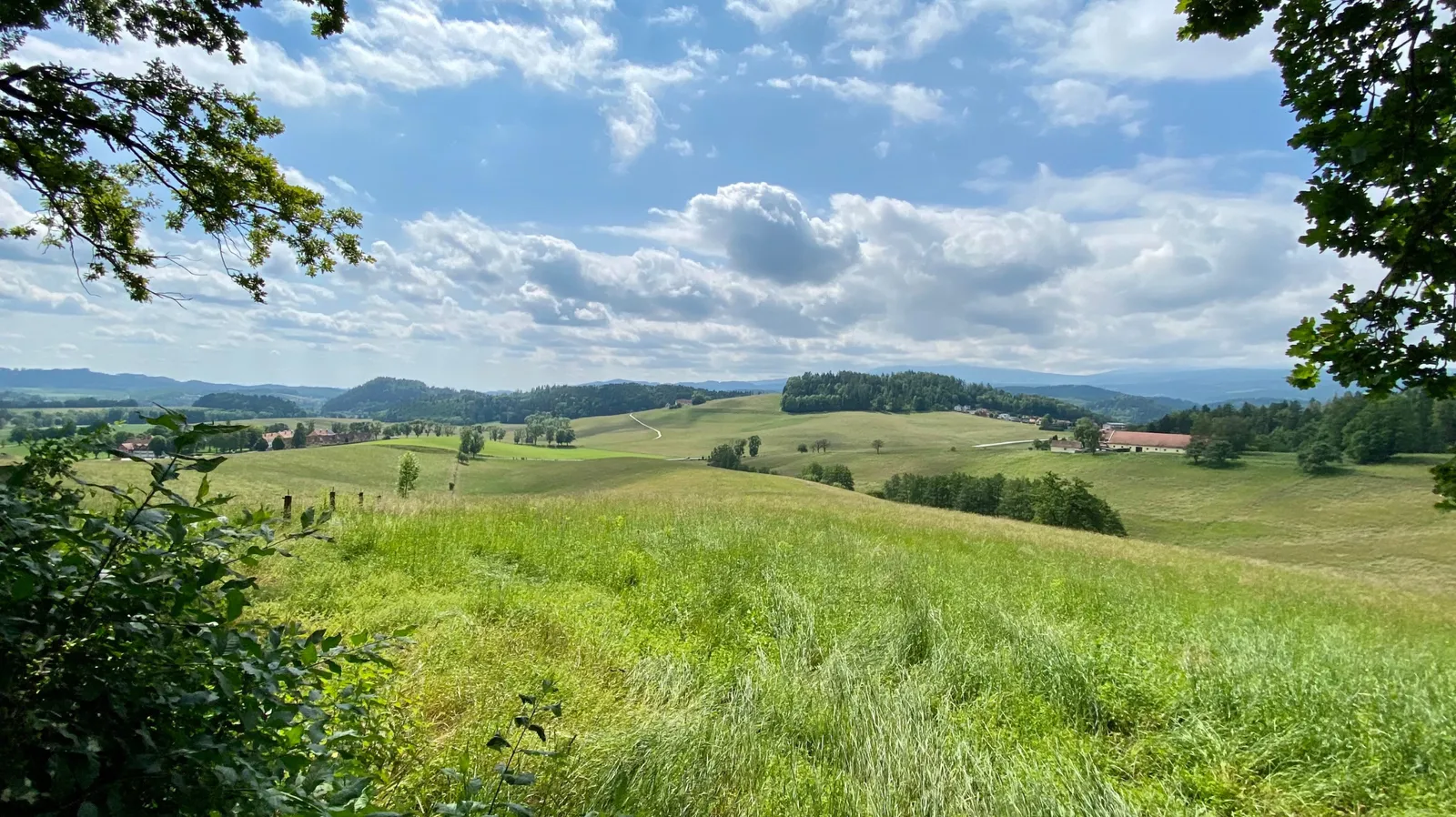
Modriach is located in the beautiful district of Voitsberg, surrounded by picturesque scenery, gentle hills and forests. There are plenty of opportunities for outdoor activities here, such as hiking, cycling and walks in nature. Visitors can enjoy the fresh air, the peaceful atmosphere and the panoramic views of the Styrian countryside.
For those who fancy a bit more action, there's also a summer toboggan run and its accompanying park. You can find more information here: Steirarodl-Park.
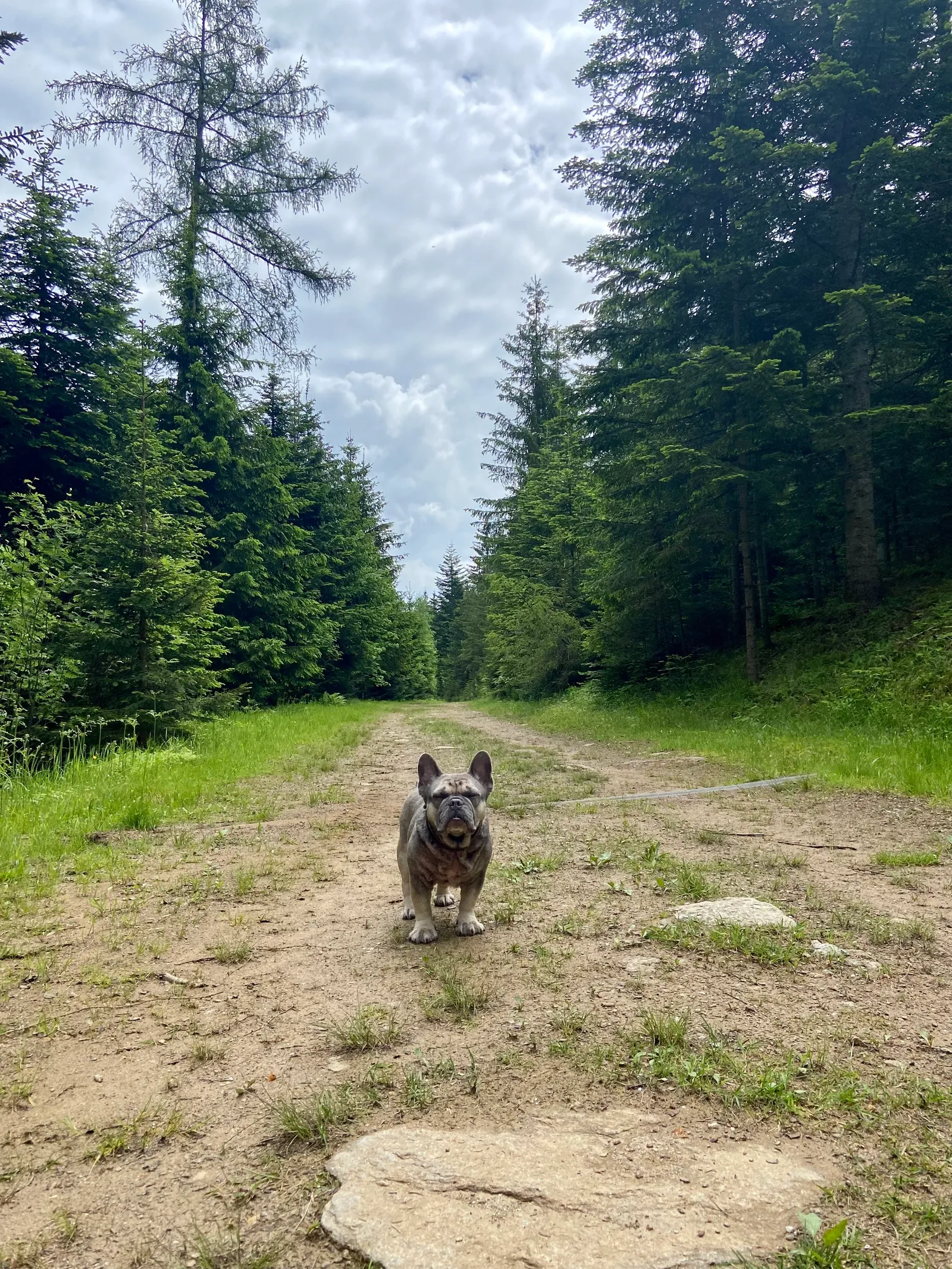
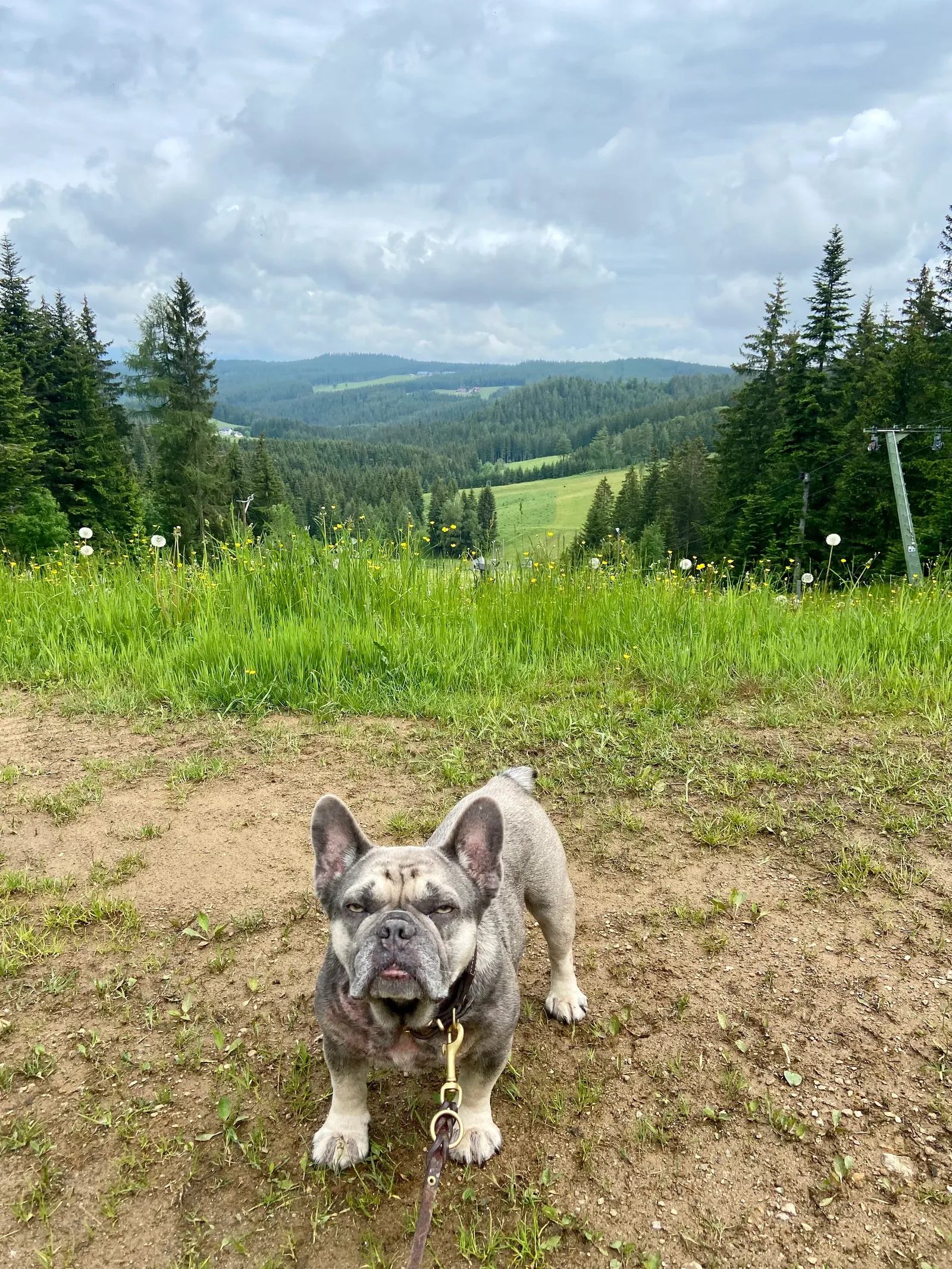
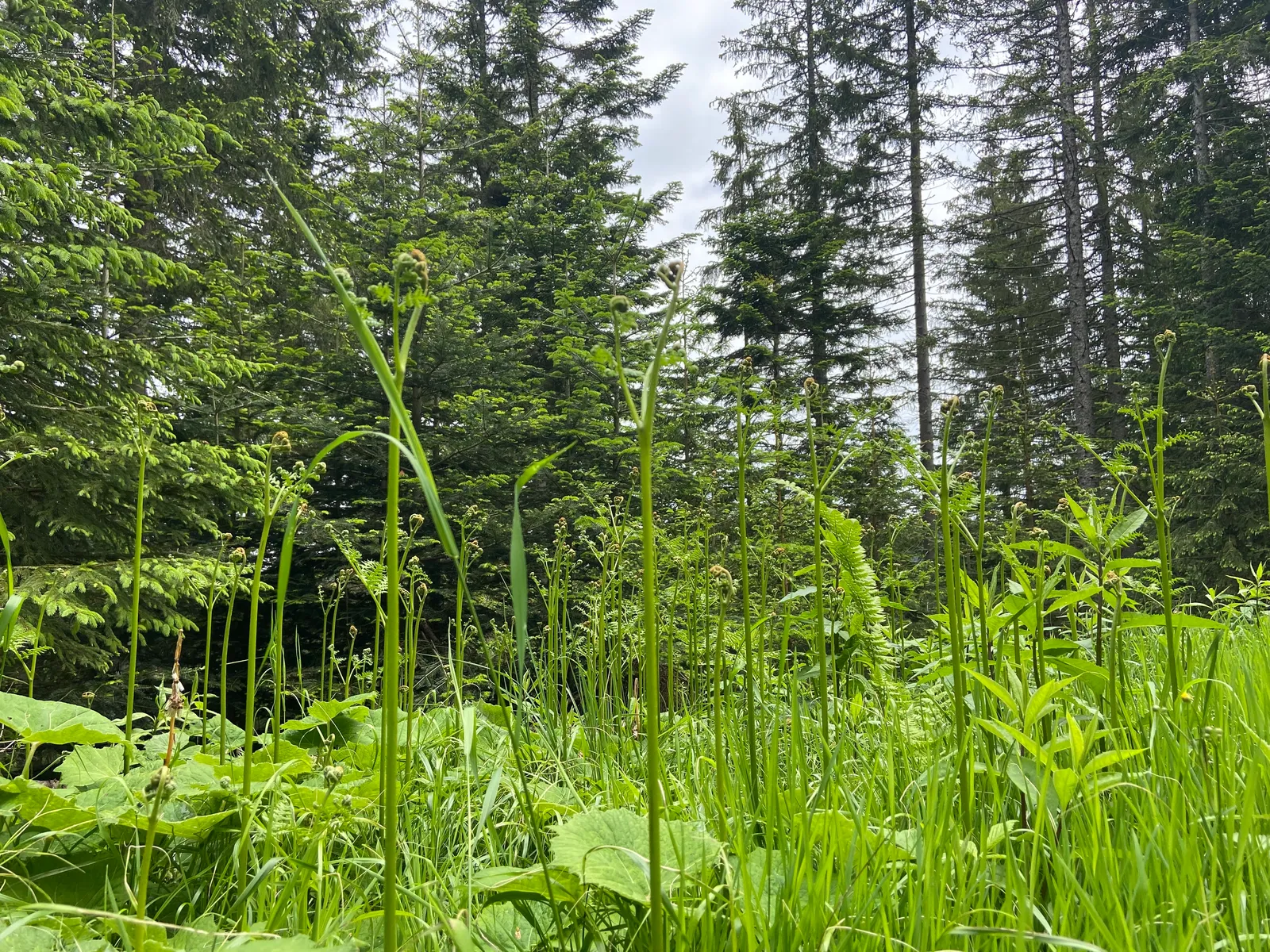
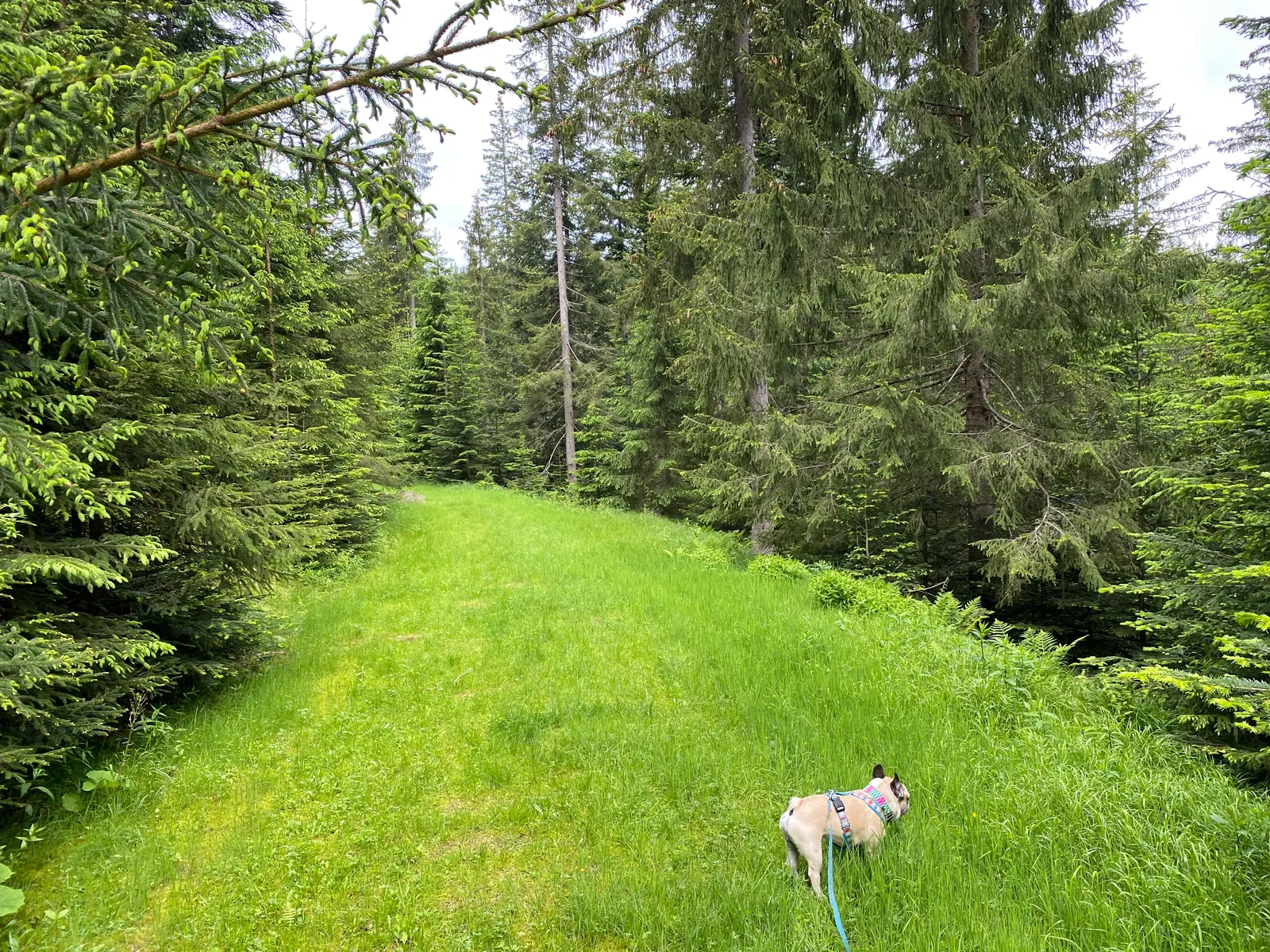
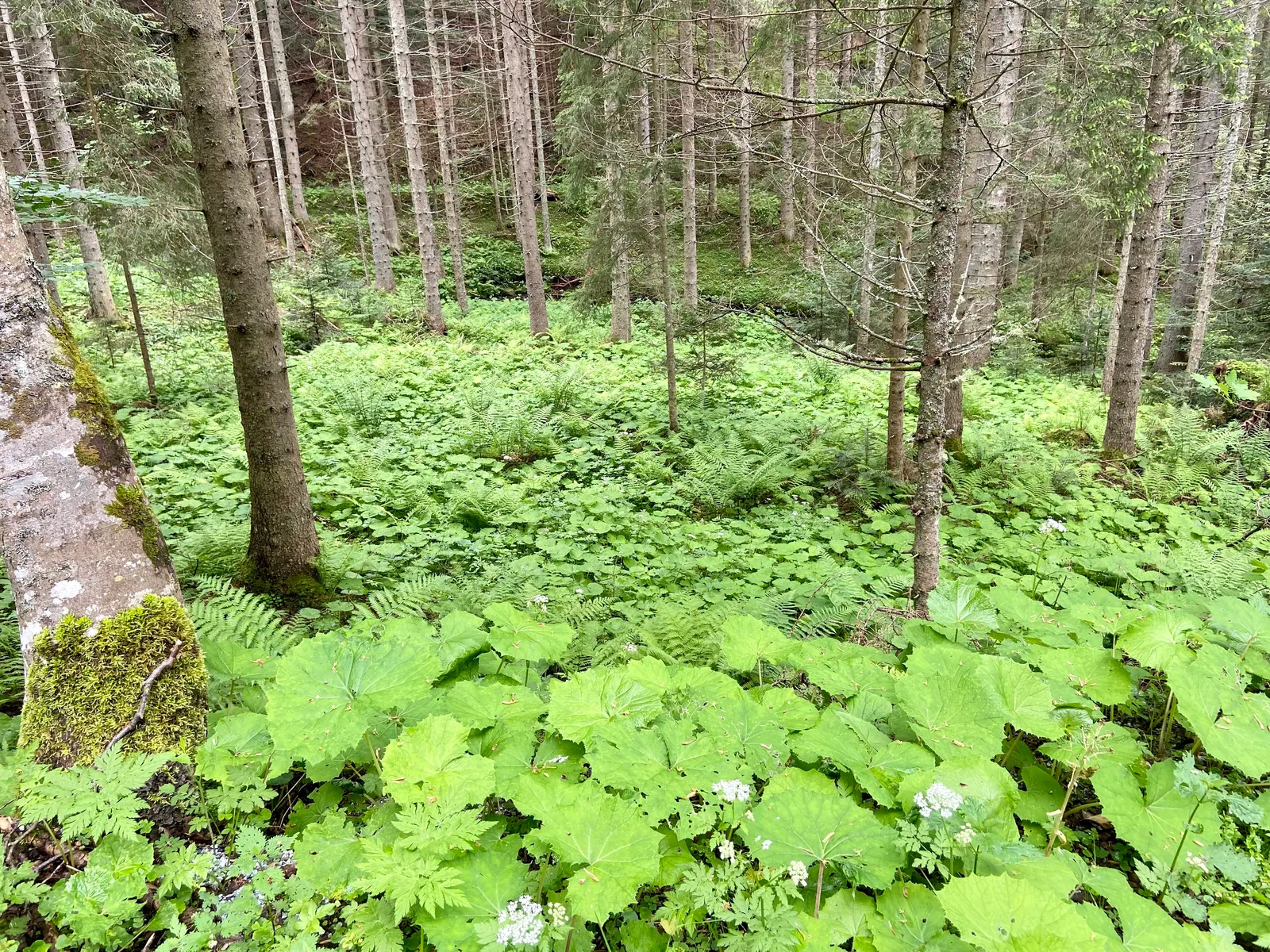
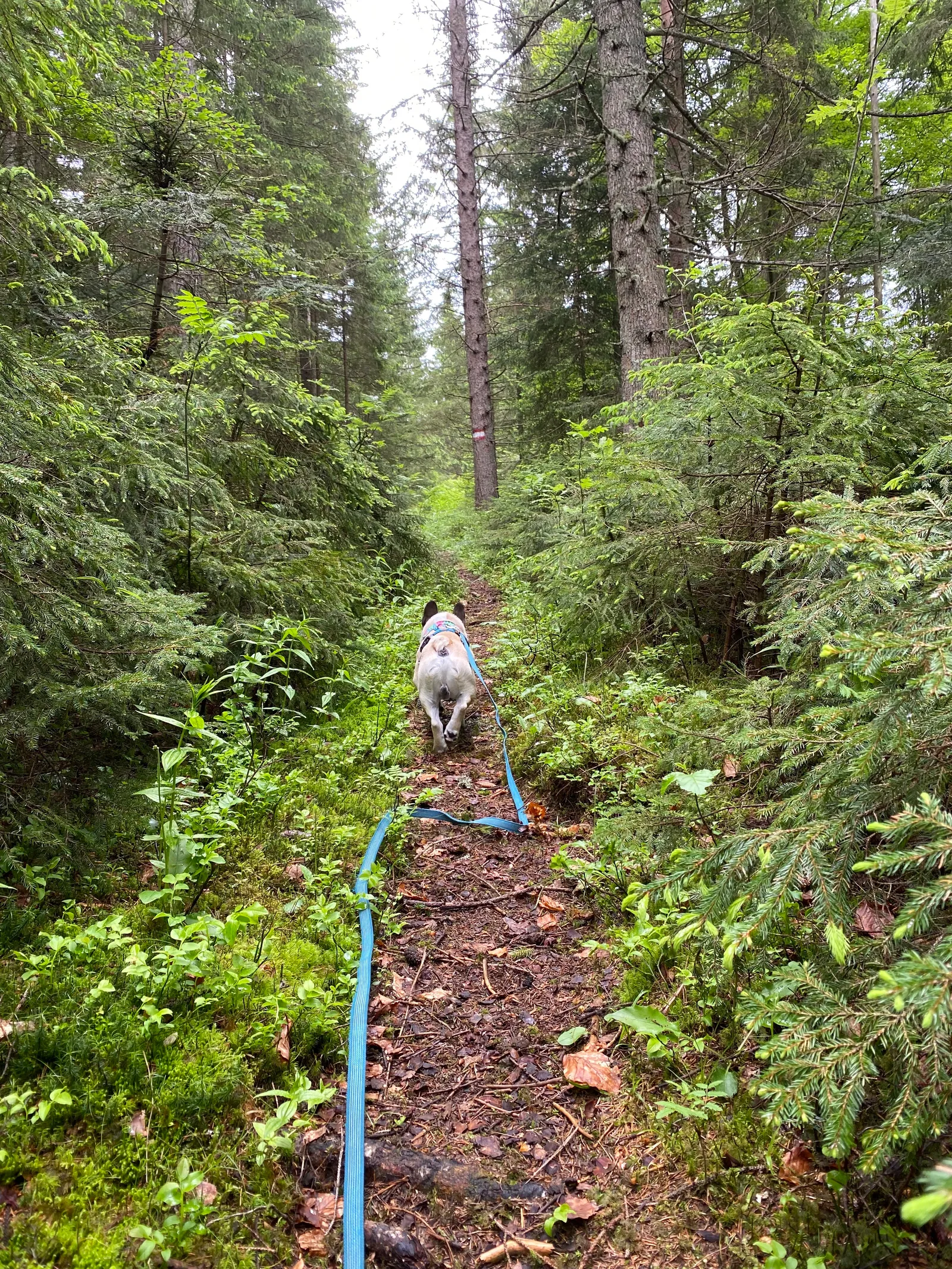
We park at the Hoiswirt and start our walk from there. Green Styria lives up to its name right from the start: our one-hour circular route of around 1.9 km showcases every shade of that wonderfully calming colour.
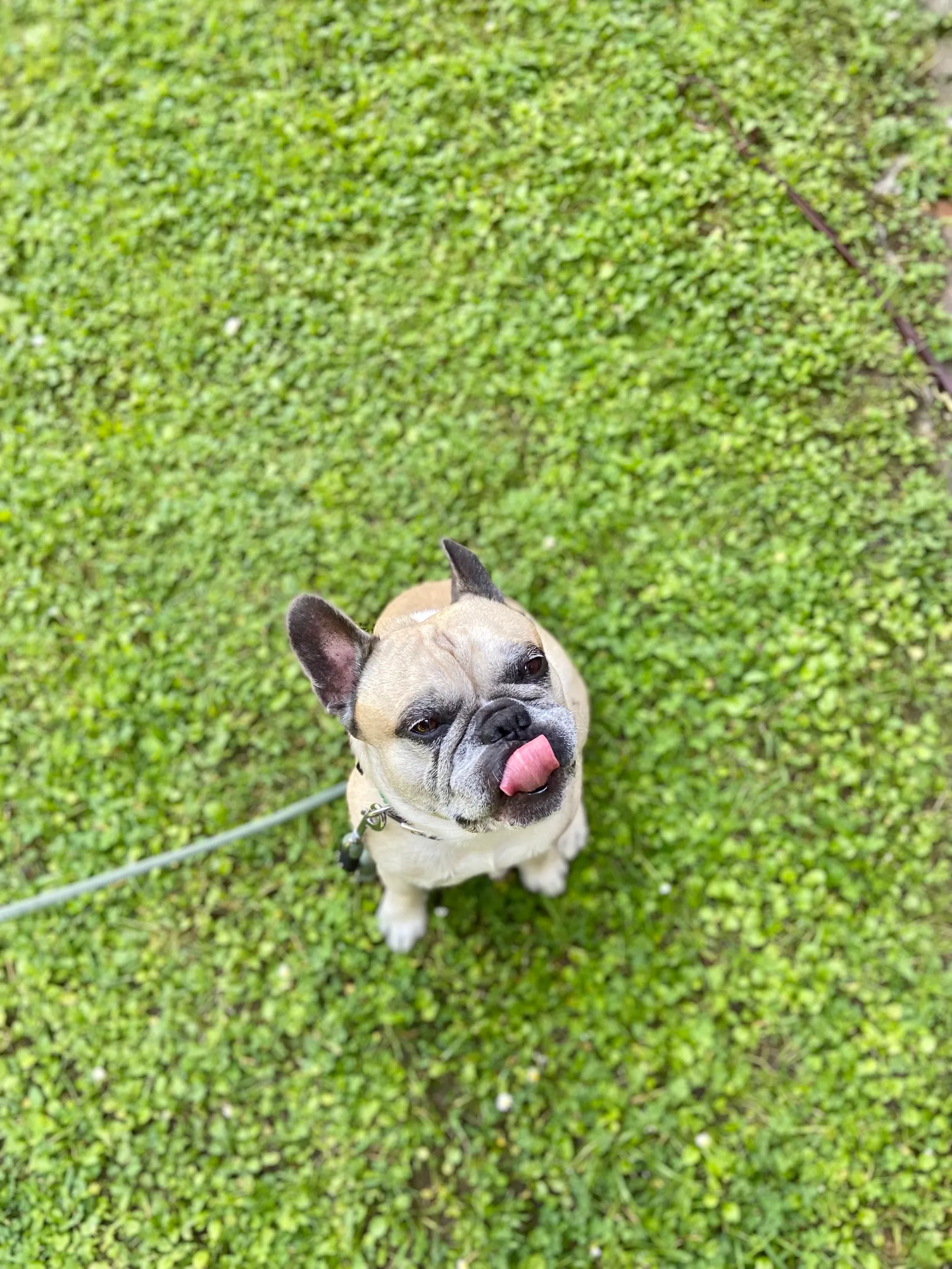
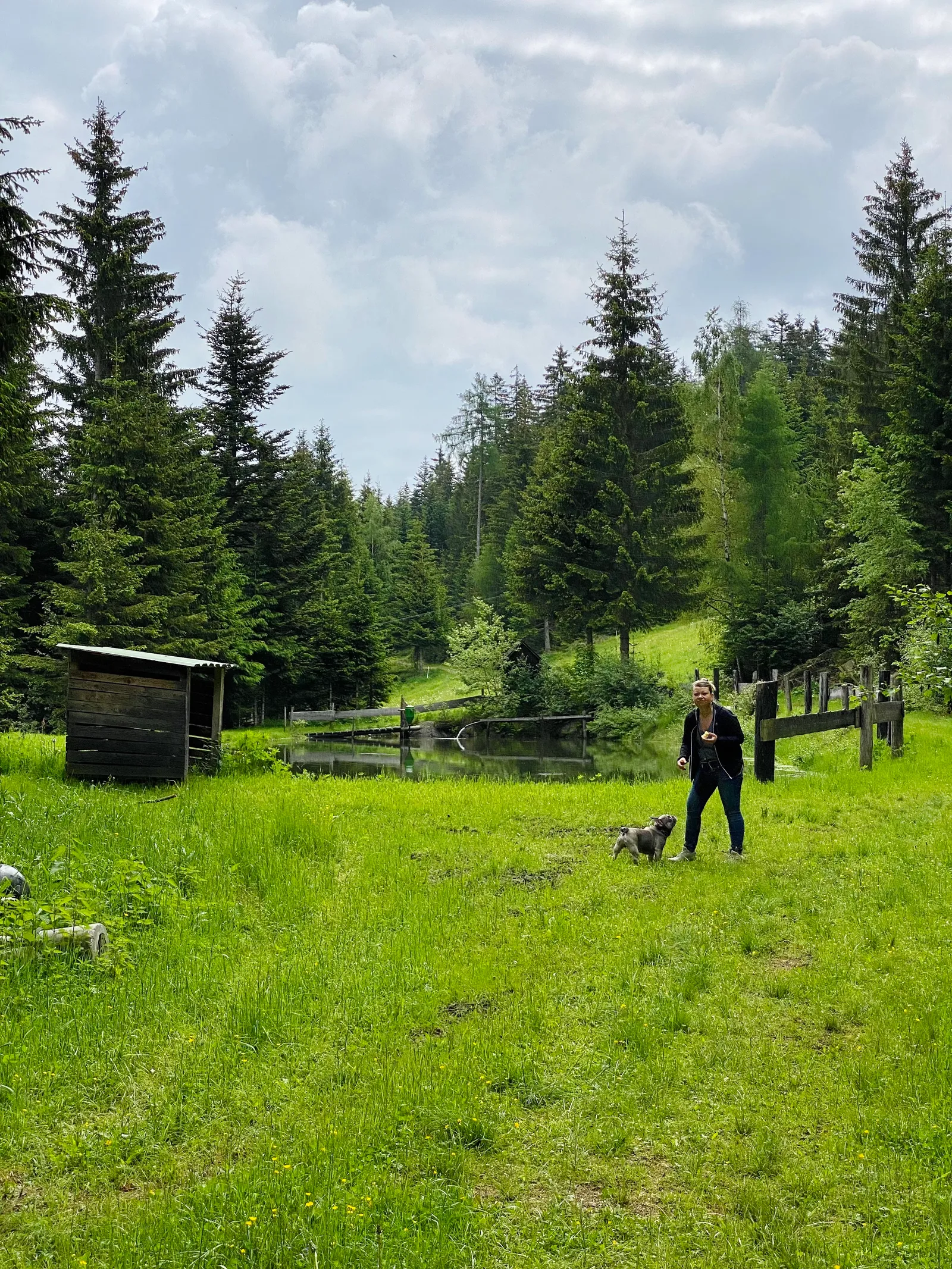
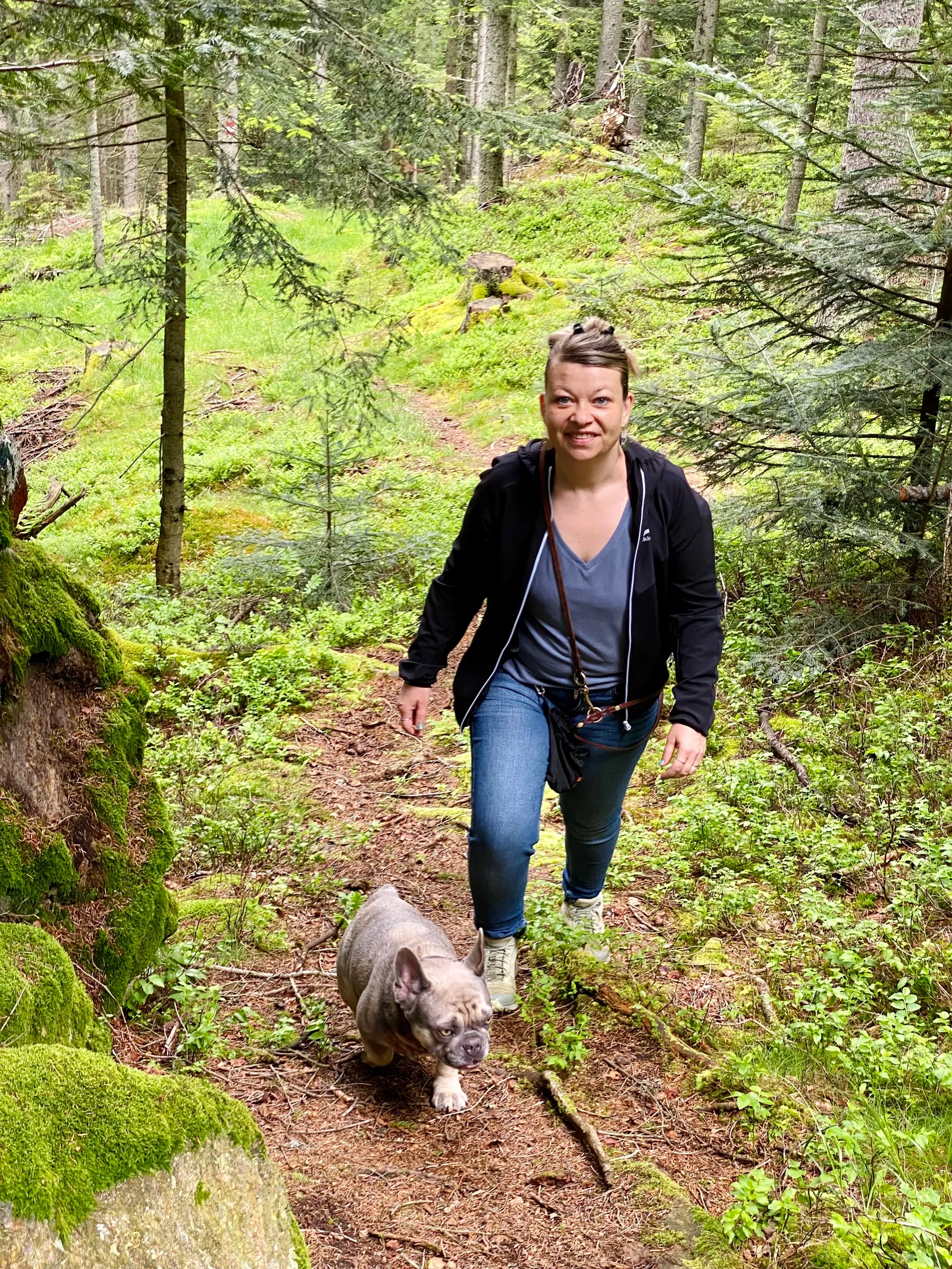
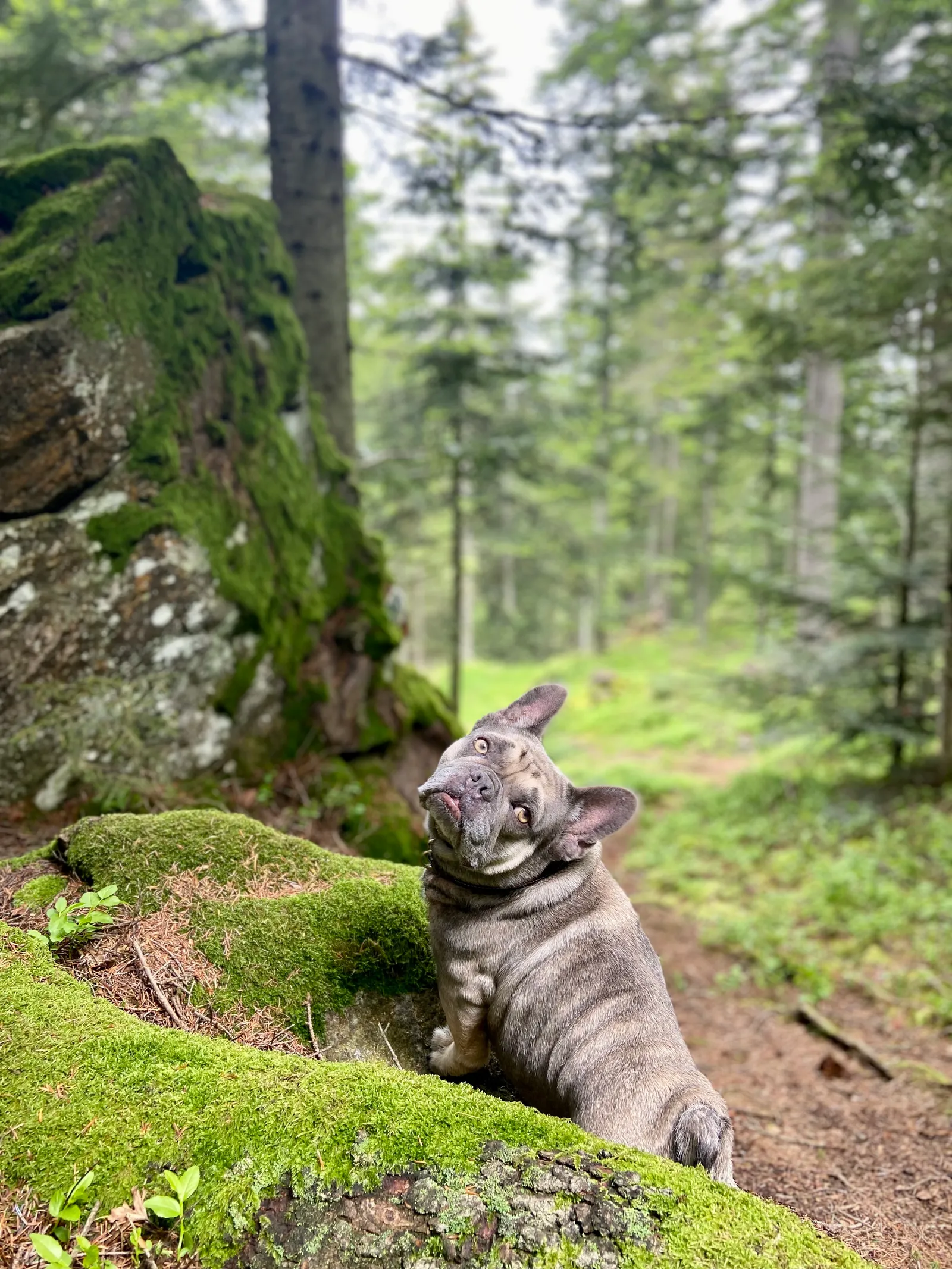
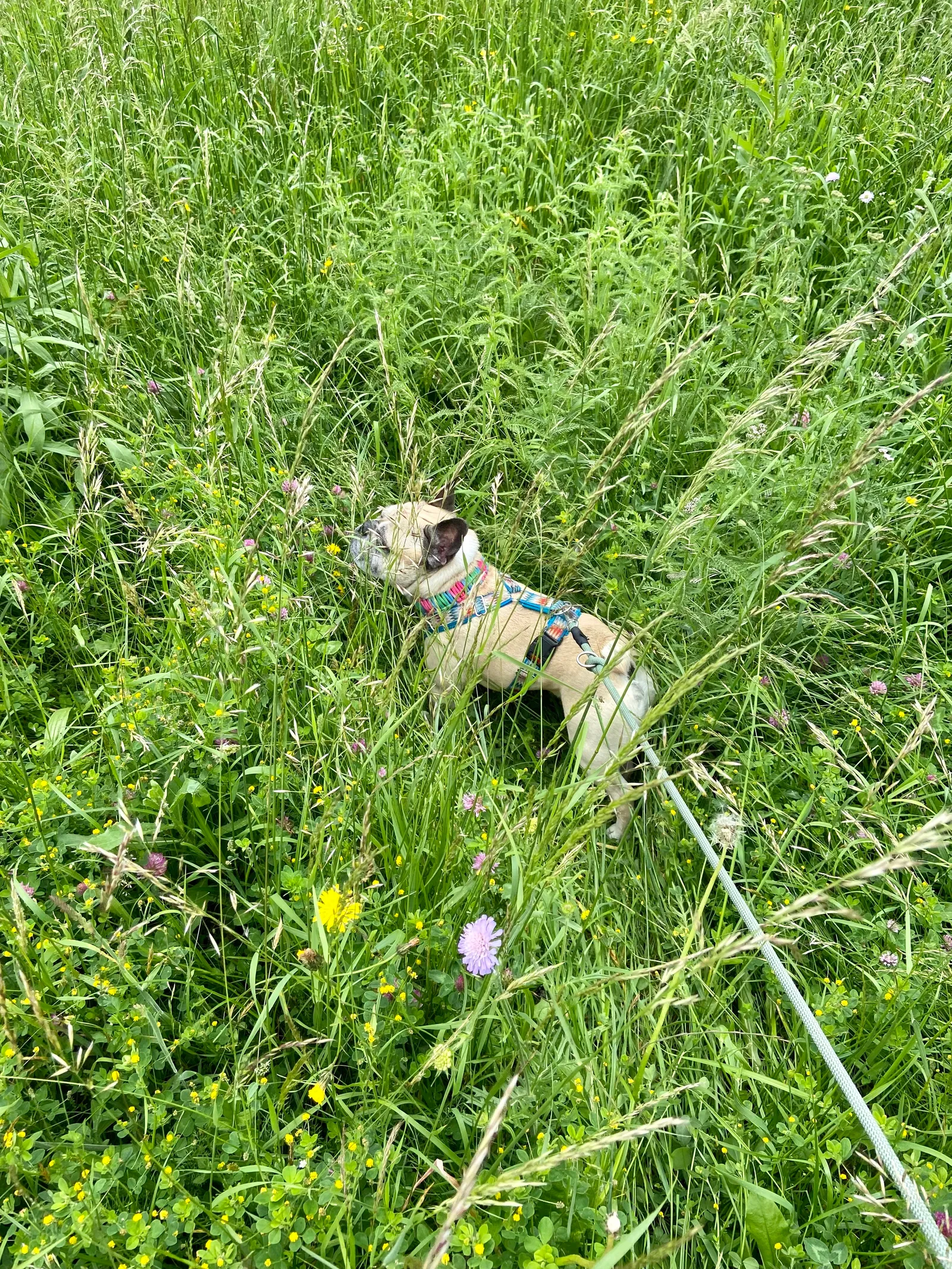
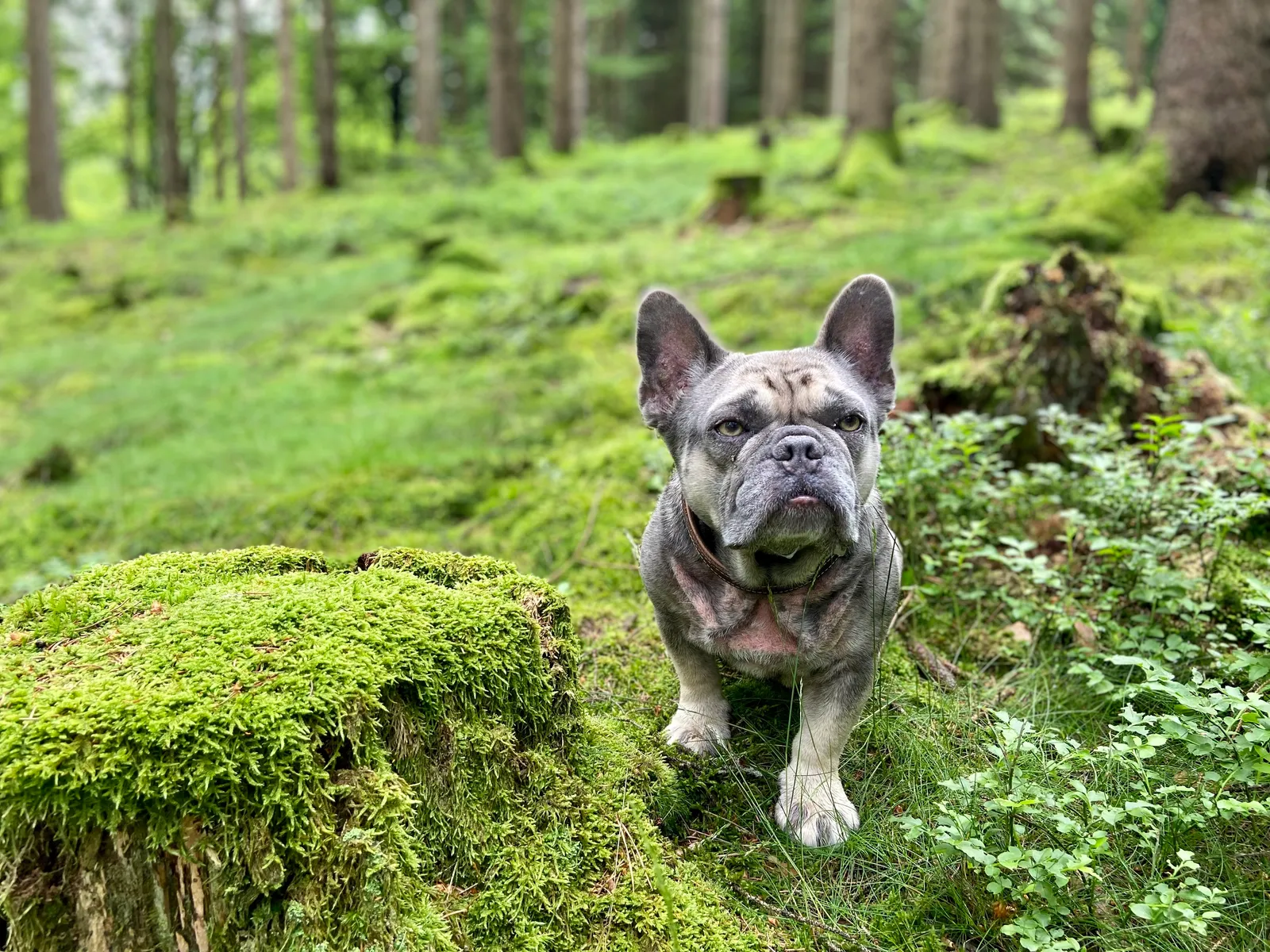
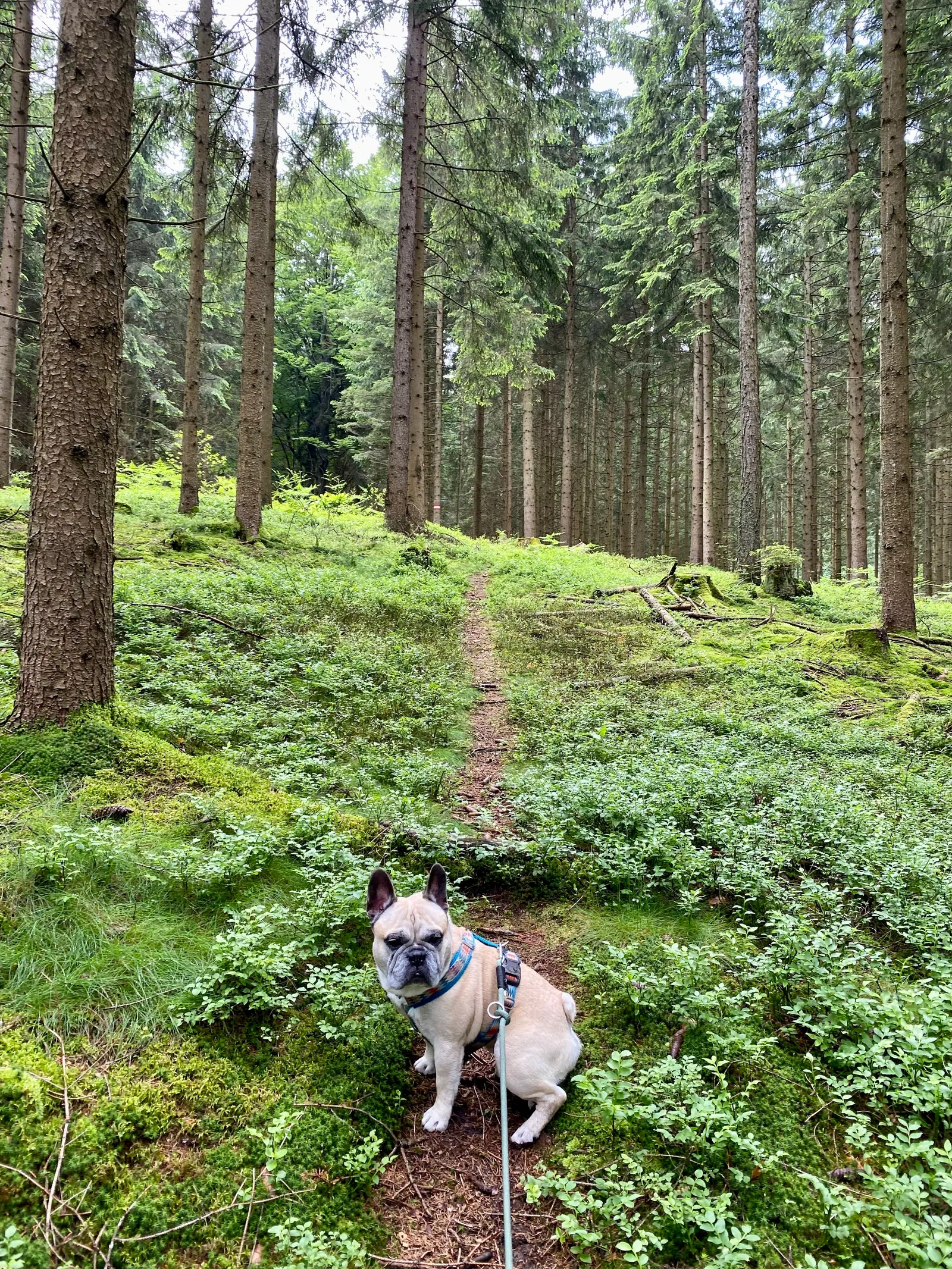
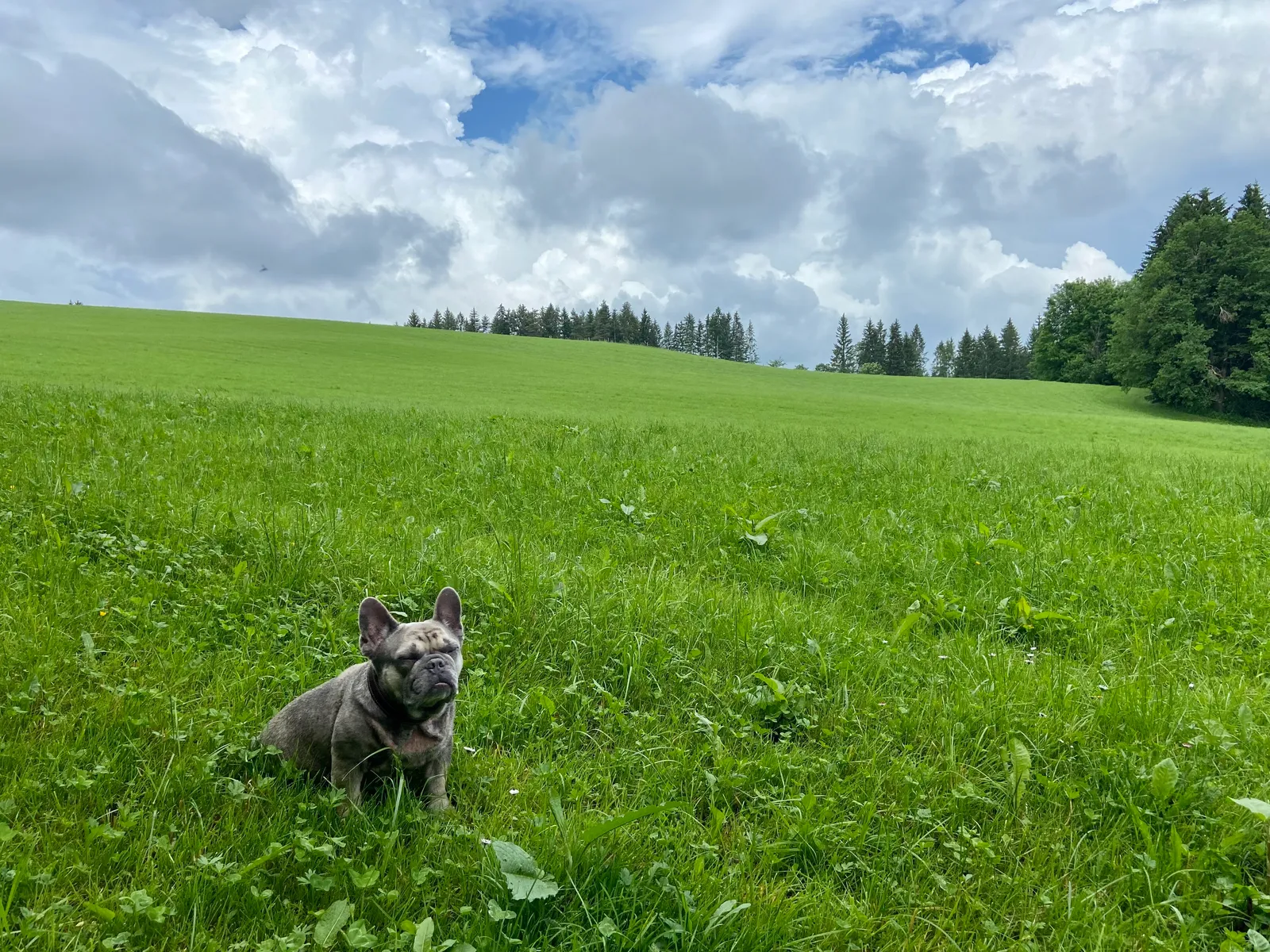
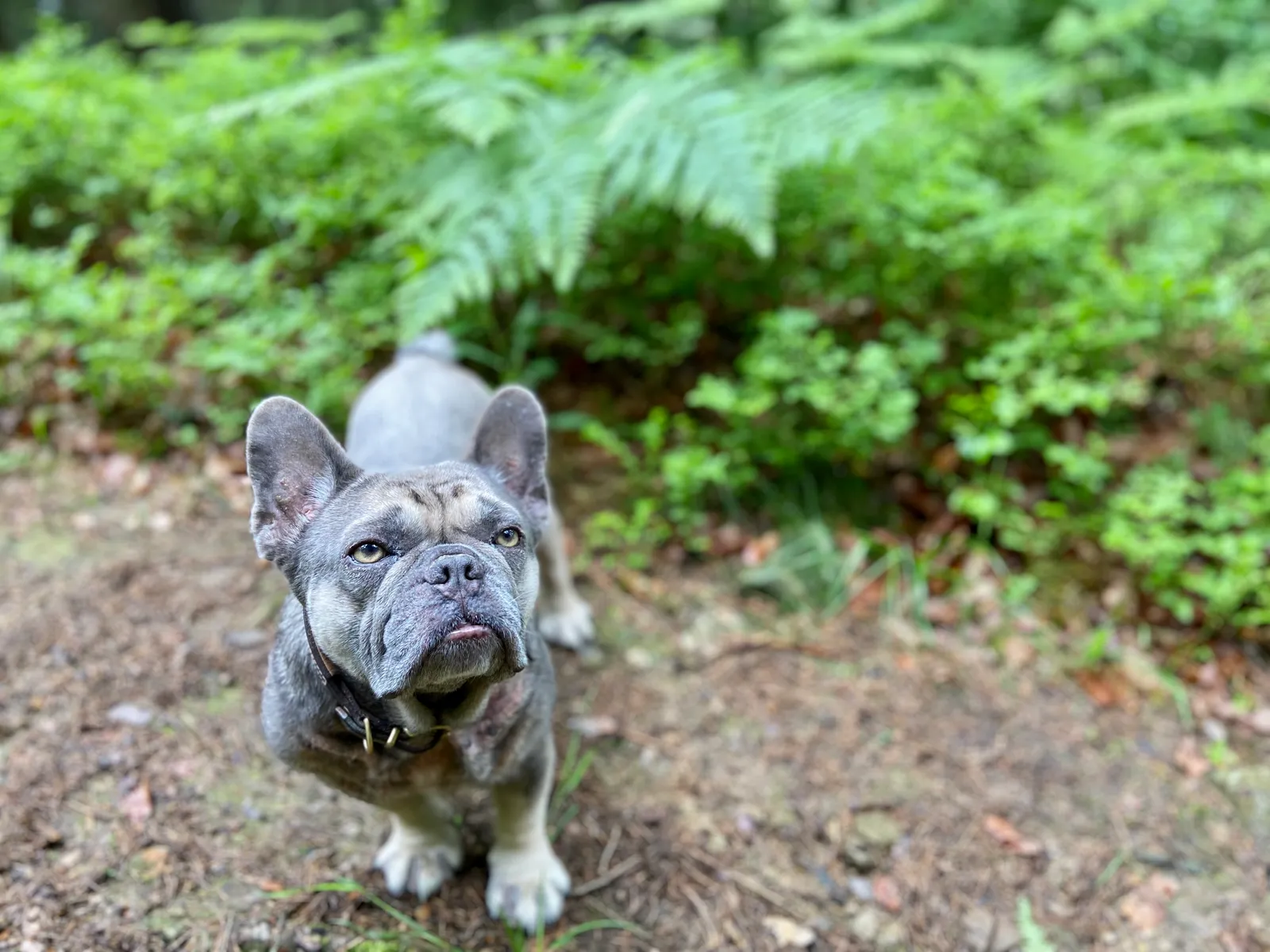
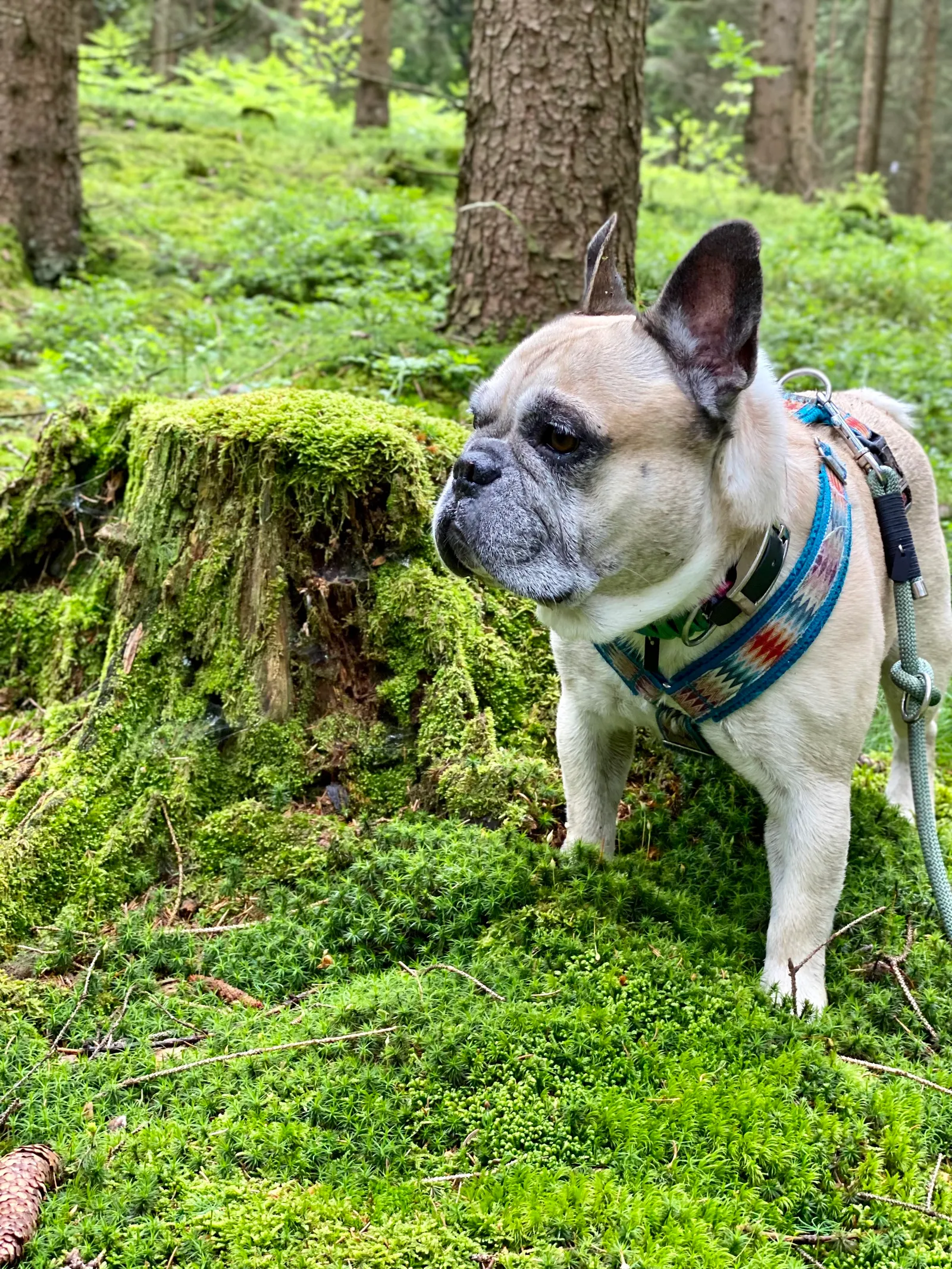
The paths are simply ideal for our allergy sufferer Archie and his sensitive paws. And Murphy enjoys every outing in nature regardless.
At lunchtime we enjoy the delicious regional cooking and the dog-friendly welcome at Gasthof Klug zum Ehrensepp, which we already introduced to you in our post about our accommodation.
The village of Pack
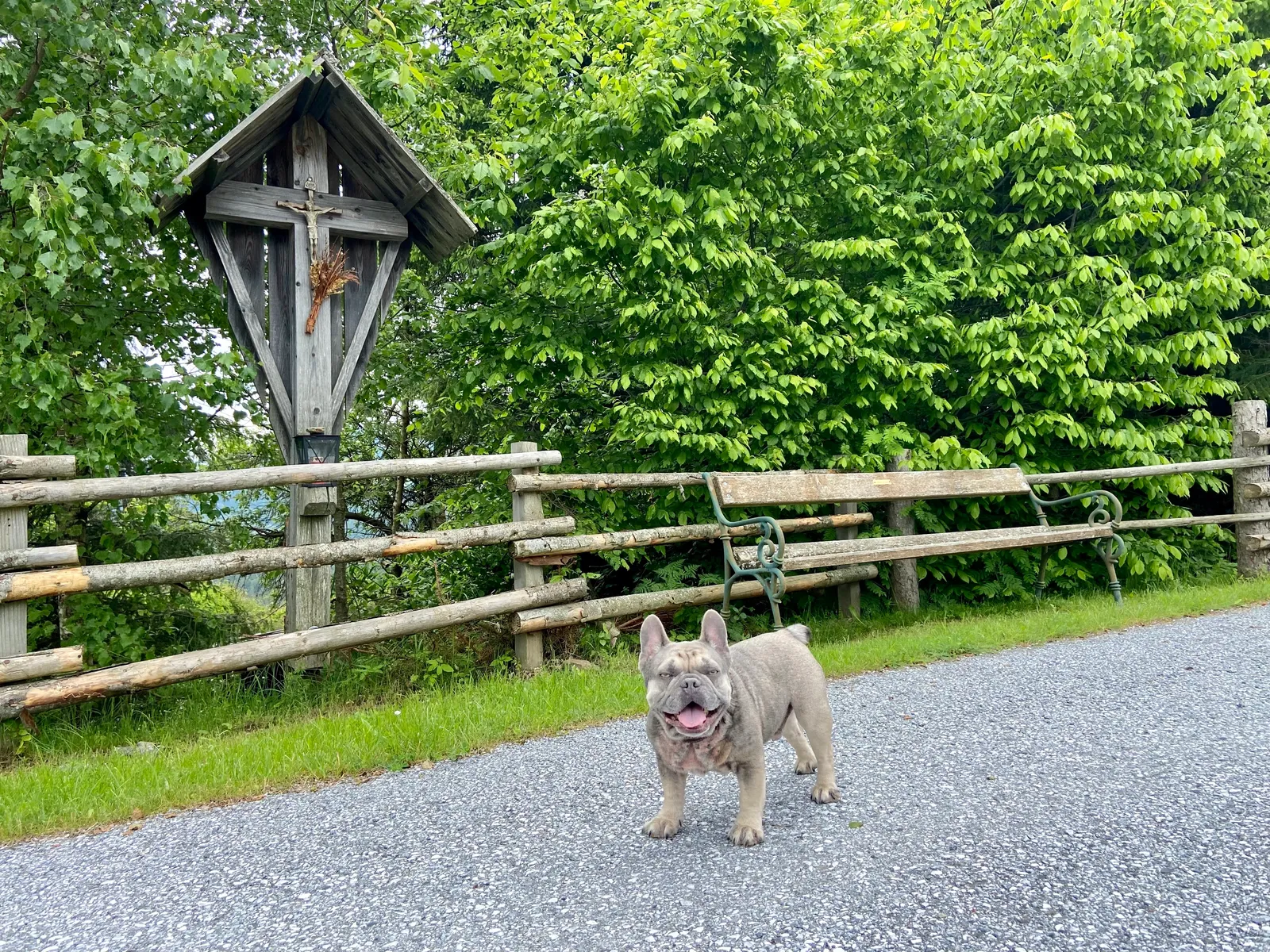
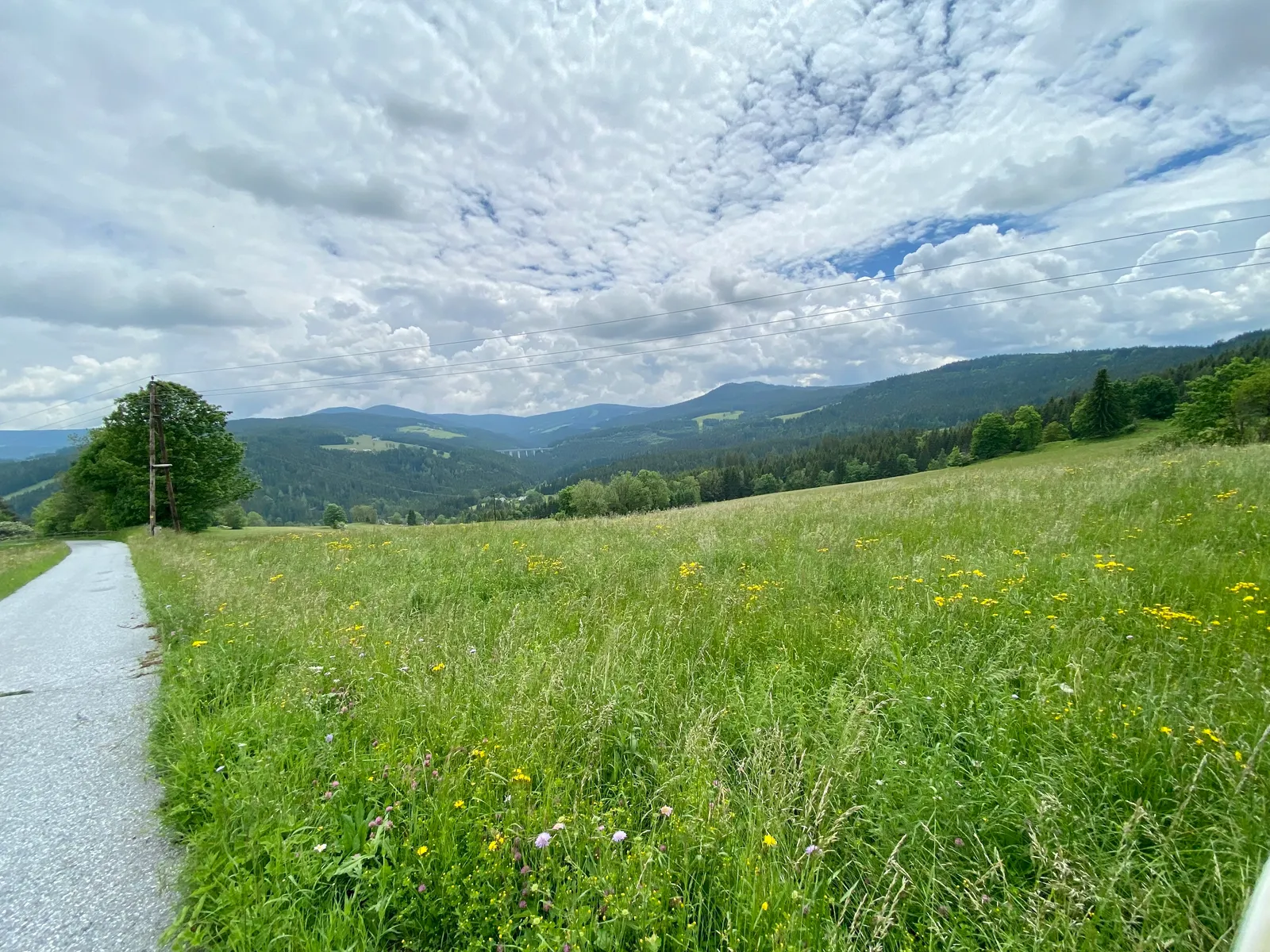
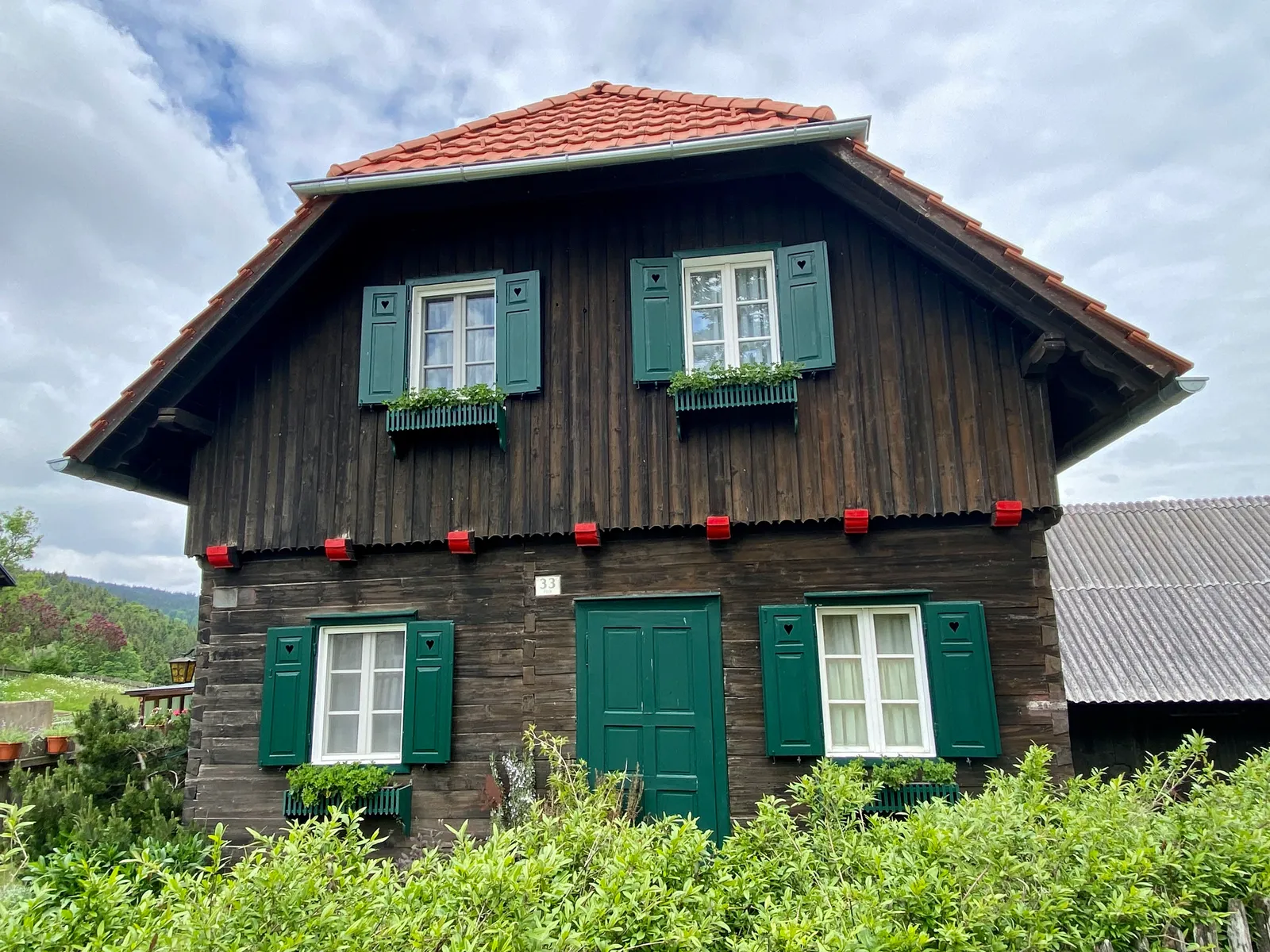
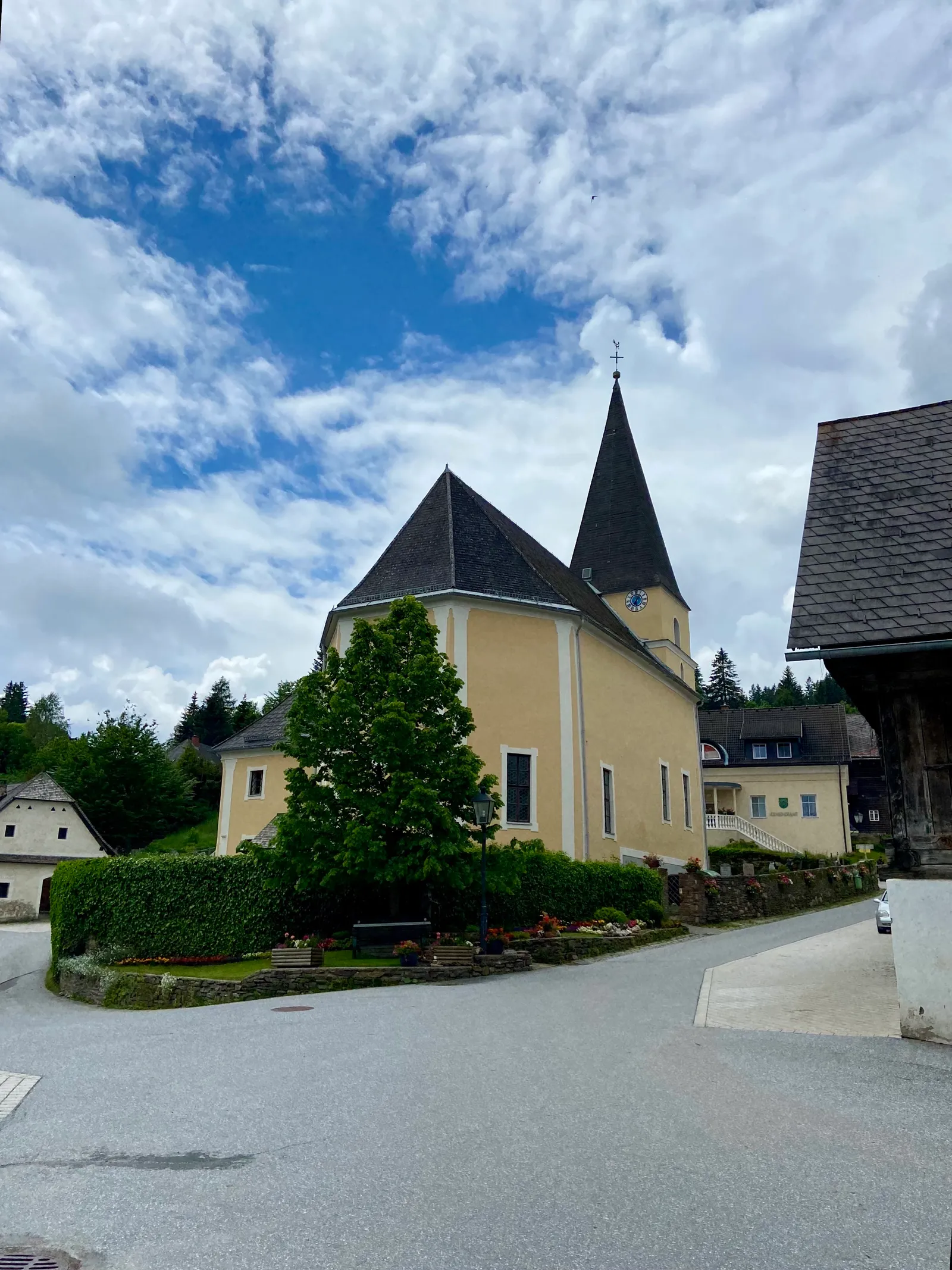
Since the morning loop wasn't all that long, we want to have a look around the village of Pack. We live right by the Packer Stausee and the Packer Sattel mountain pass is a name we keep hearing on the traffic reports, so we're curious to see the little place for ourselves.
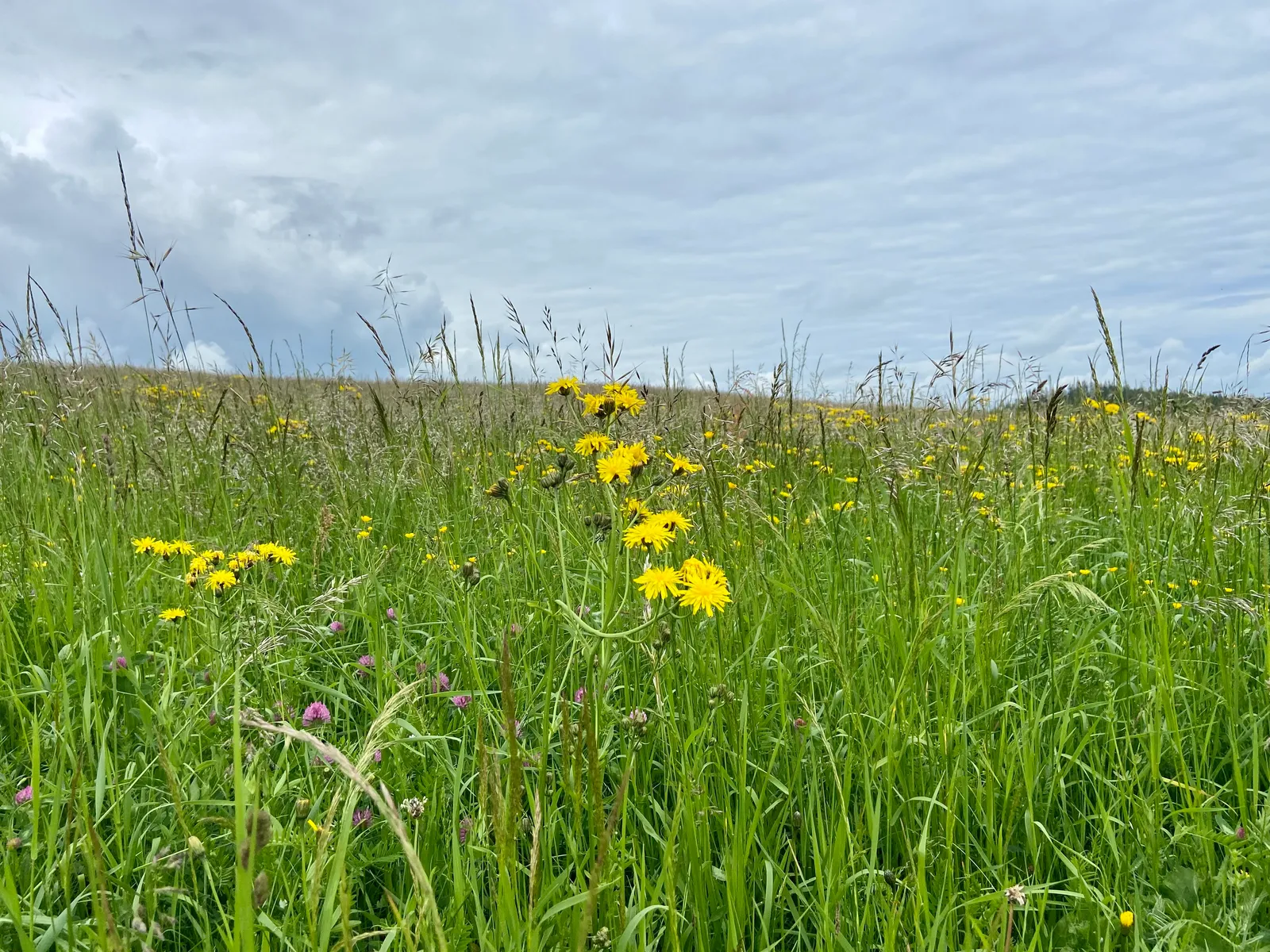
According to Wikipedia, the municipality has 411 inhabitants and sits on the border with Kärnten. We stroll past the church and the school and take in the gentle beauty of the rolling hills.
Hike at the Hirzmann reservoir
The following day we tackle the Anton Wildgans circular trail. Here are a few details about the route:
Route data
- Pace: slow
- Stated walking time: 1 hour 15 minutes
- Our time: 1.5 hours
- Distance: 2.91 km
- Ascent: 118 m
- Descent: 112 m
- Highest point: 782 m
- Lowest point: 715 m
Dog facts
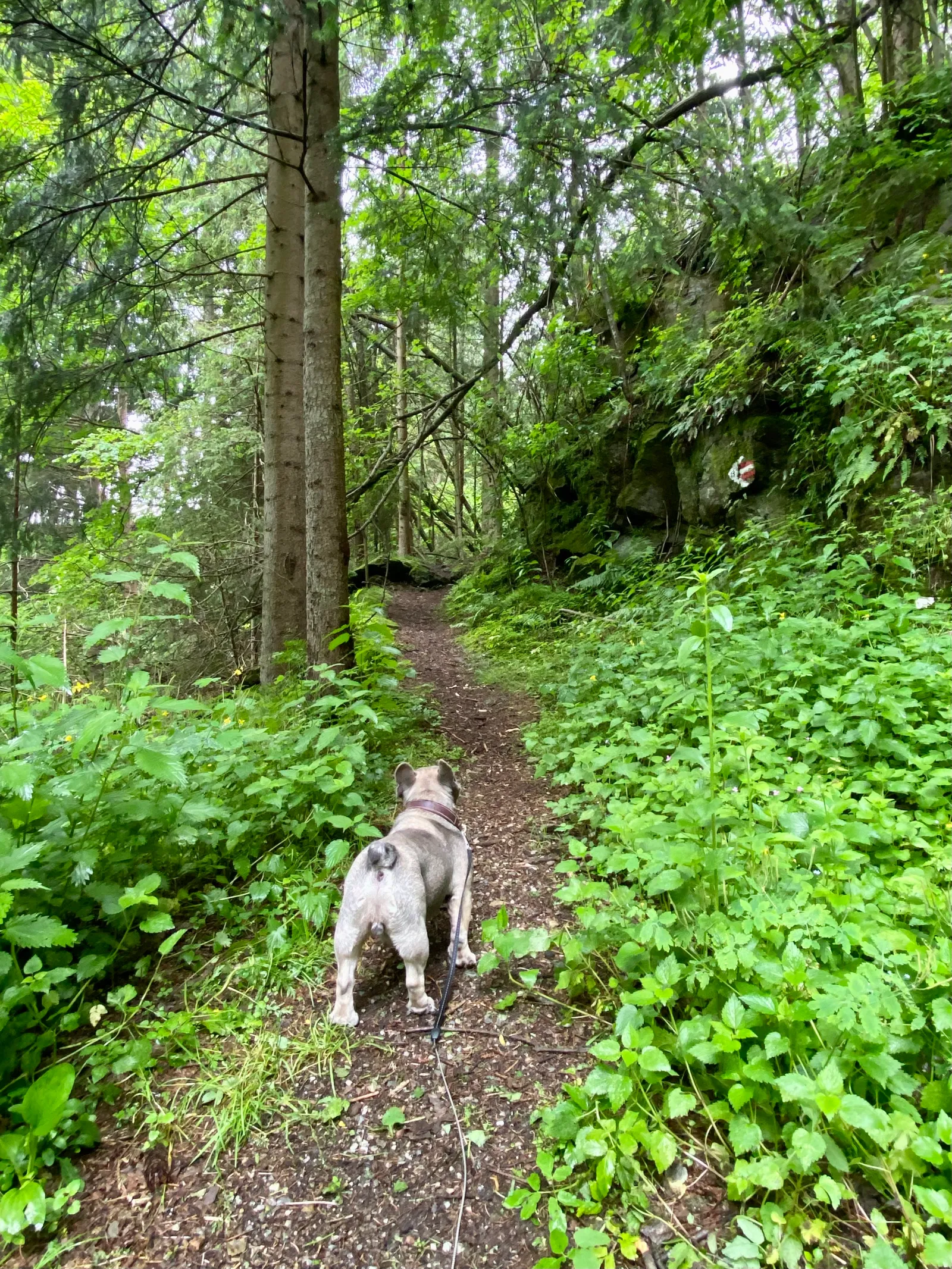
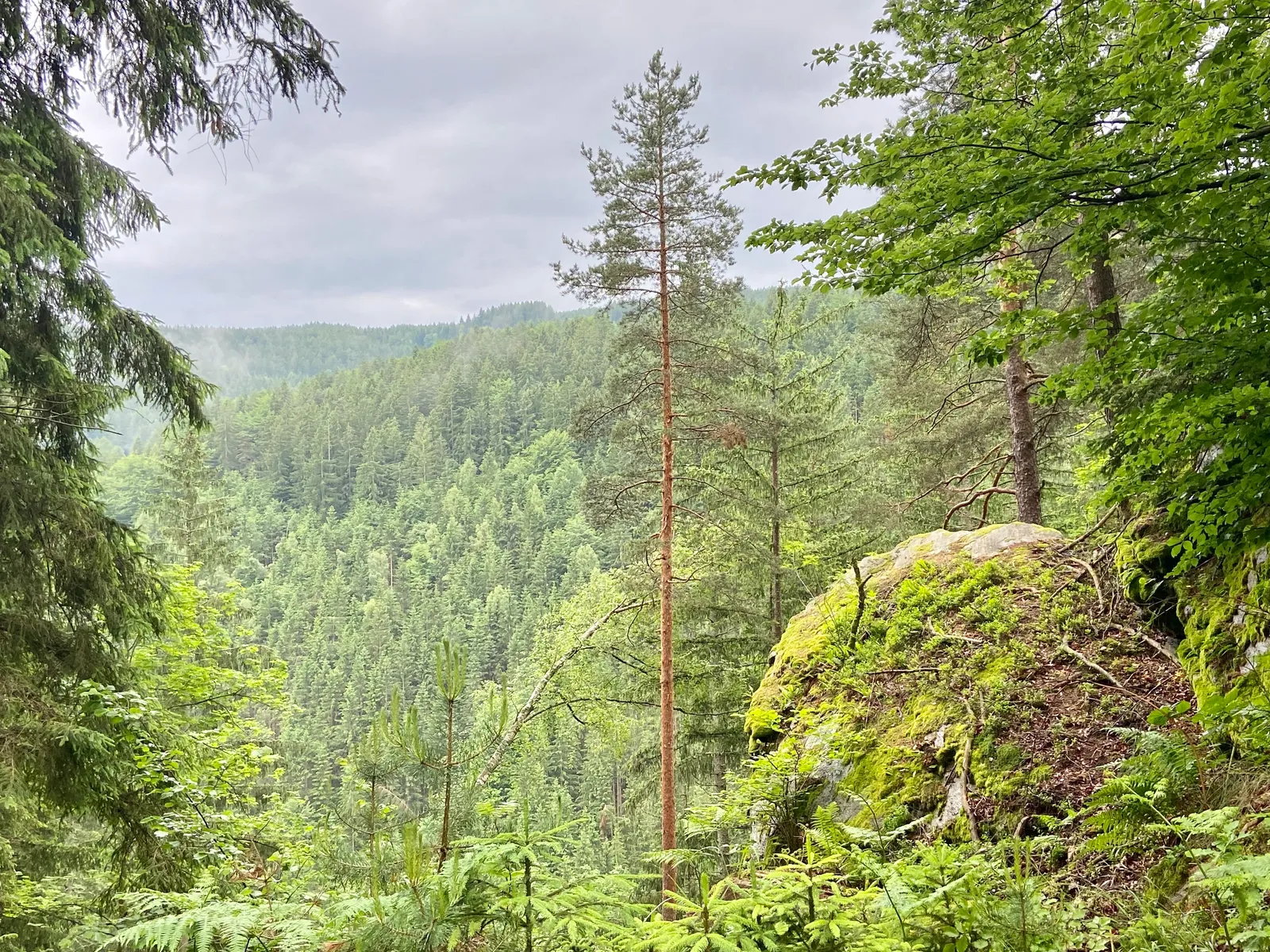
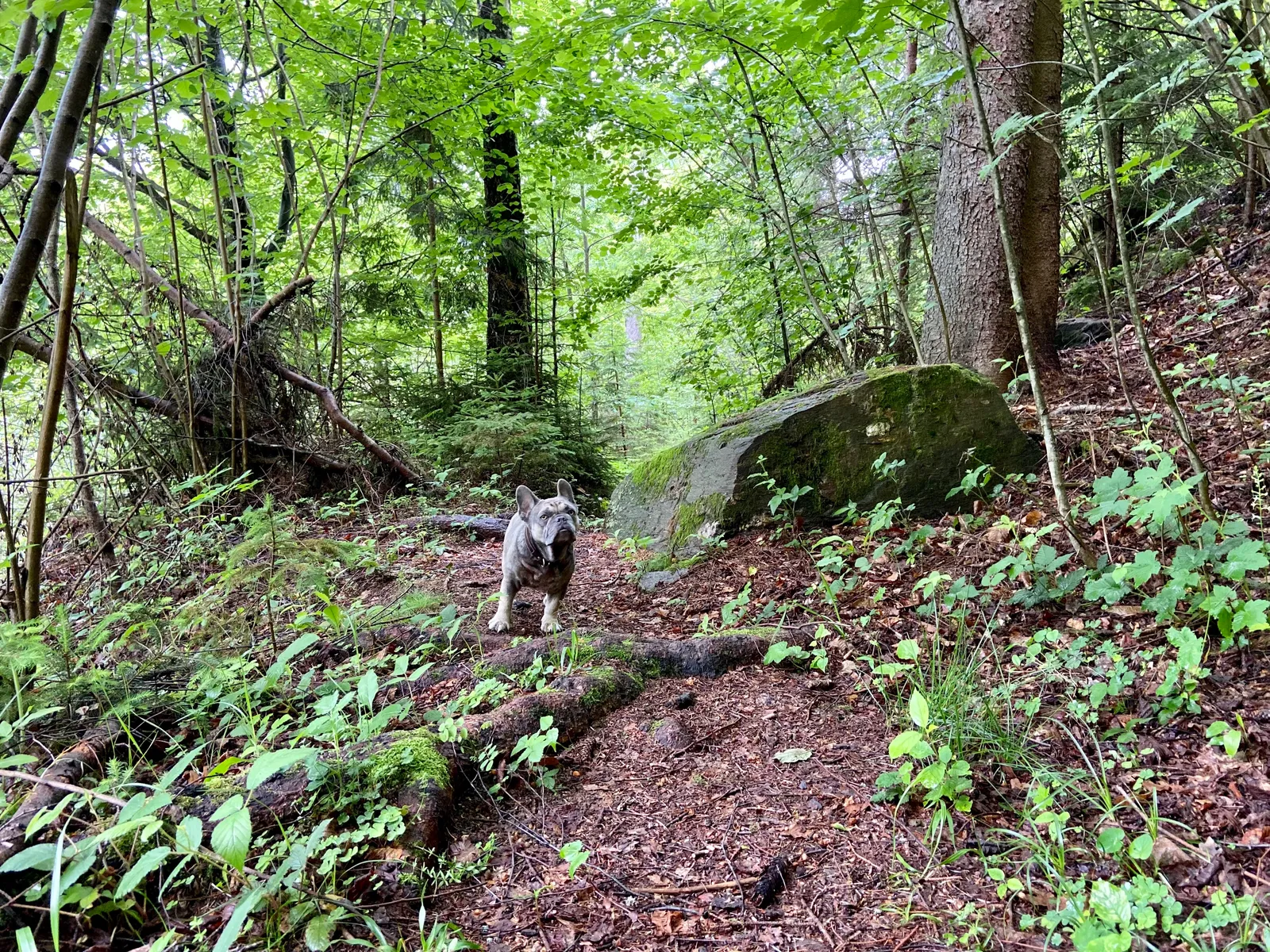
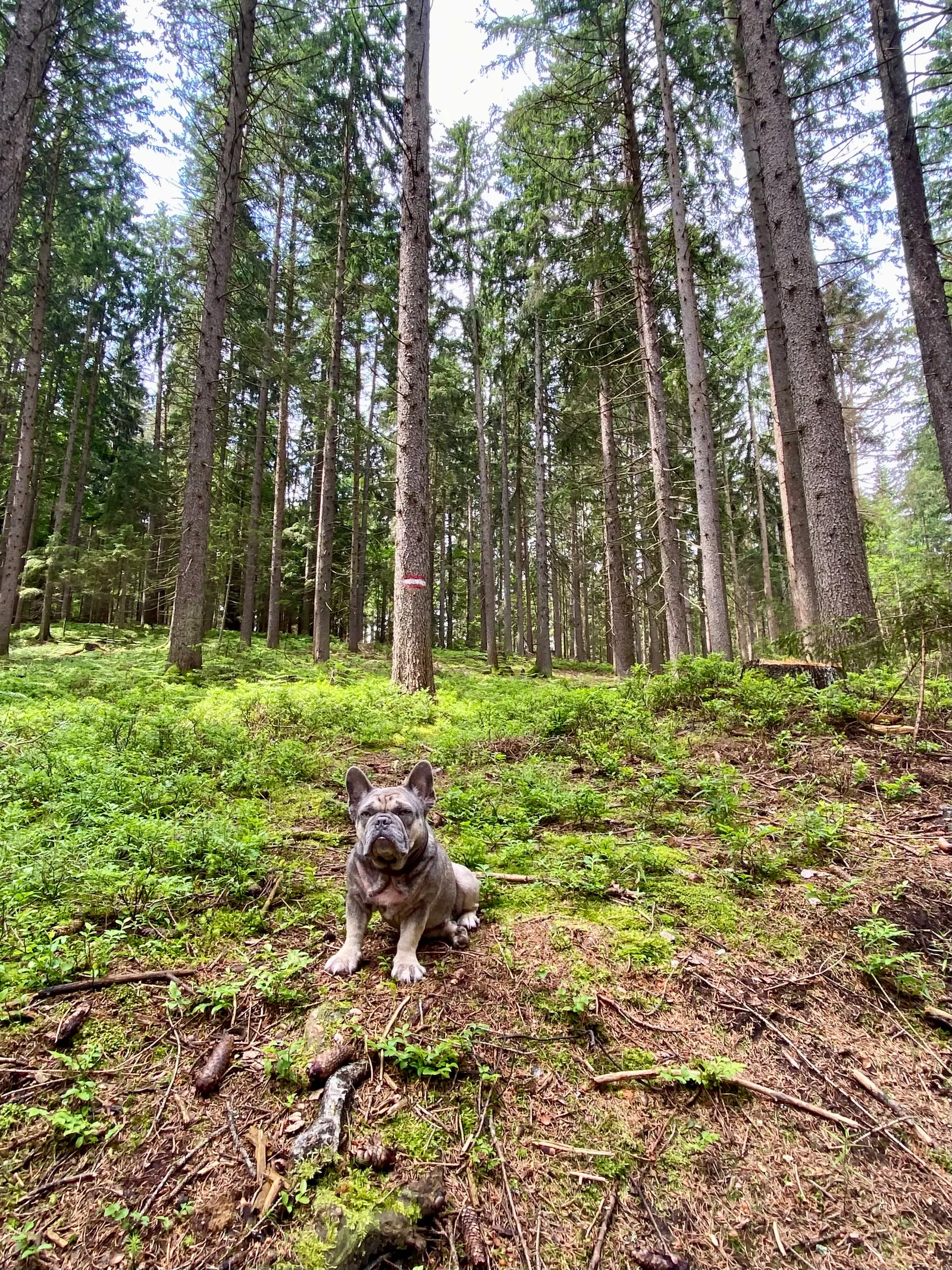
- The hike runs mainly on lovely forest paths and trails.
- An easy hike on a very straightforward route.
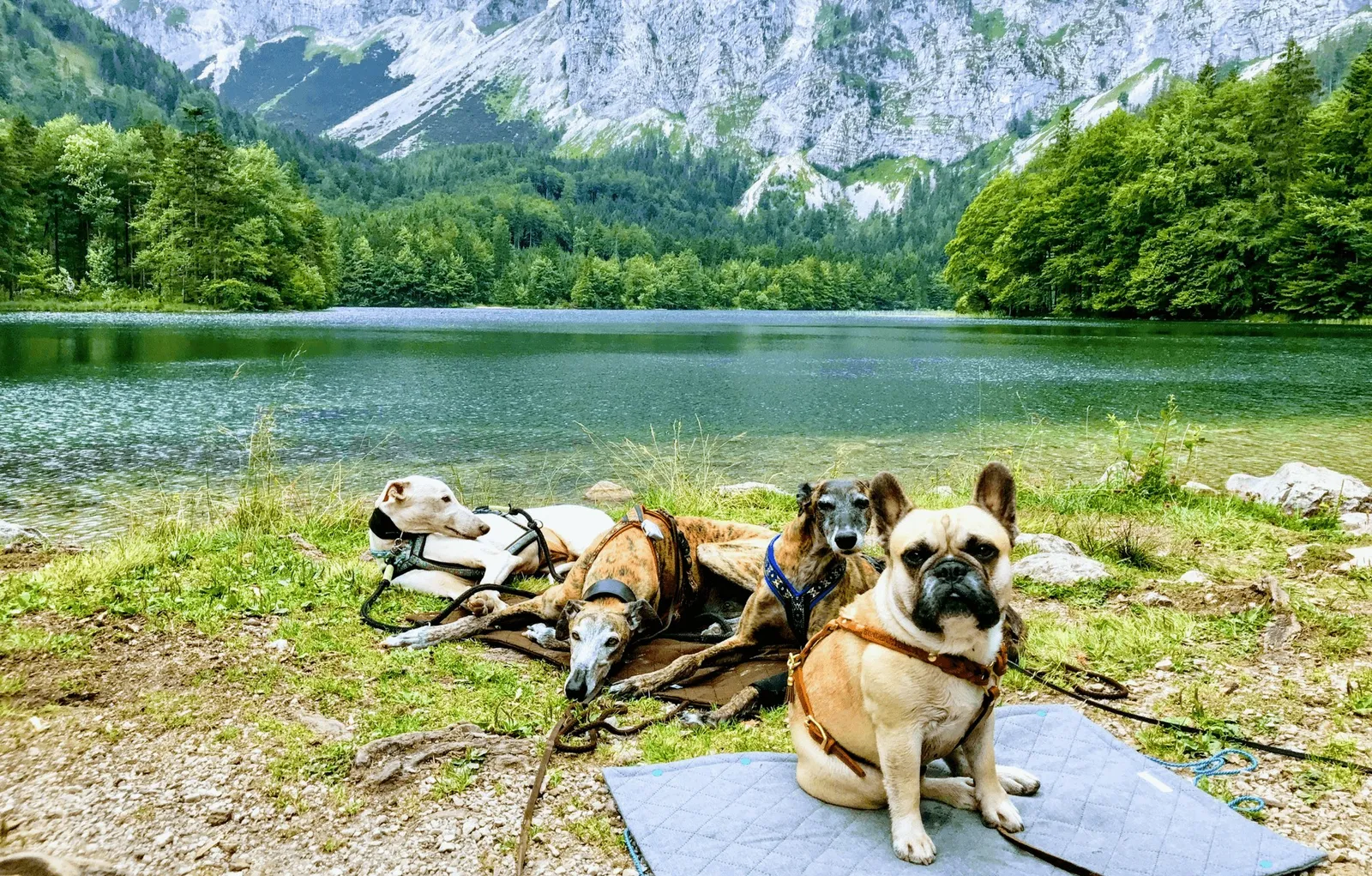
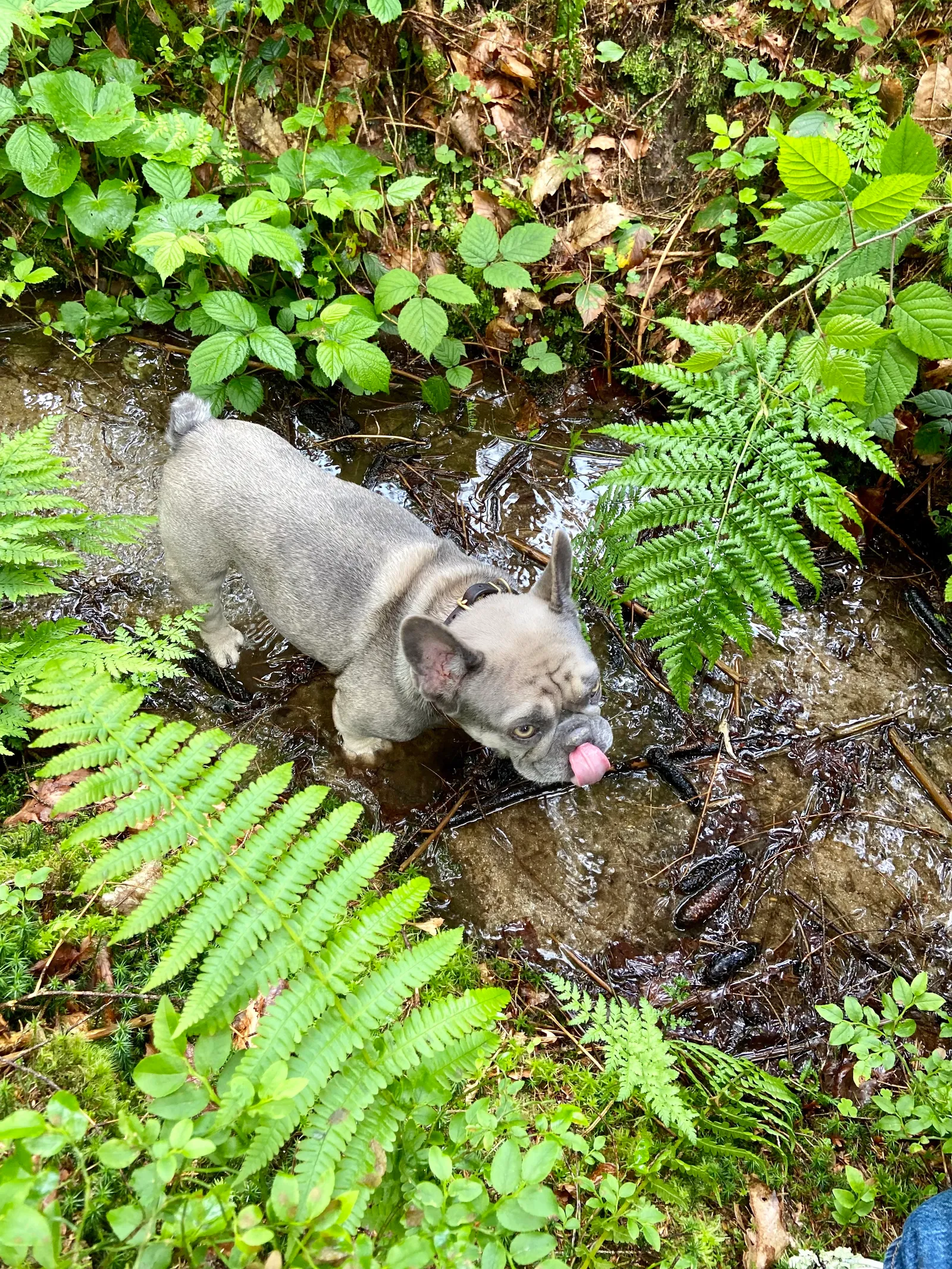
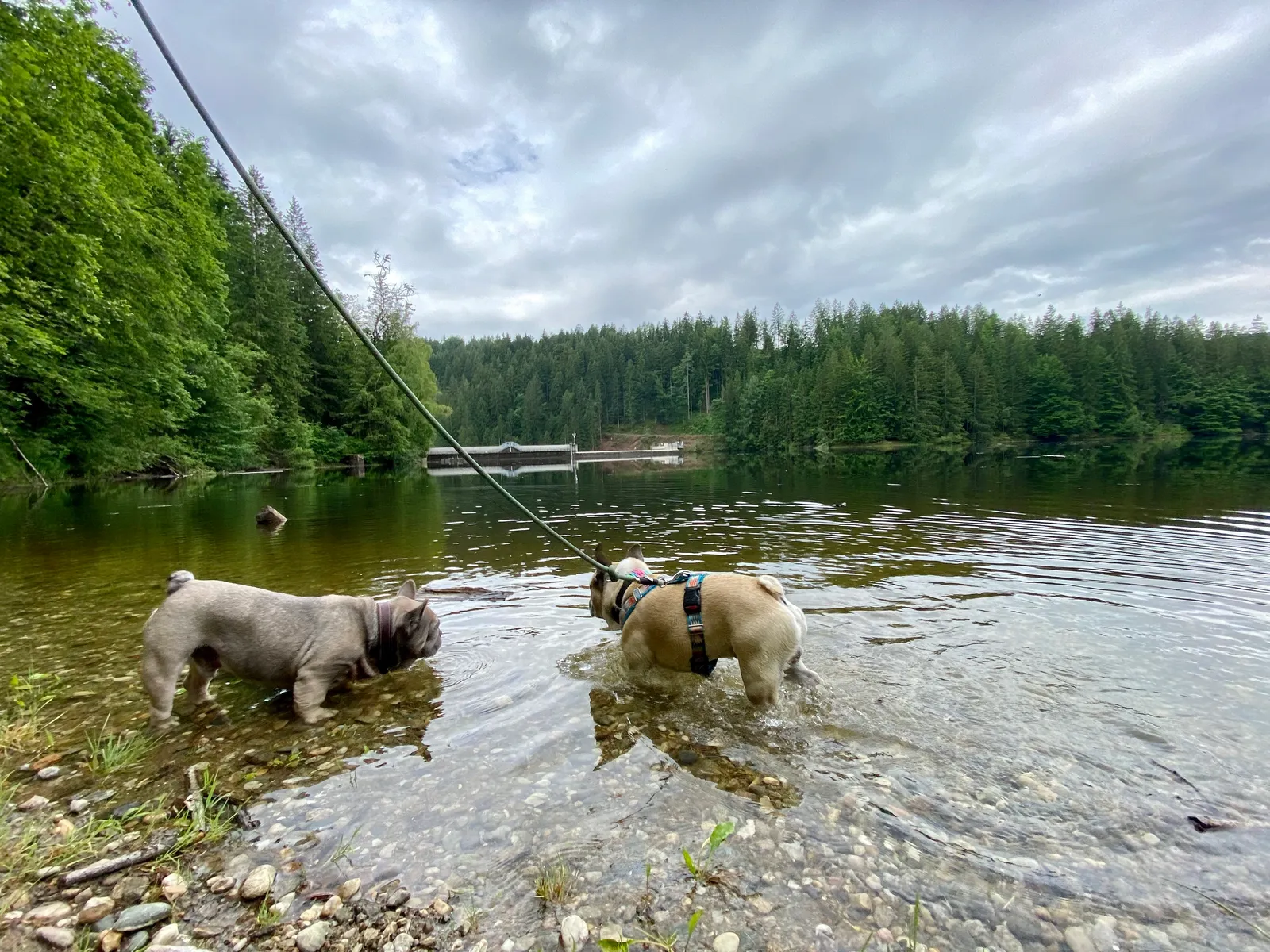
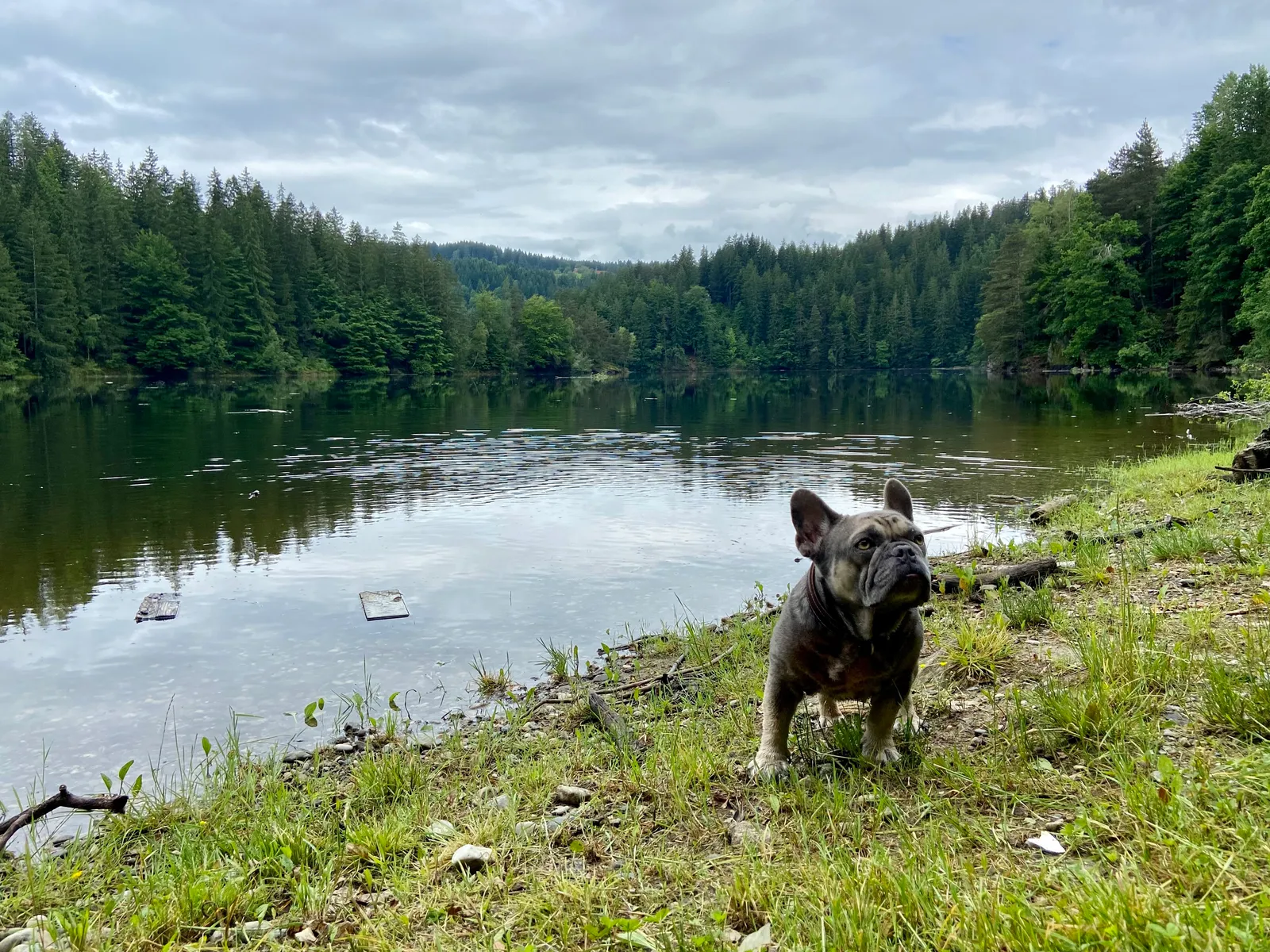
- We found a spot where the dogs could swim in the reservoir and cool off in a stream in the forest.
- That day we didn't meet any walkers, hikers or other dog owners, just friendly locals.
Facts about the reservoir
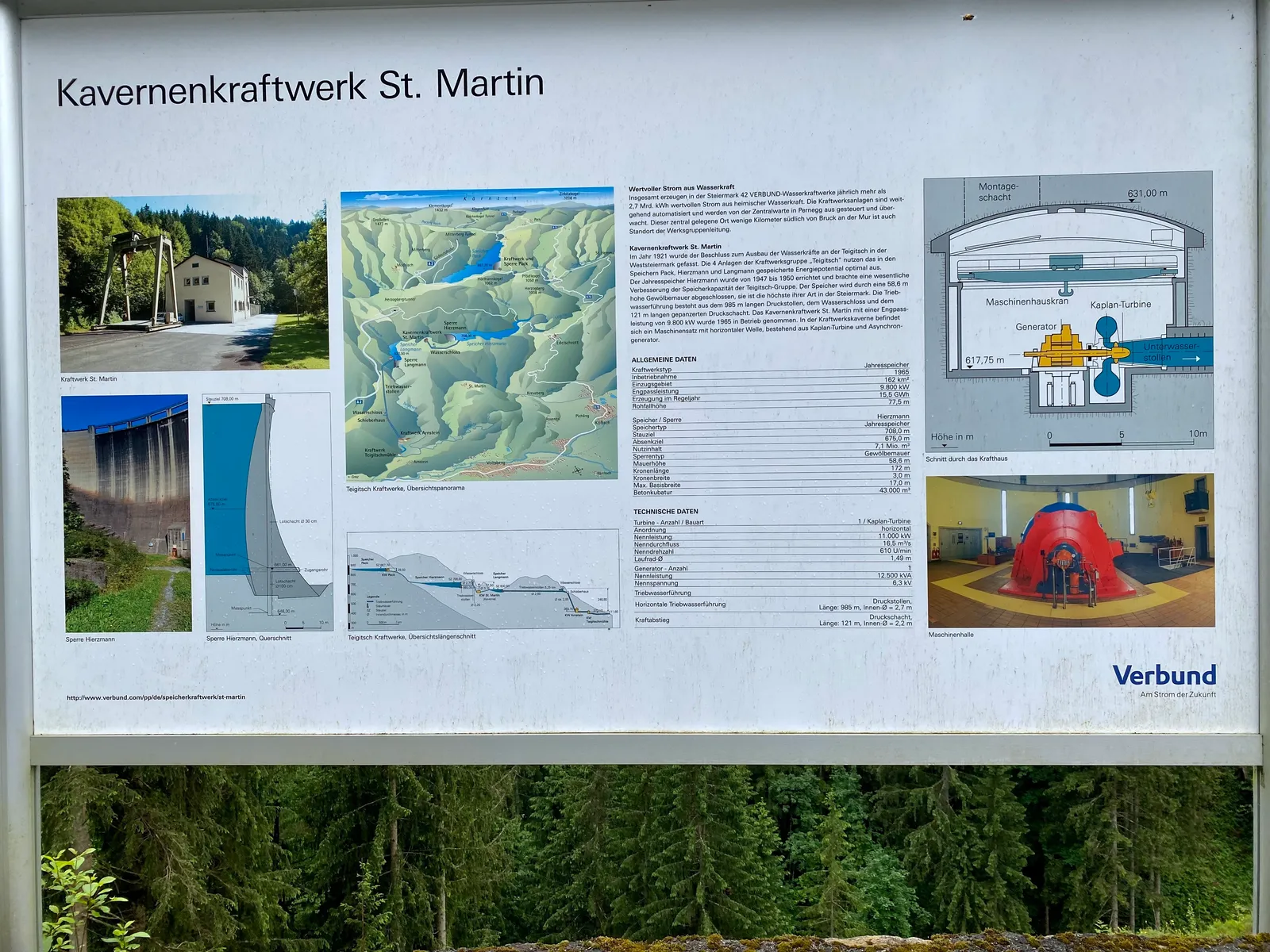
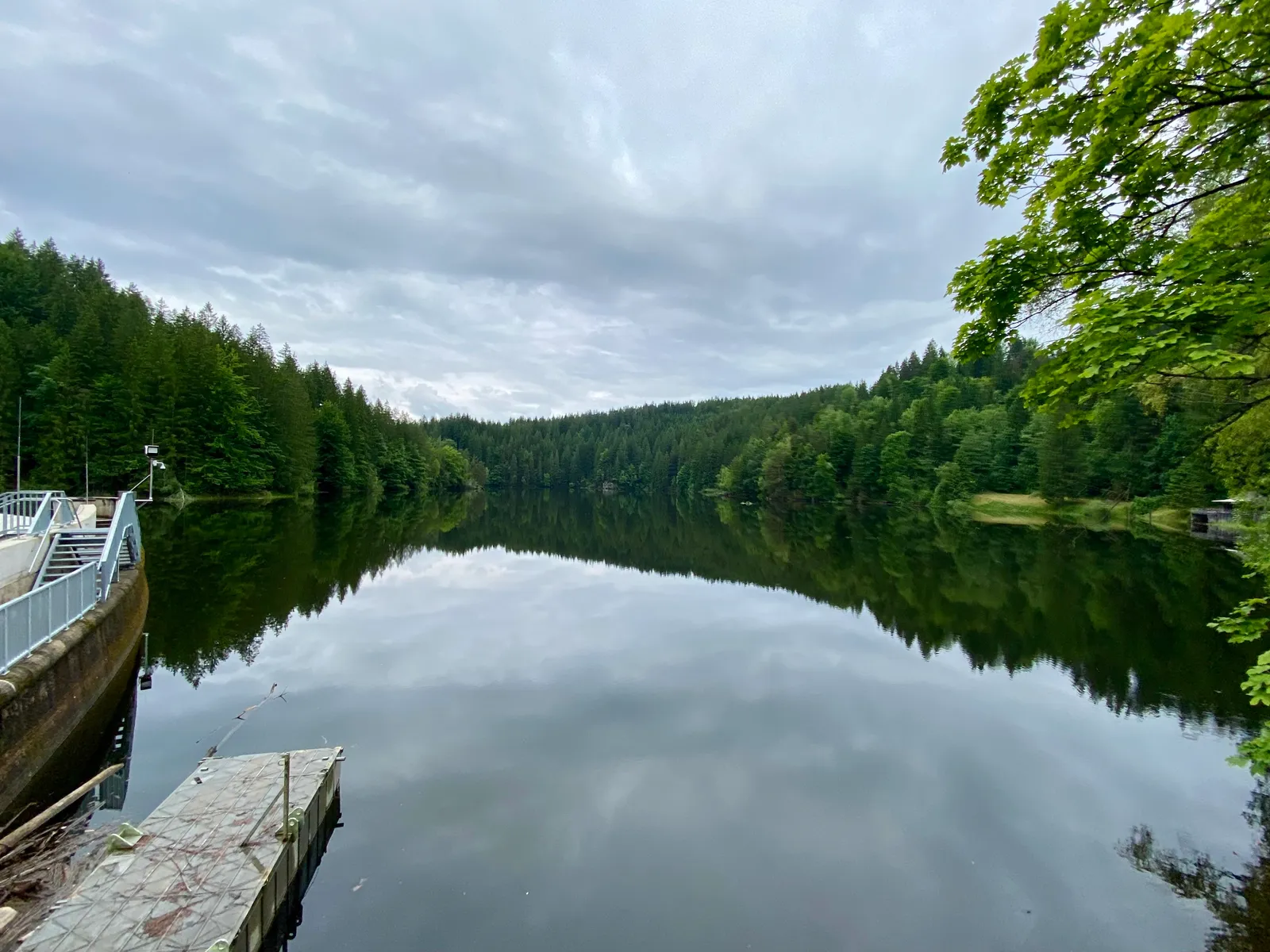
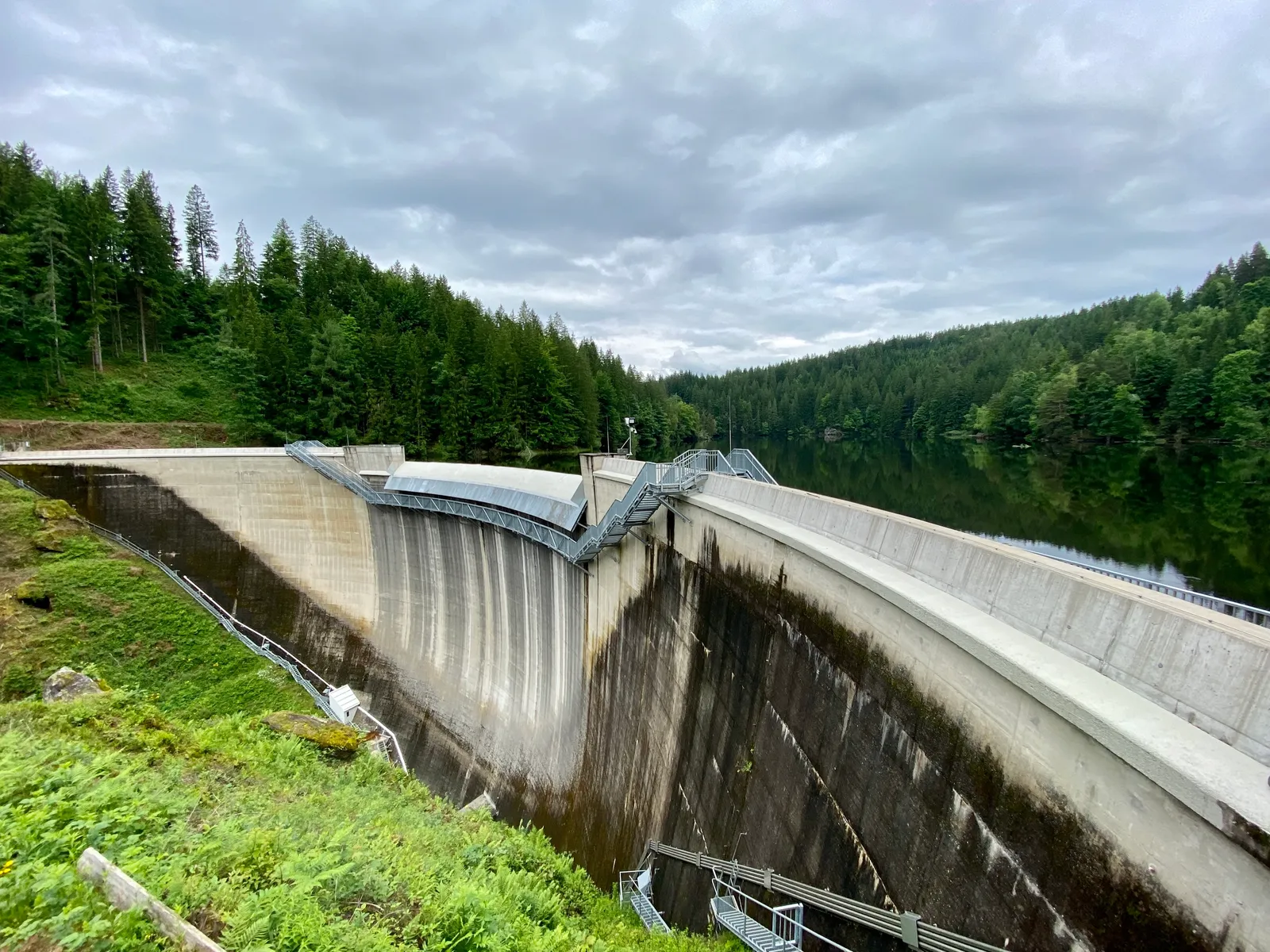
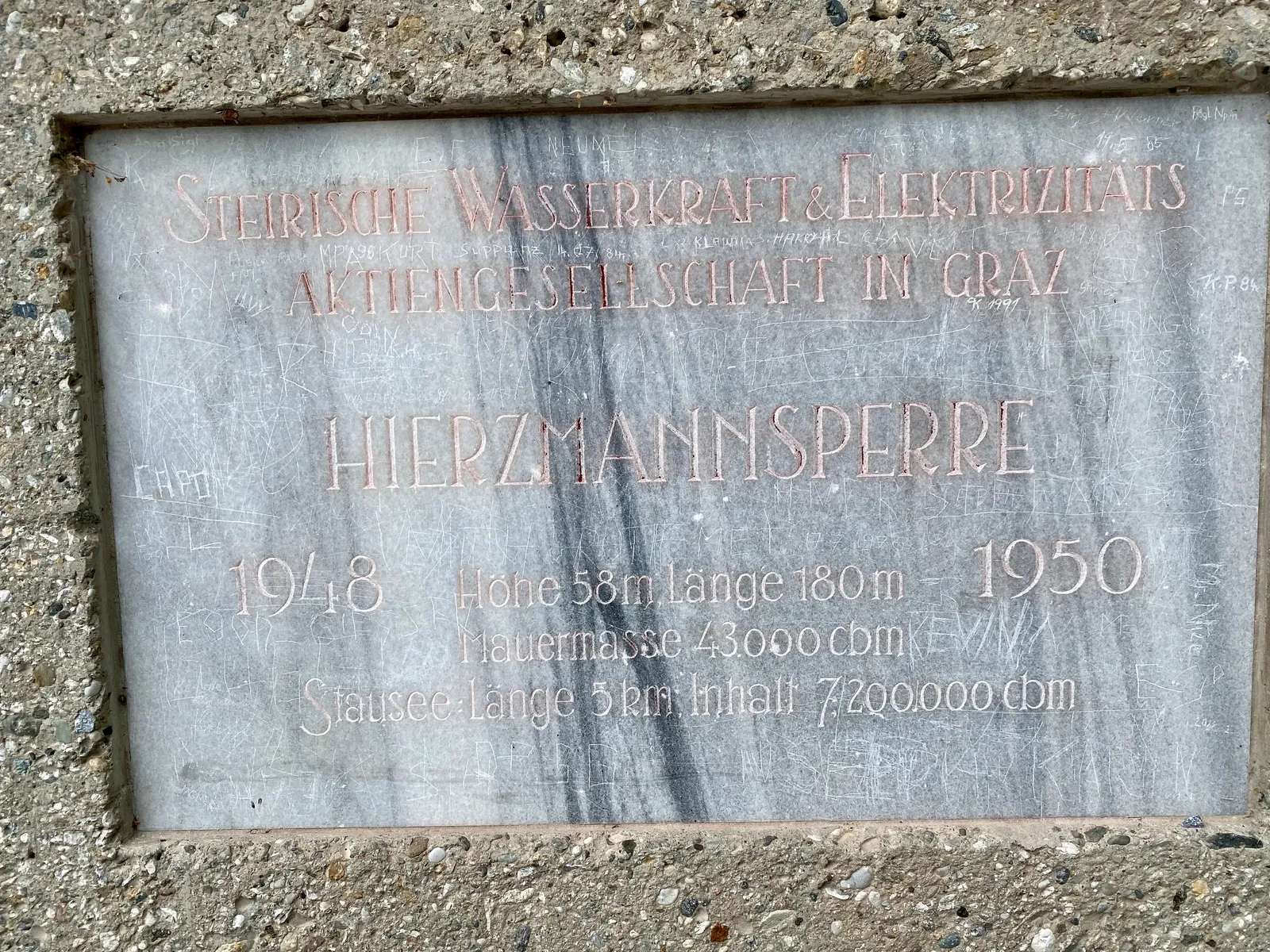
The Hirzmann reservoir, also known as Speicher Hirzmann, lies south of Köflach and to the north-east of the Packer Stausee. The dam was built between 1947 and 1950, and at 58.6 m it is the tallest dam in Steiermark.
Until 1964/65 the lake served "merely" as additional storage capacity for the Arnstein power plant. With the construction of the St. Martin power plant, hydropower now generates up to 15,500 megawatt-hours of electricity here each year.
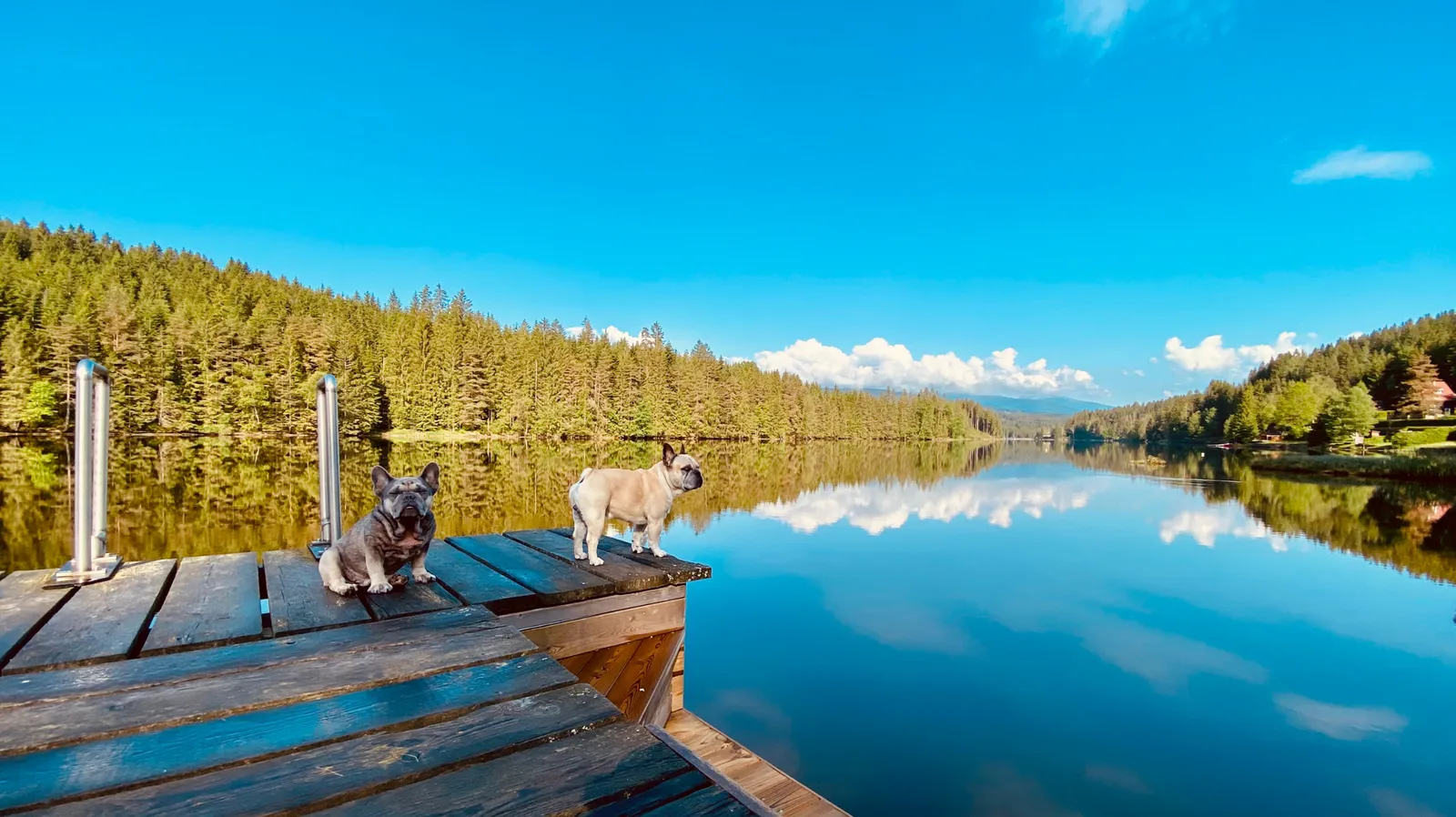
The Hirzmann reservoir is 5 km long and reaches a depth of 47 m at its deepest point. It is a natural bathing lake where both fishing and rowing are permitted. Dogs are in principle welcome too, though not on the public bathing jetty, which is located in the north-eastern area.
There is also a loop around the reservoir. It takes roughly 2.5 hours, covers 7.84 km and has 26 metres of elevation gain. Here is the link to Bergfex for the longer tour.
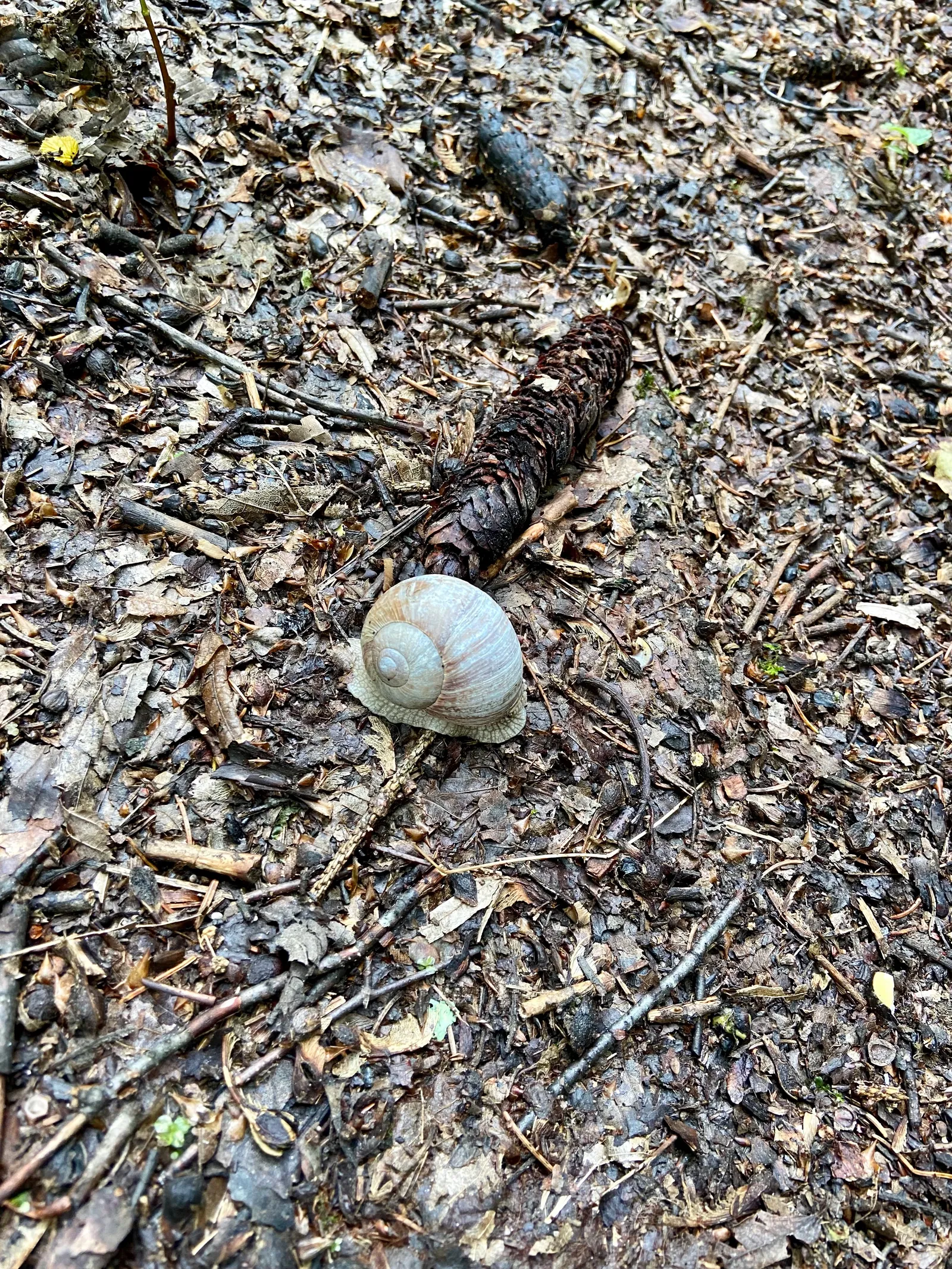
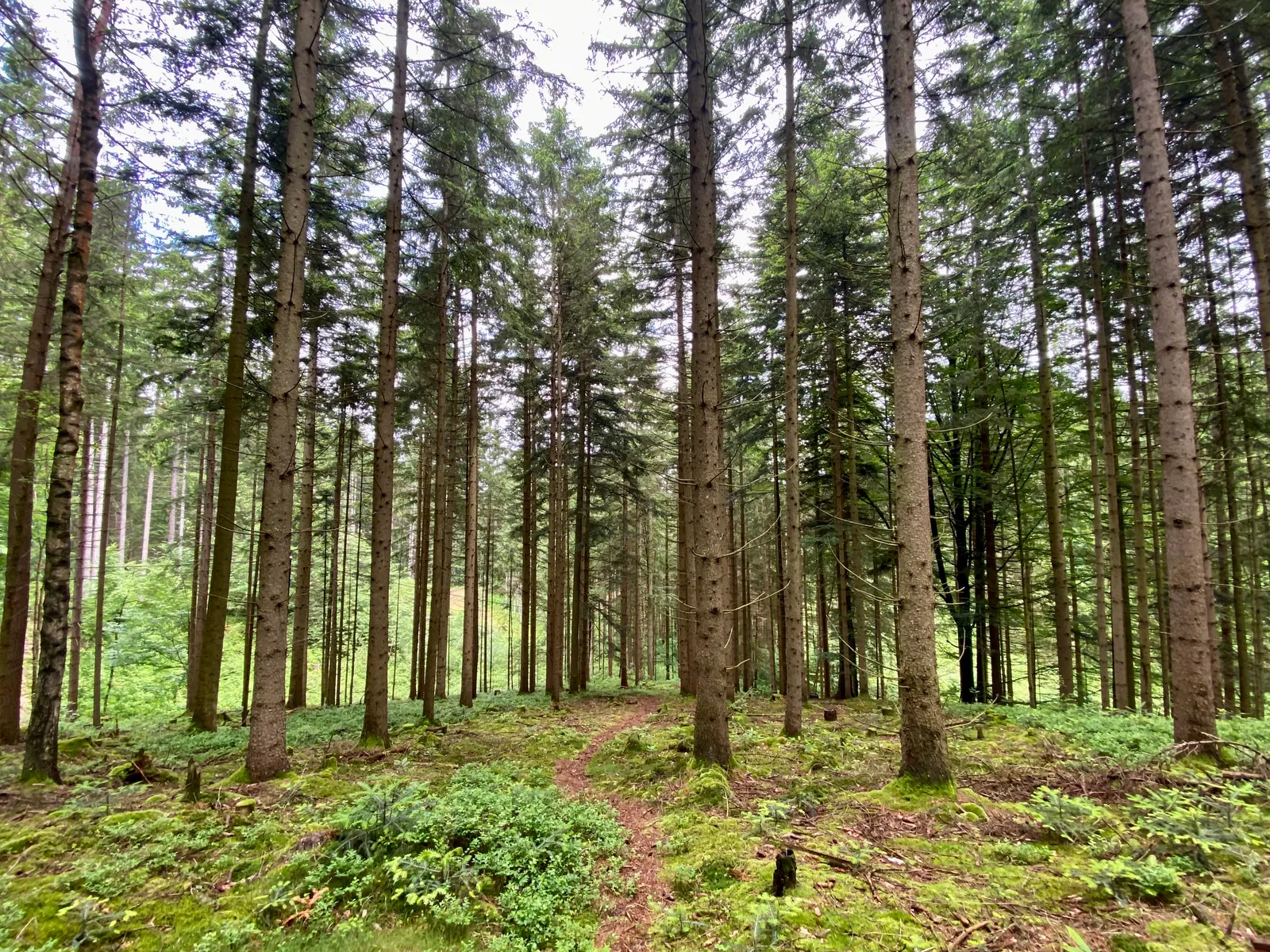
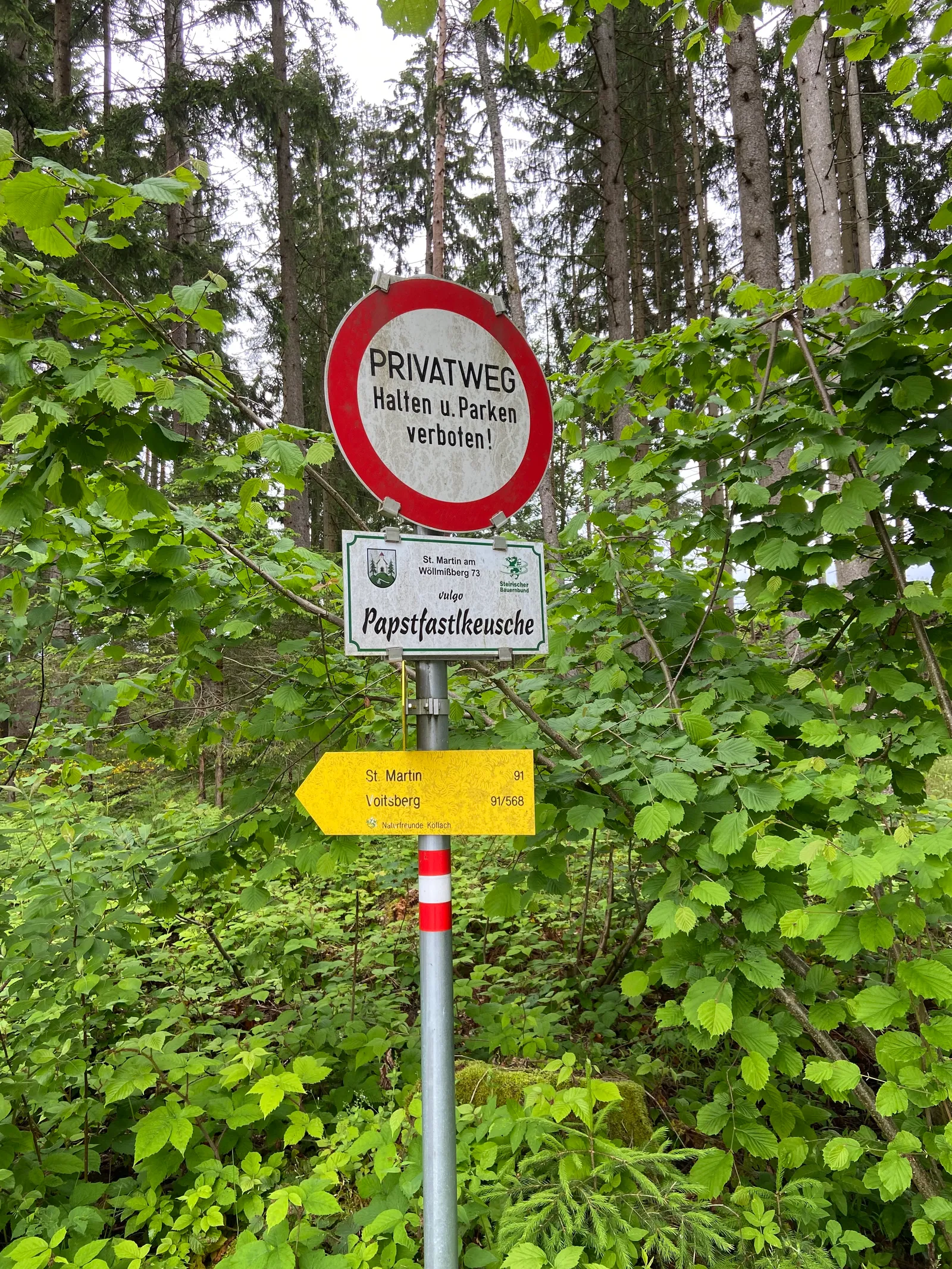
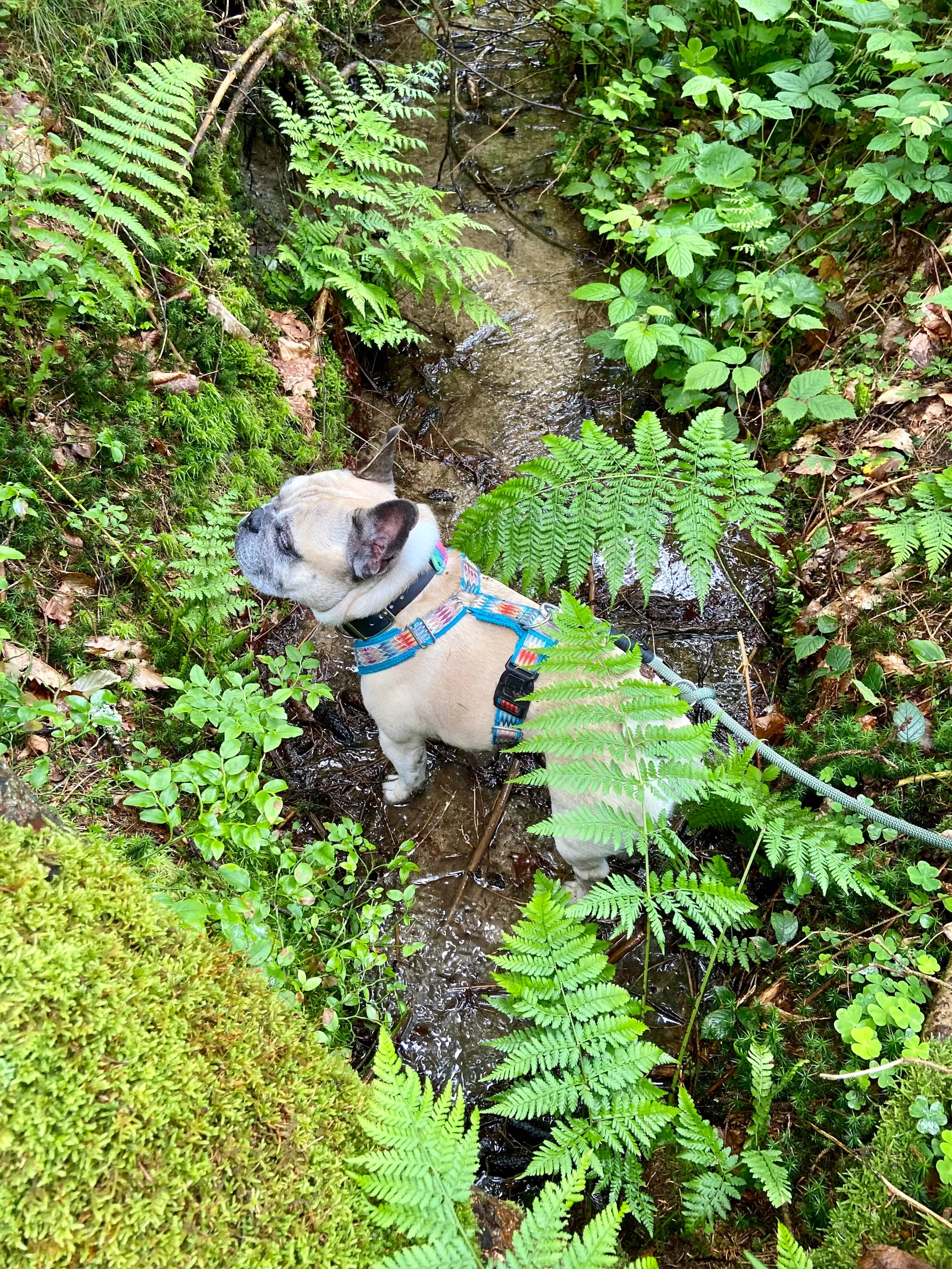
The Anton Wildgans circular trail
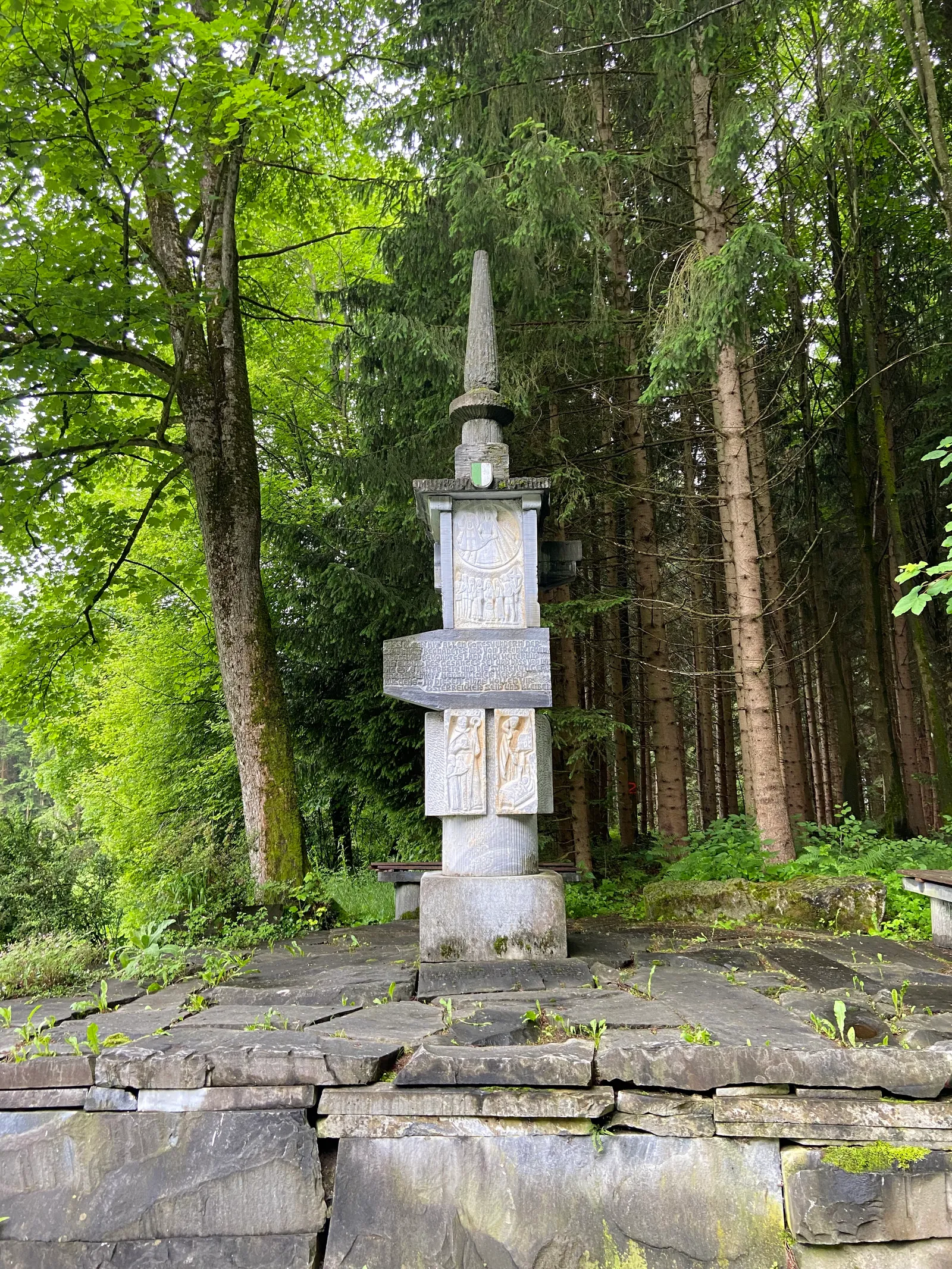
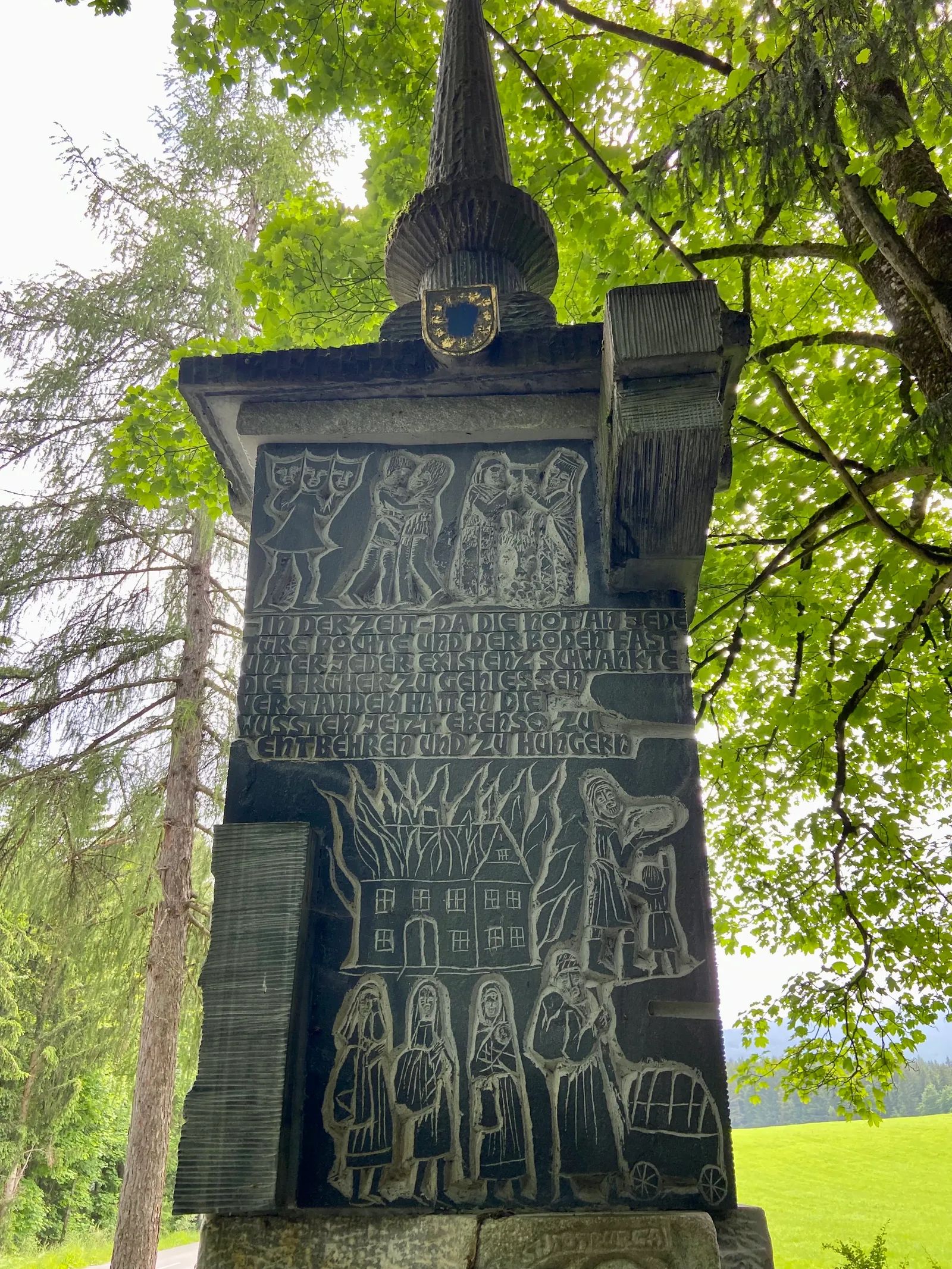
As mentioned above, we opted for a shorter loop. And it starts at the Anton Wildgans memorial.
Who was Anton Wildgans?
He was an Austrian poet, playwright and essayist whose poems, plays and essays left a significant mark on Austrian literature and contributed to the cultural and intellectual landscape of his time.
In St. Martin am Wöllmißberg he wrote parts of his work Kirbisch, which is why the circular trail bears his name.
Anton Wildgans was born in 1881 into a prosperous Viennese family and was part of the Viennese literary circle known as the Jung Wien movement, which included prominent writers and intellectuals such as Arthur Schnitzler and Hugo von Hofmannsthal. He received several literary prizes and honours for his contributions to Austrian literature. In 1927, for example, he was awarded the Grillparzer Prize.
Anton Wildgans died in Vienna in 1932 at the age of 50. His literary works are cherished for their lyrical beauty, perceptive observations and contributions to the Austrian language.
Our verdict on the tour
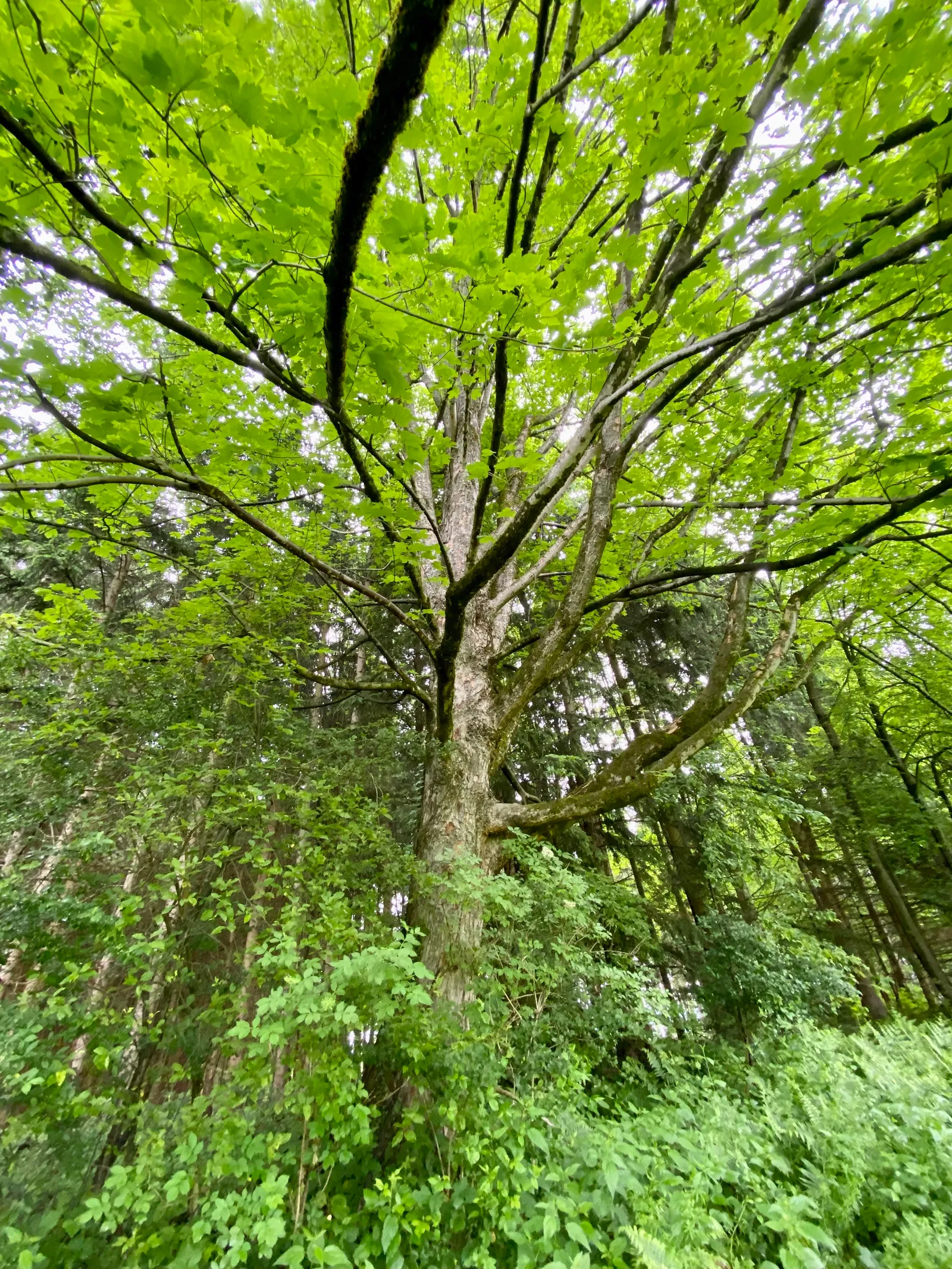
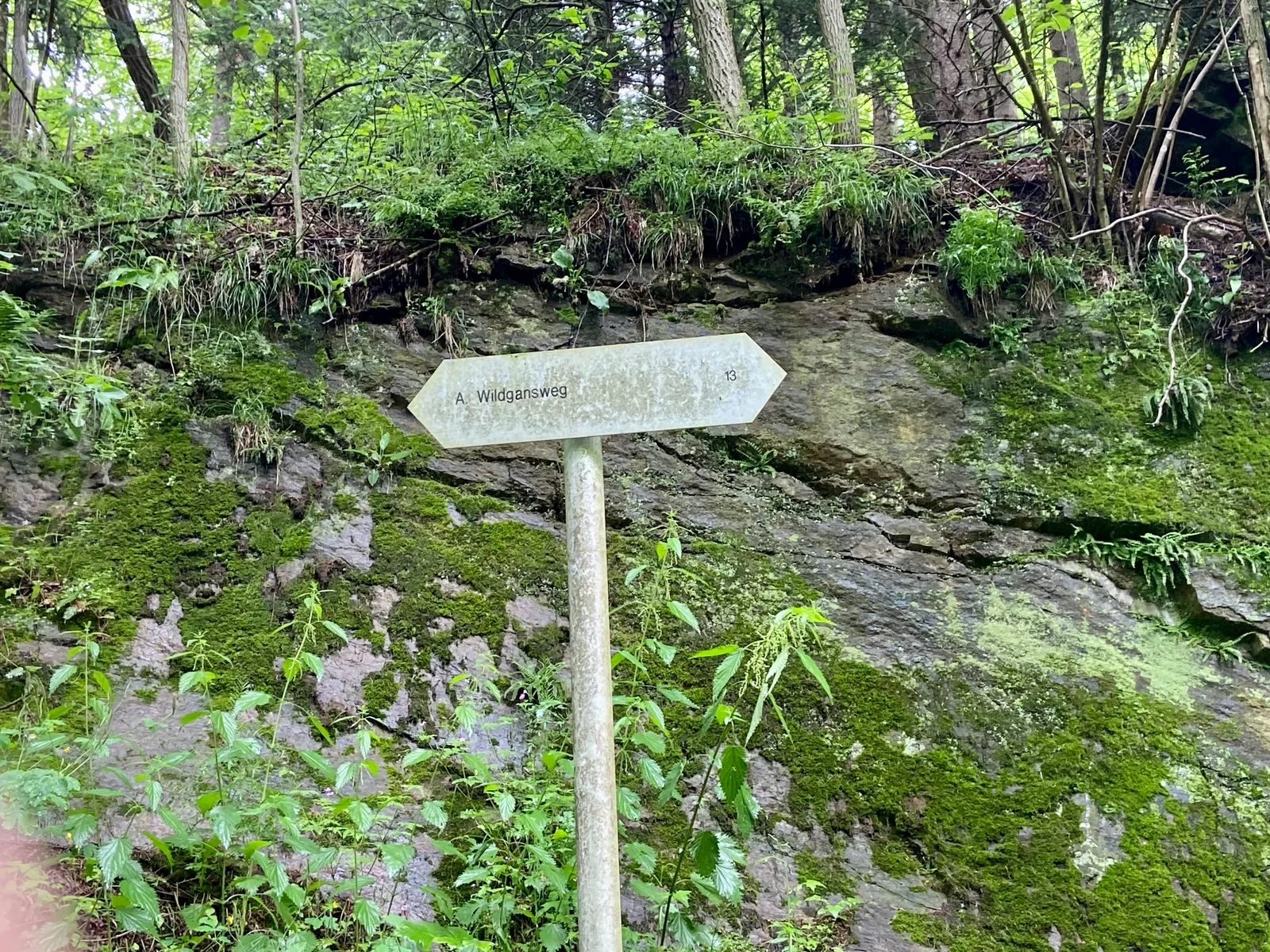
We walked a lovely, varied, easy route here that takes you through the forest to hiking trail 13, which in turn led us to the reservoir. The dogs can cool off here while we enjoy a break by the water.
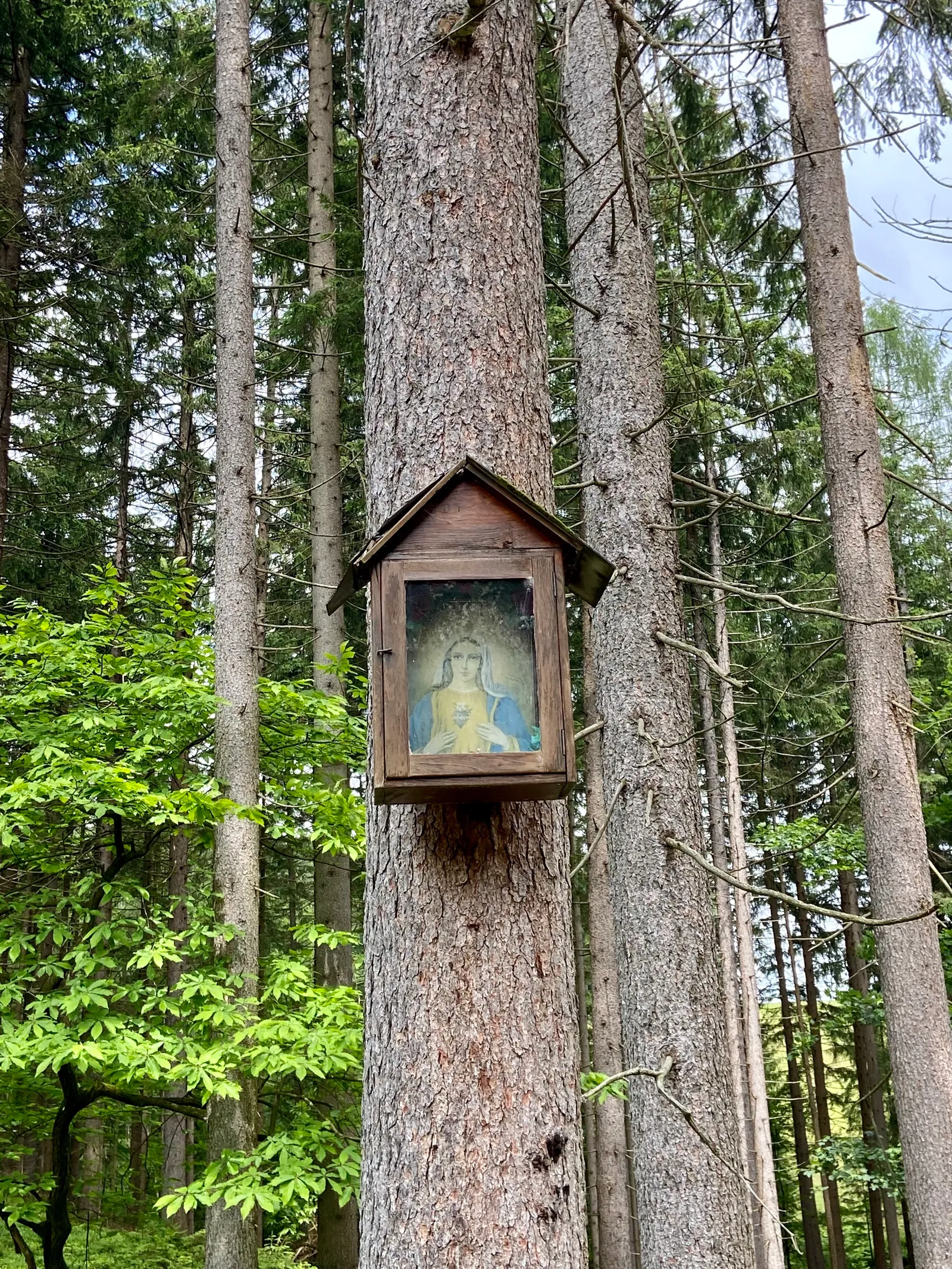
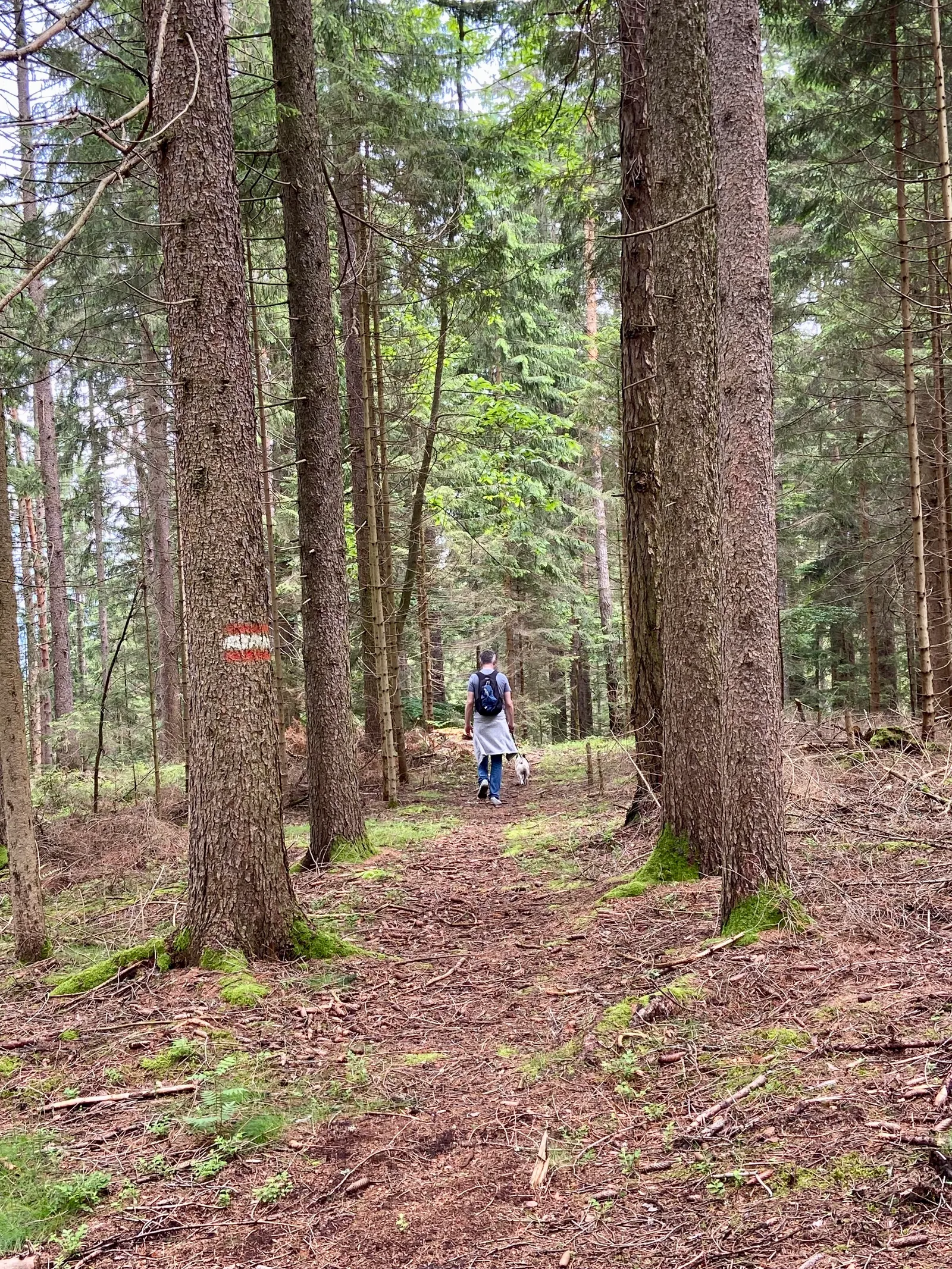
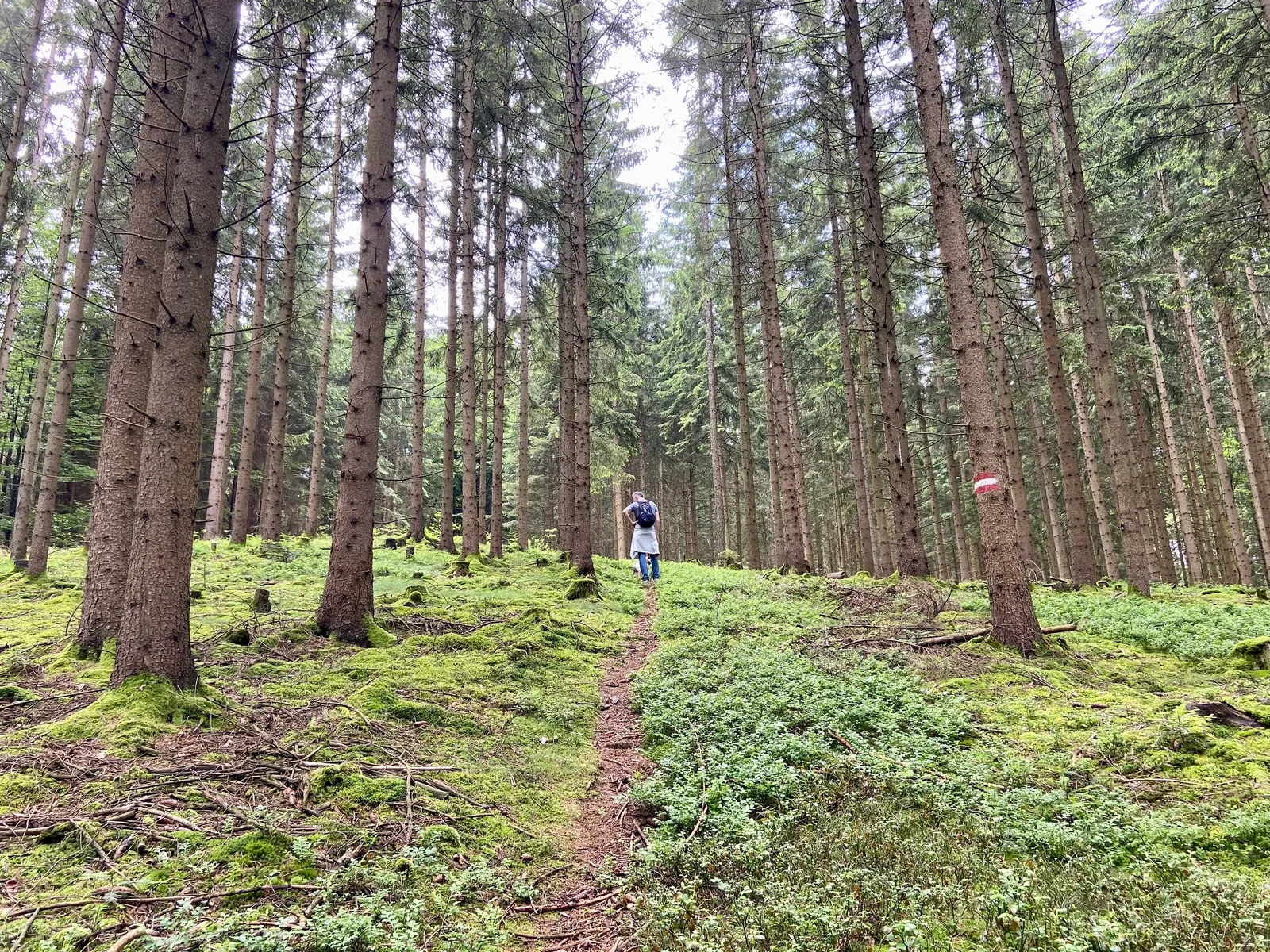
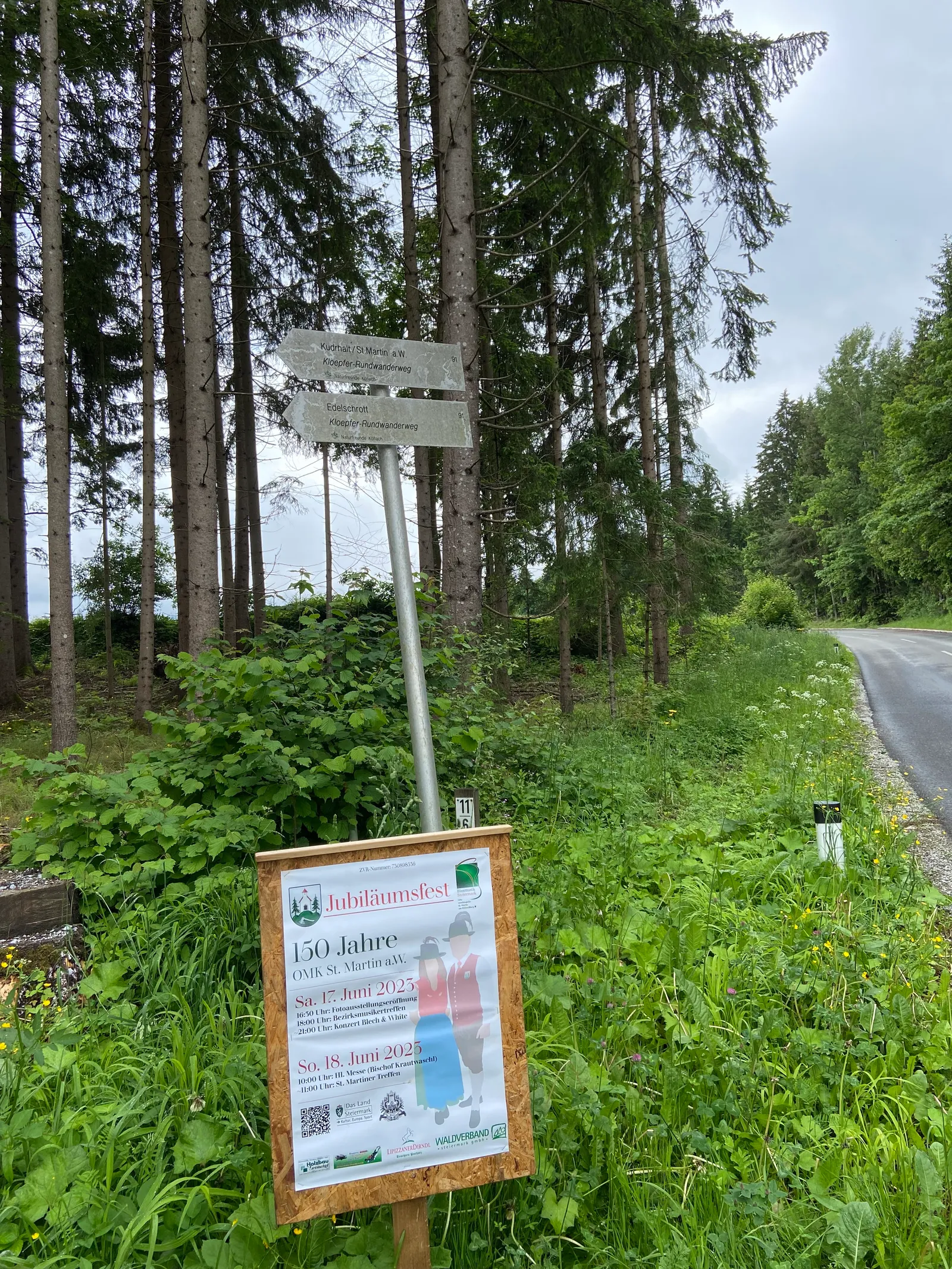
We then follow the circular route and turn right off the gravel road, following the path through the forest until we reach St. Martiner Straße. We walk a short stretch along this road to the signpost that sends us left into a beautiful, tall woodland.
After the first bend stands an old farmstead, where an elderly man and his cats greet us warmly. A little further on we find ourselves in front of a gate that is firmly shut. We fiddle around with it until we realise that the path beside the paddock is overgrown but still passable.
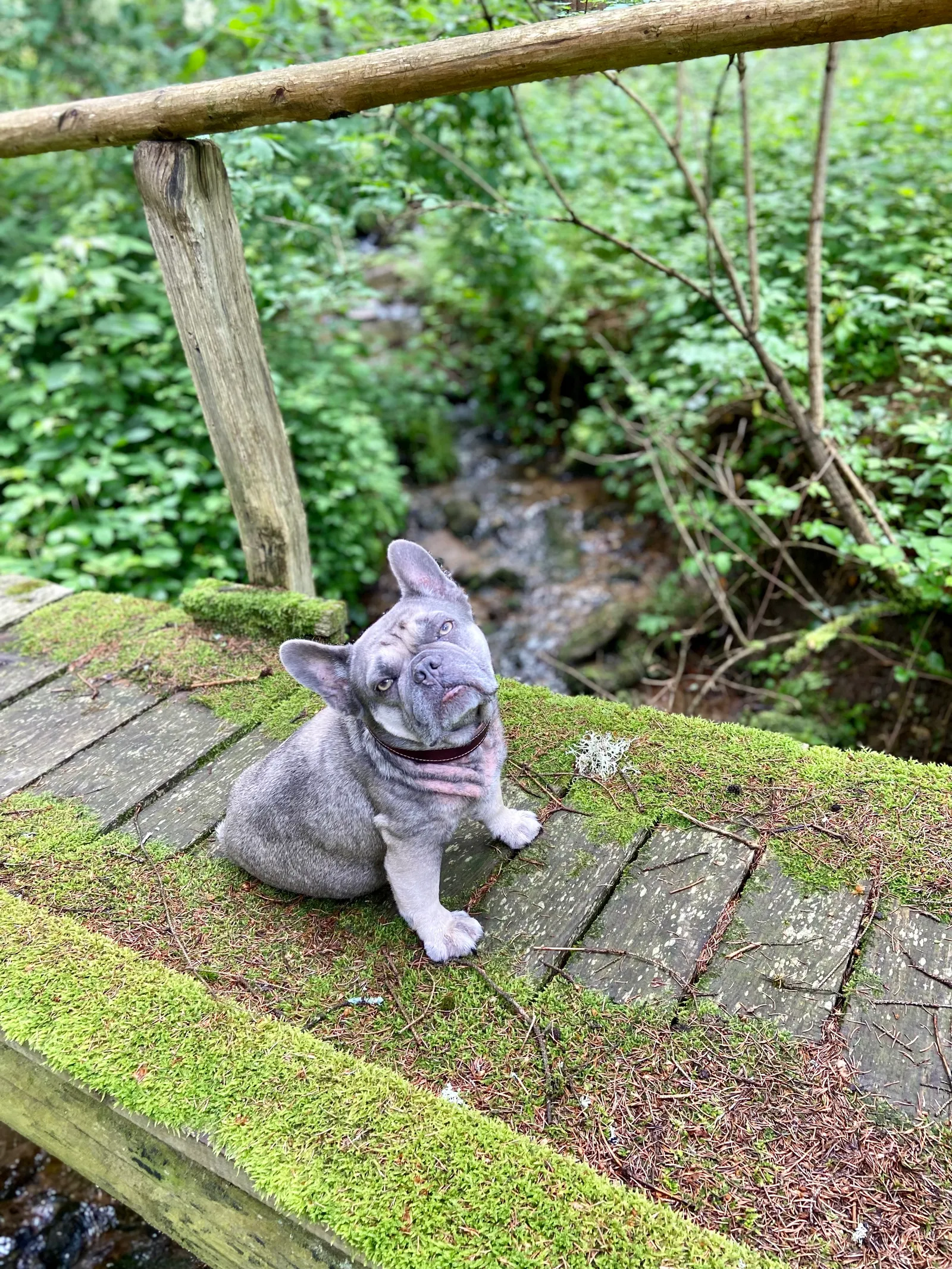
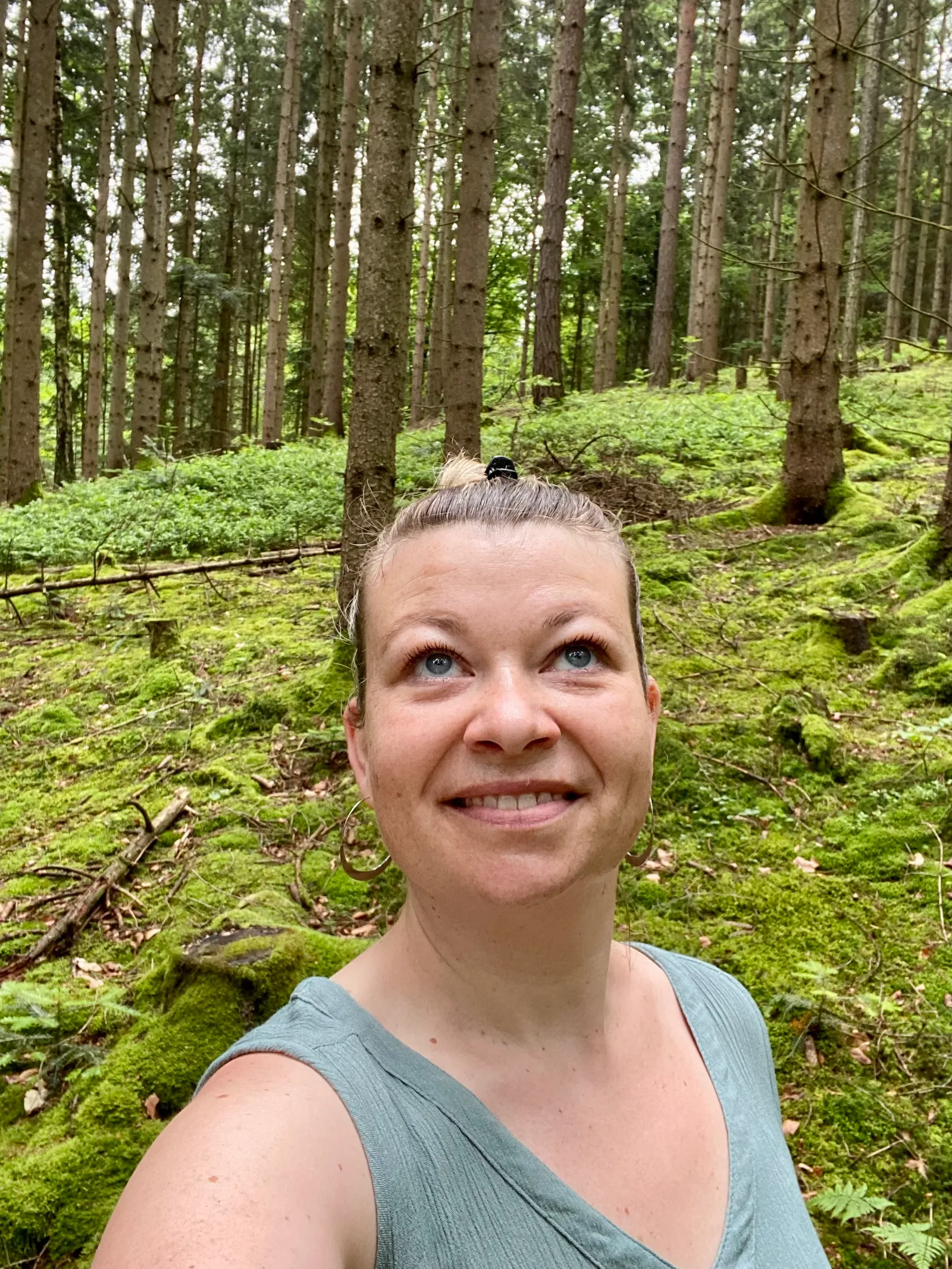
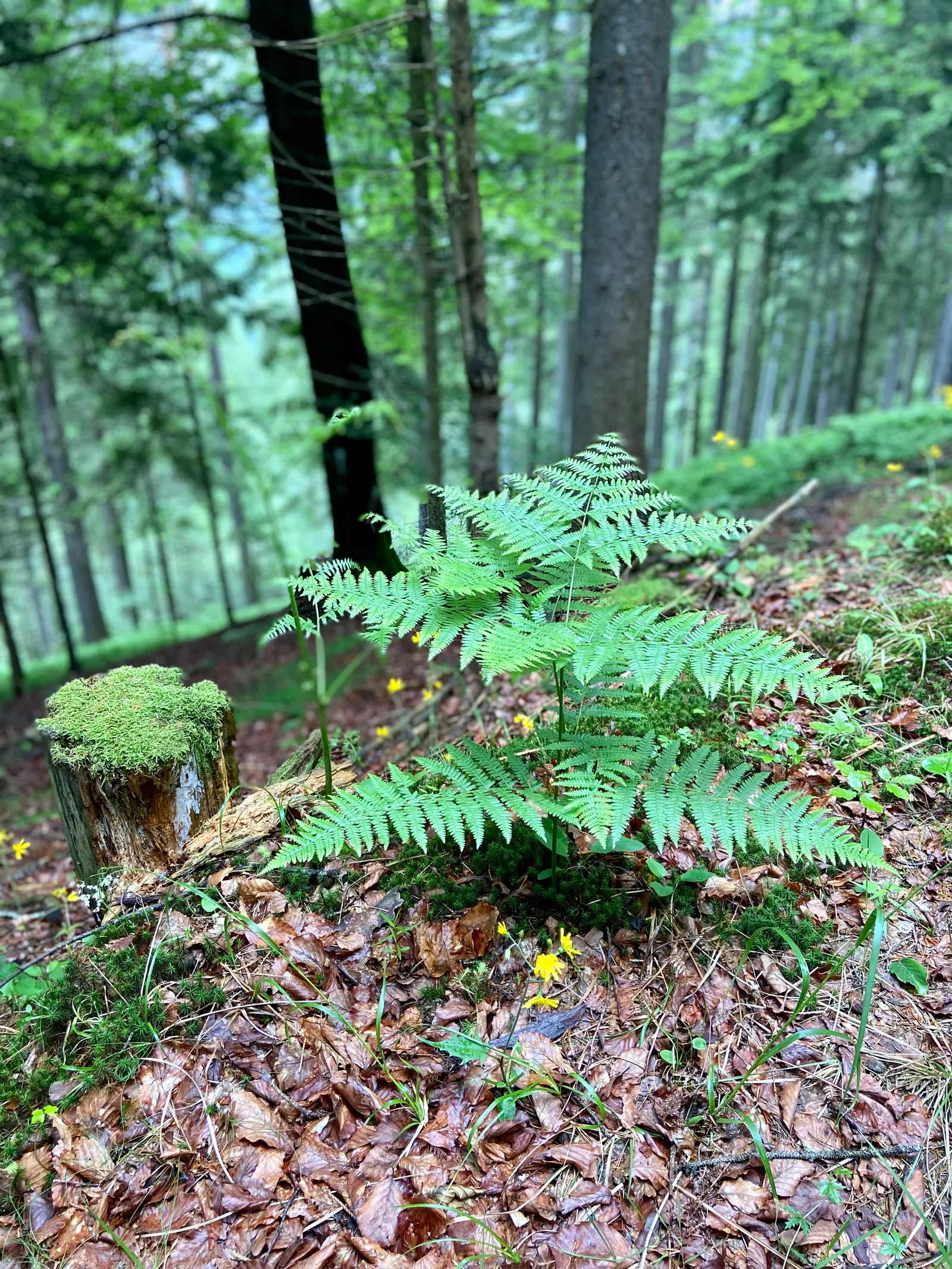
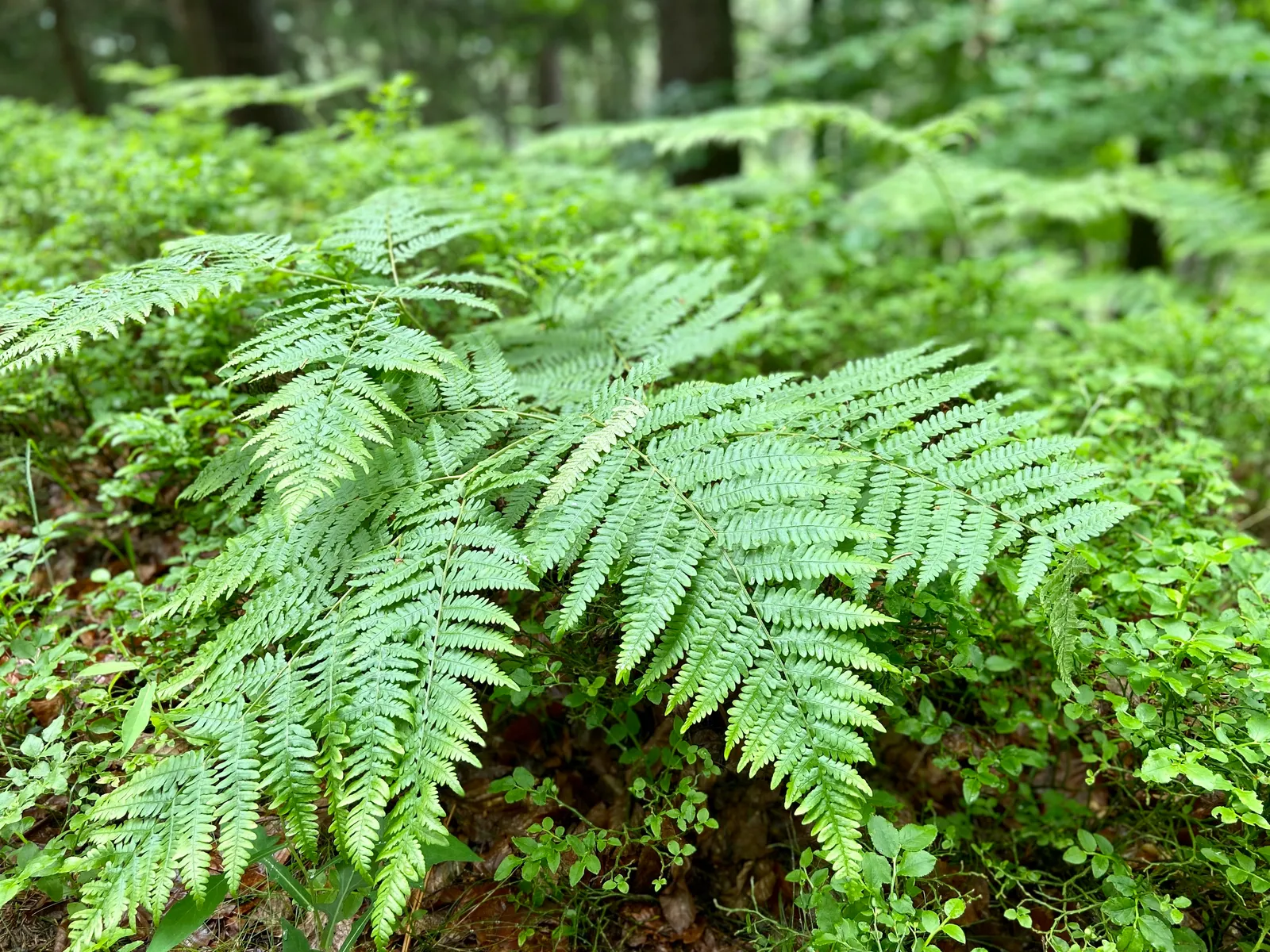
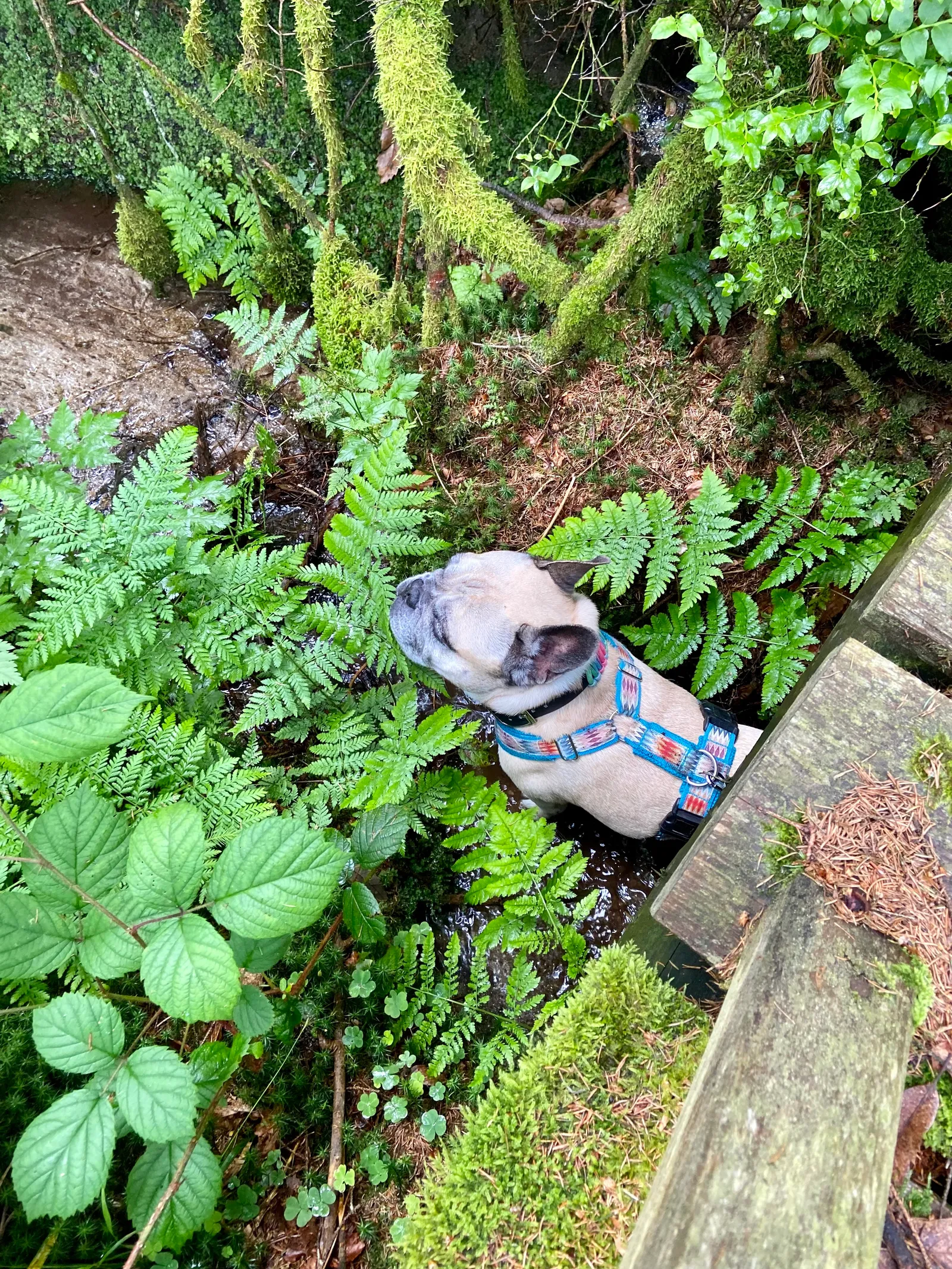
The remaining kilometre leads us, well signposted, through the dreamlike, peaceful green of the forest, complete with a little stream for Murphy and Archie to cool off in.
Outlook
In the next post I'll tell you about our day trips to Wolfsberg, St. Andrä and Burg Voitsberg, as well as our Piber loop walk.