
[Advertisement - Sponsored Post]
I was invited by wellness vet Verena Senoner and dog trainer Alexander Minnich to attend a seminar on Medical Training at the newly founded Forum Waldegg. So at the end of January I headed to the Piestingtal to hear Elke Grablechner from the Animal Training Center.
The Venue and the Speaker.
Forum Waldegg is set slightly apart at the edge of the forest and is the passion project of Verena Senoner and Alexander Minnich. They have created a home there for themselves and their animals, and also want to offer talks and seminars on various topics for those interested.
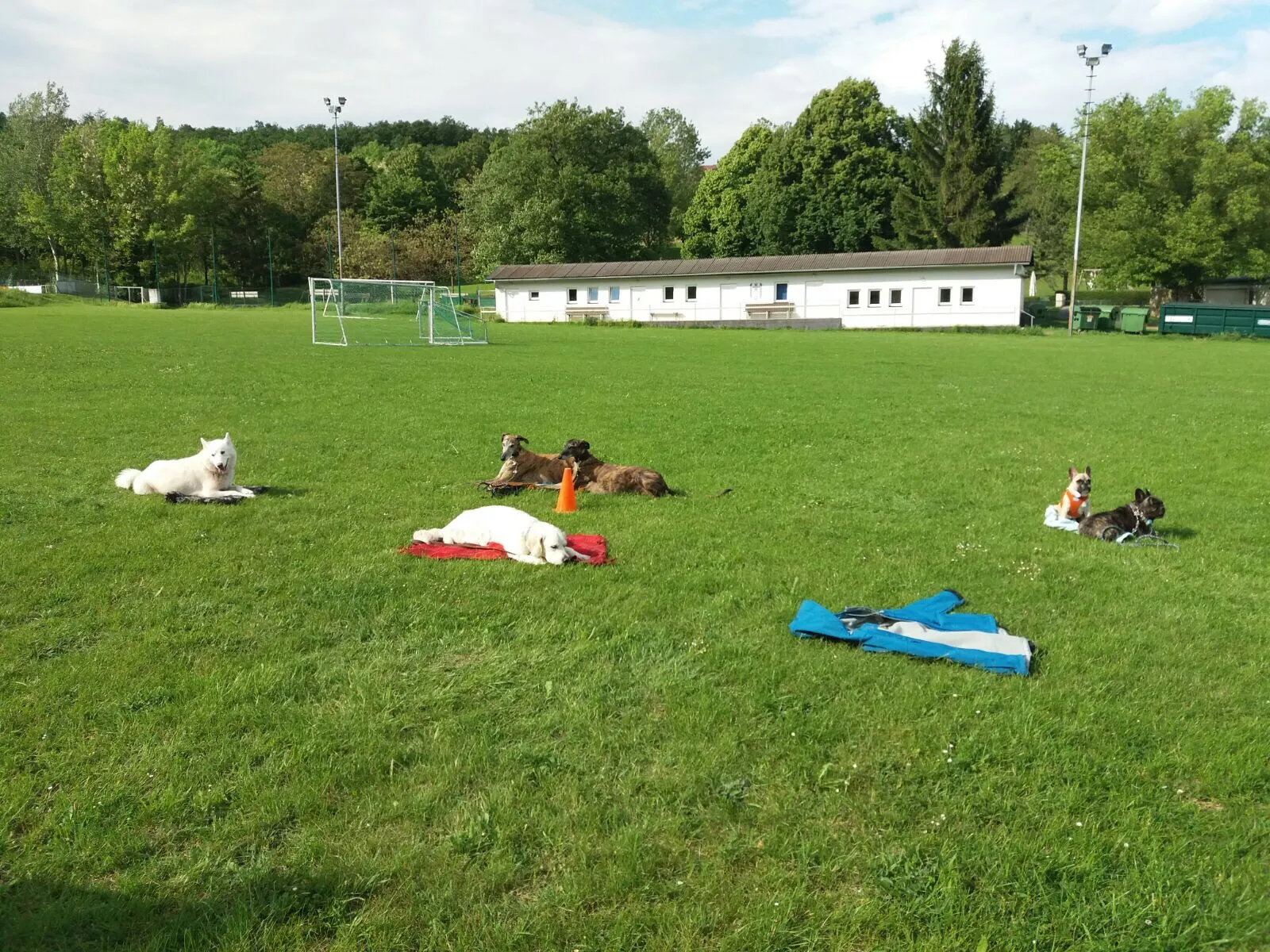
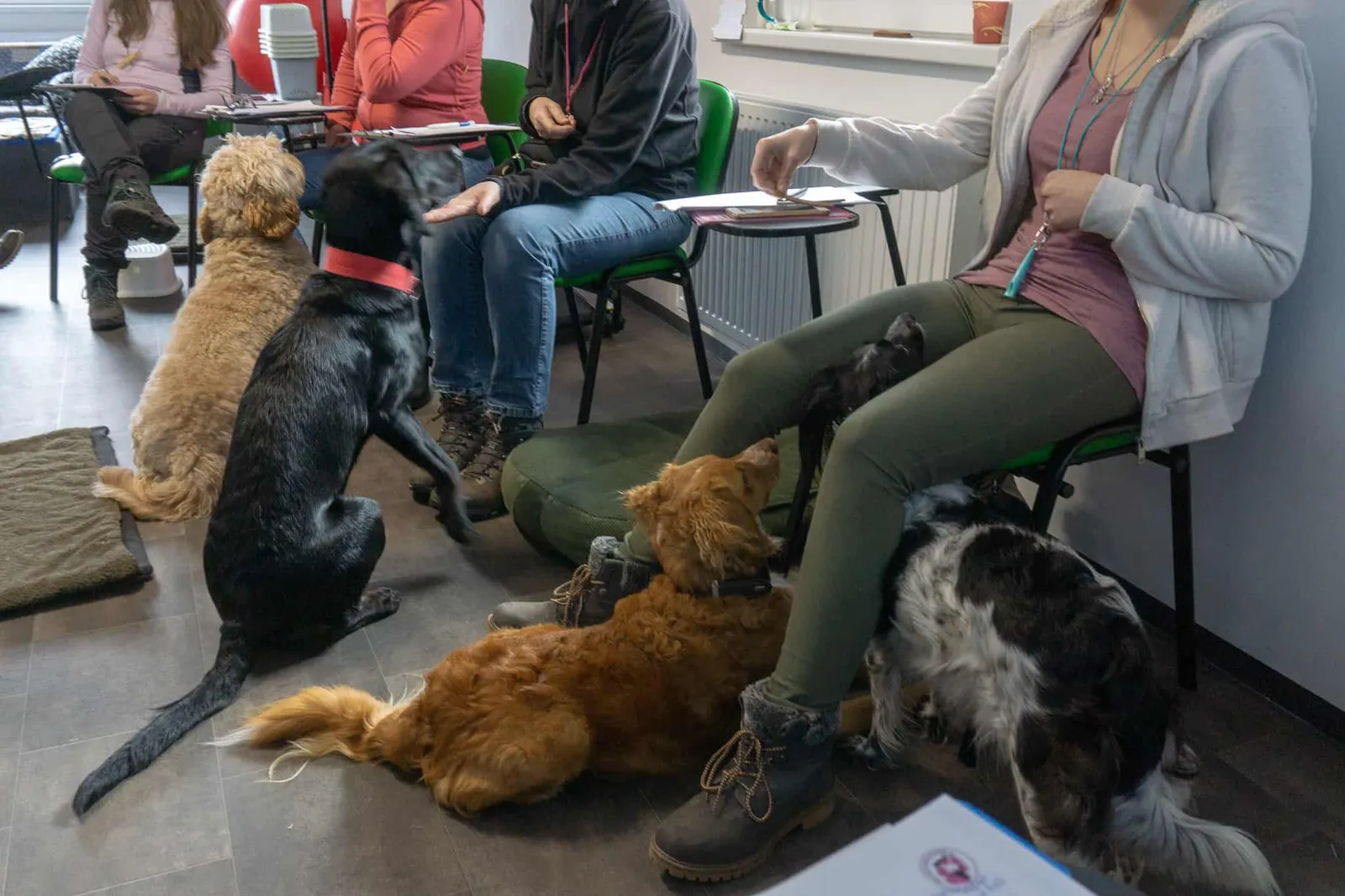
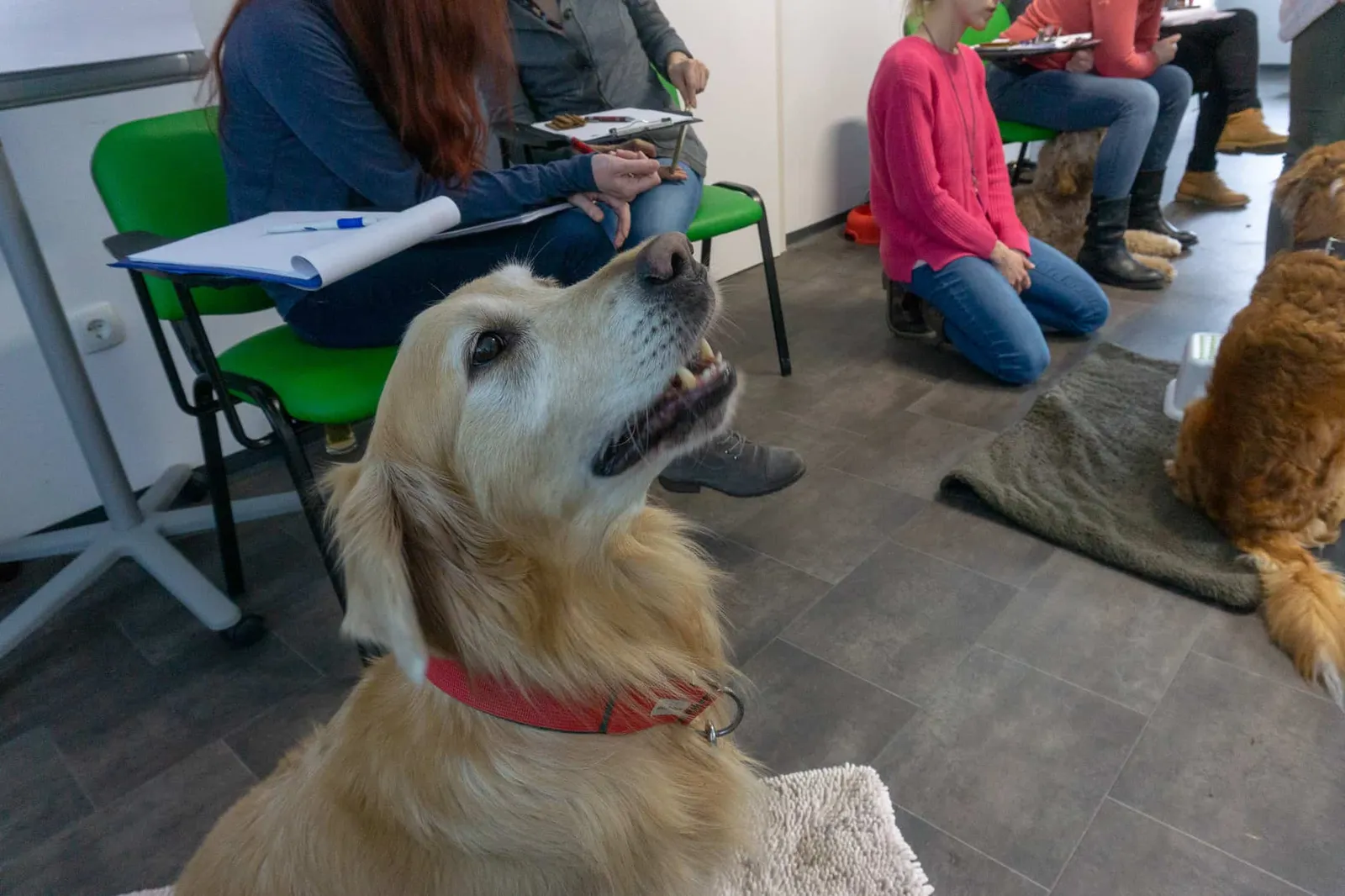
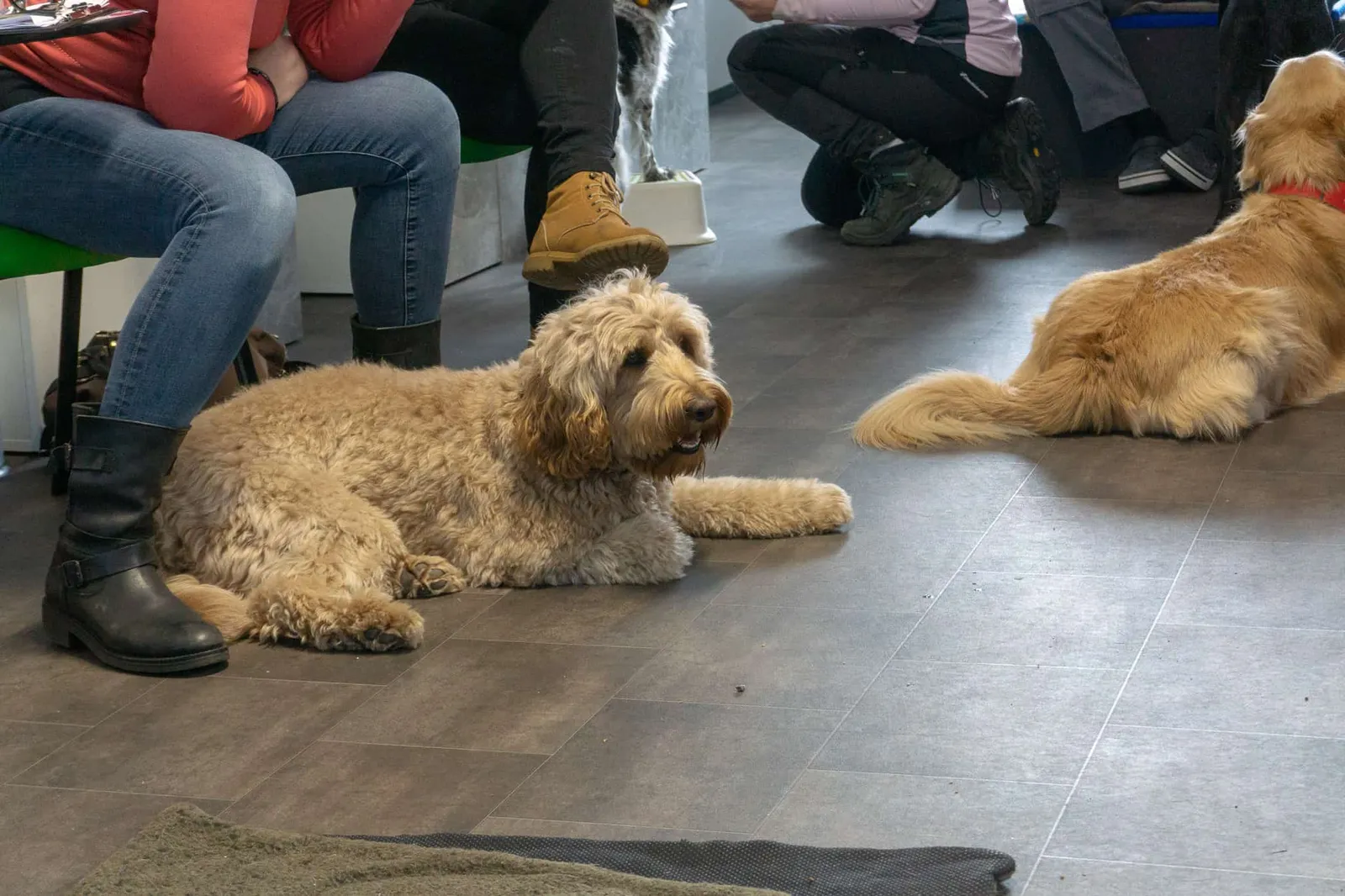
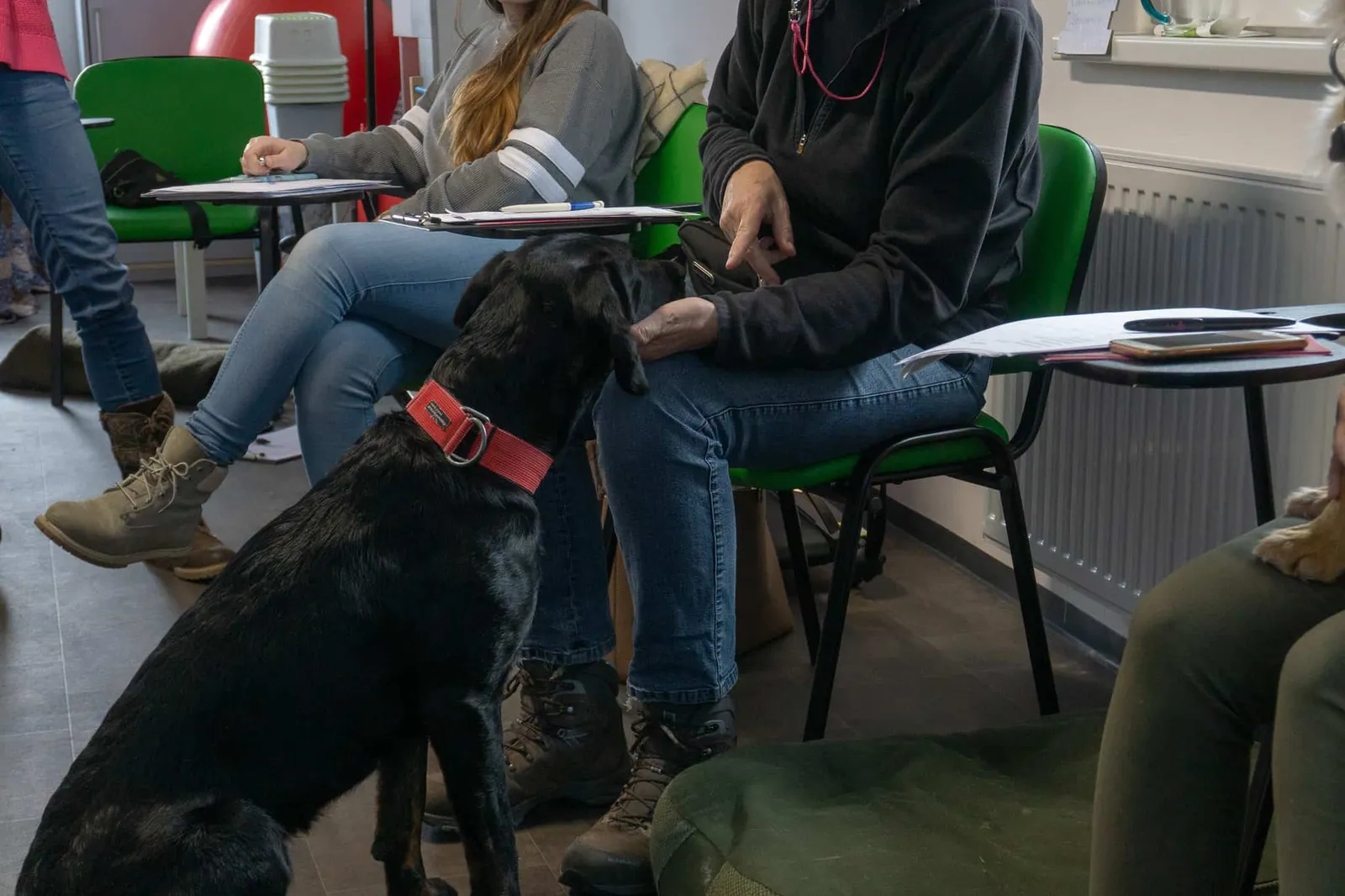
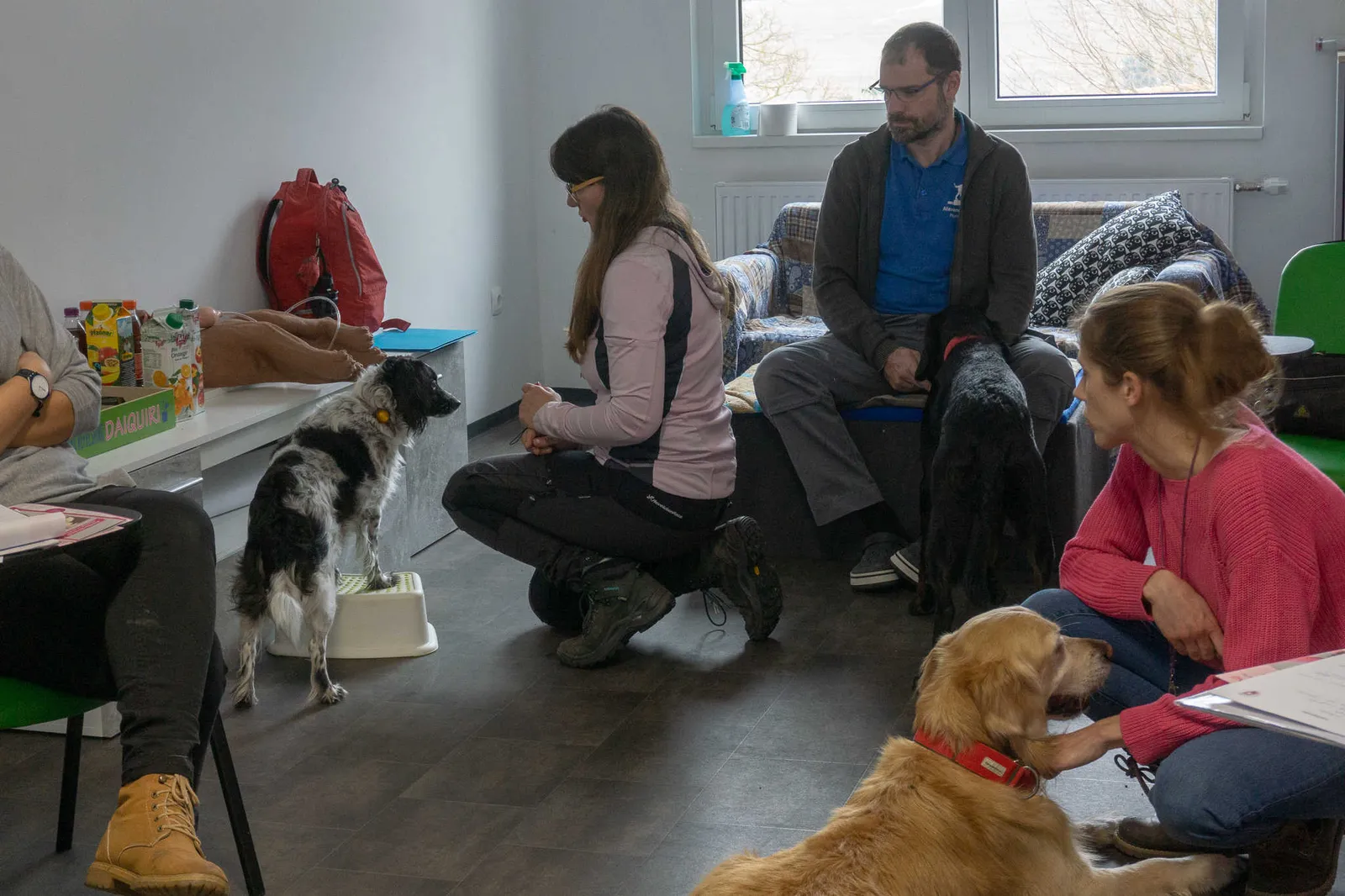
At the entrance I'm already greeted by a furry nose, before Alexander leads me to the newly renovated seminar room, where I find myself a seat. The atmosphere is pleasant, and the participating dogs feel very much at home too. Refreshments are also provided during the breaks.
Our speaker, Elke Grablechner, studied behavioural biology, works as an animal trainer for film productions, and since 2014 has been working as a certified animal welfare dog trainer at the Animal Training Center, specialising in therapy and assistance dogs (diabetes). She also contributed to the handbook "Medical Training", published by Cadmos Verlag.
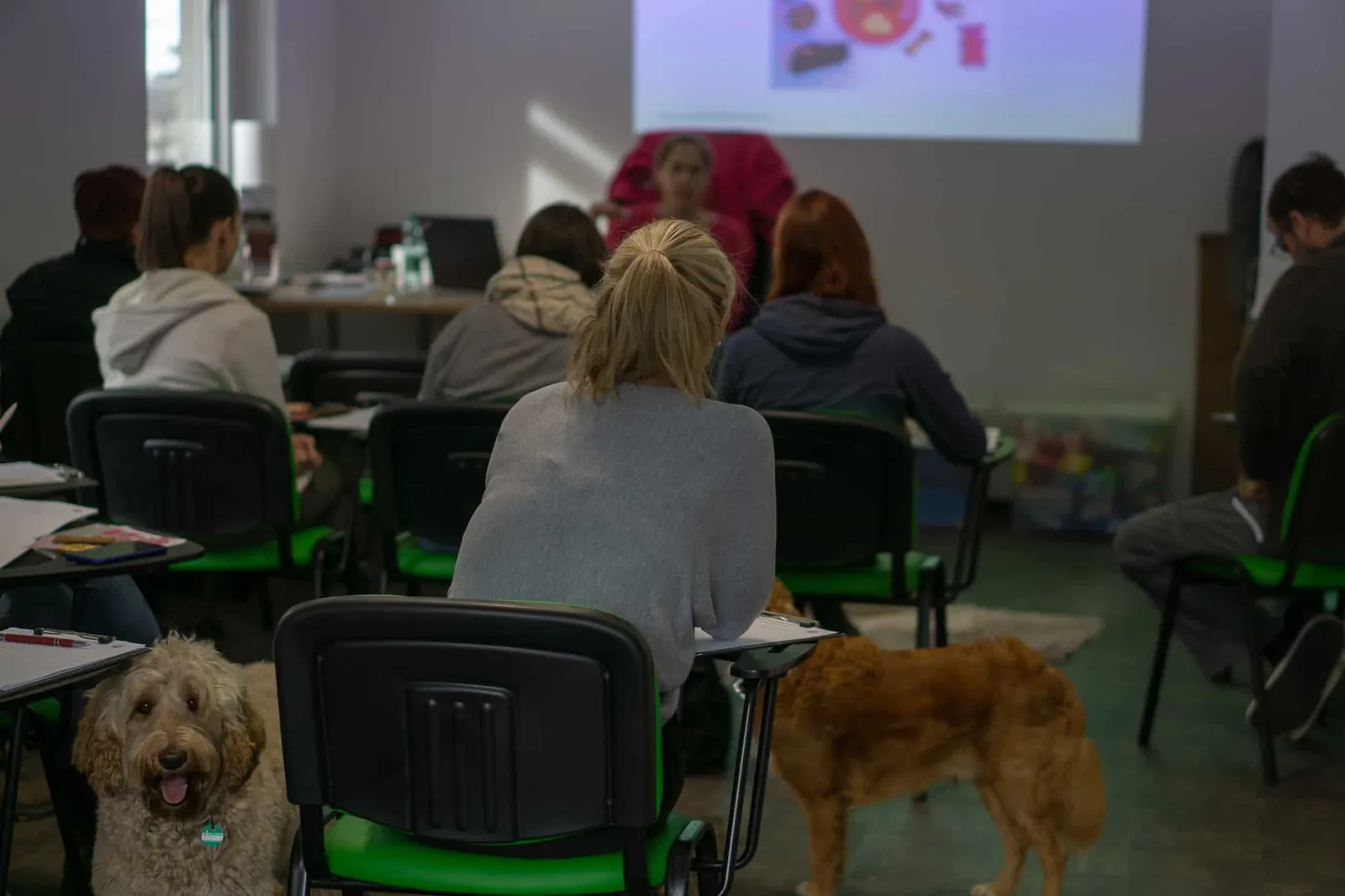
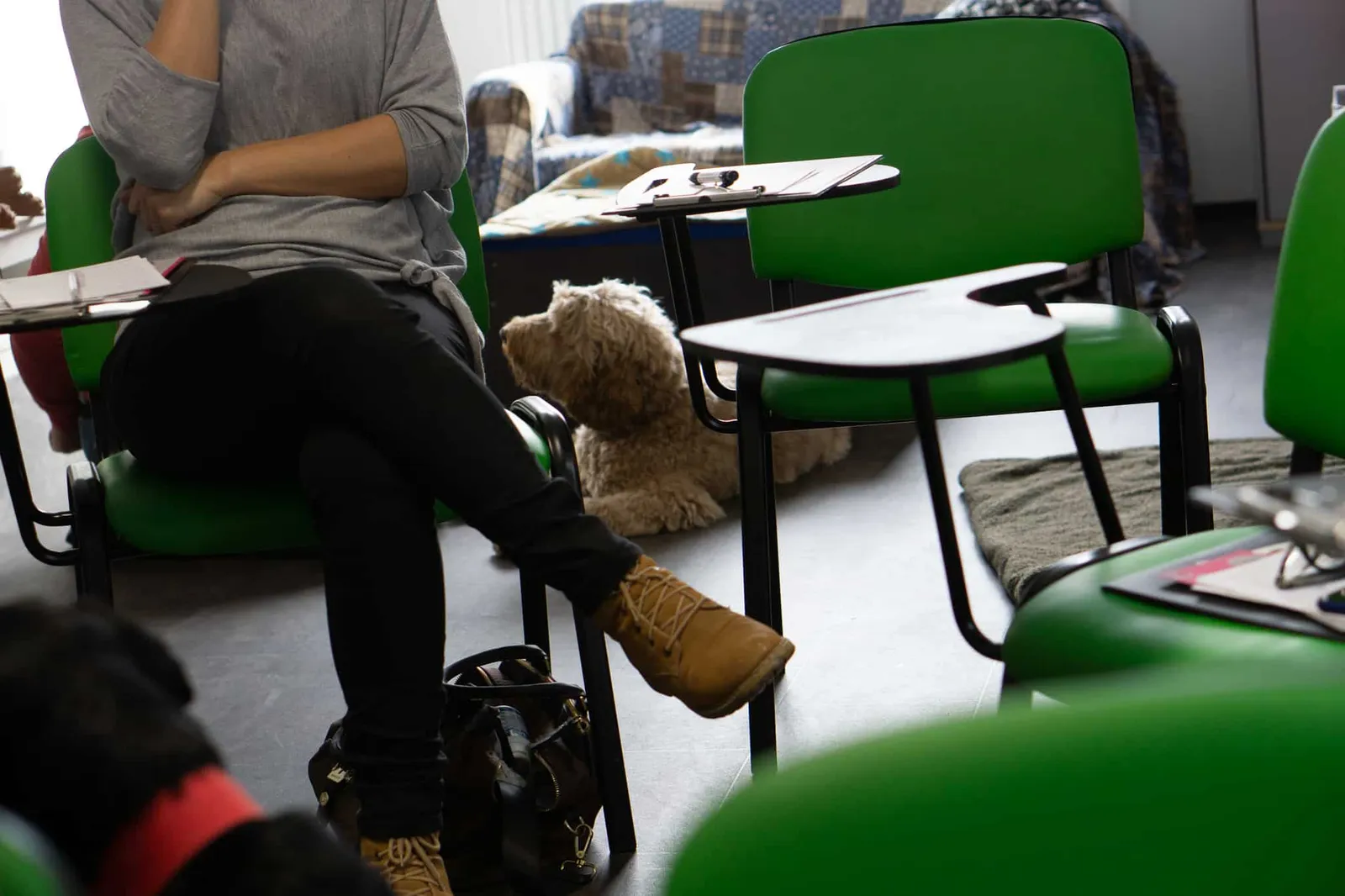
Mastering Grooming and Vet Visits with Confidence!
After a brief round of introductions, Elke starts us off with a video "How not to do it!". Dogs that are visibly uncomfortable during grooming and would much rather escape their situation. In the second clip we see zoo animals presenting their body parts, swallowing tablets voluntarily, having their teeth brushed, and even allowing blood to be drawn. And all of this without restraint and without force.
The 3 Pillars as a Foundation
1. Respect → Self-determination
2. Trust → Connection & Honesty
3. Training → Explanation & Generalisation
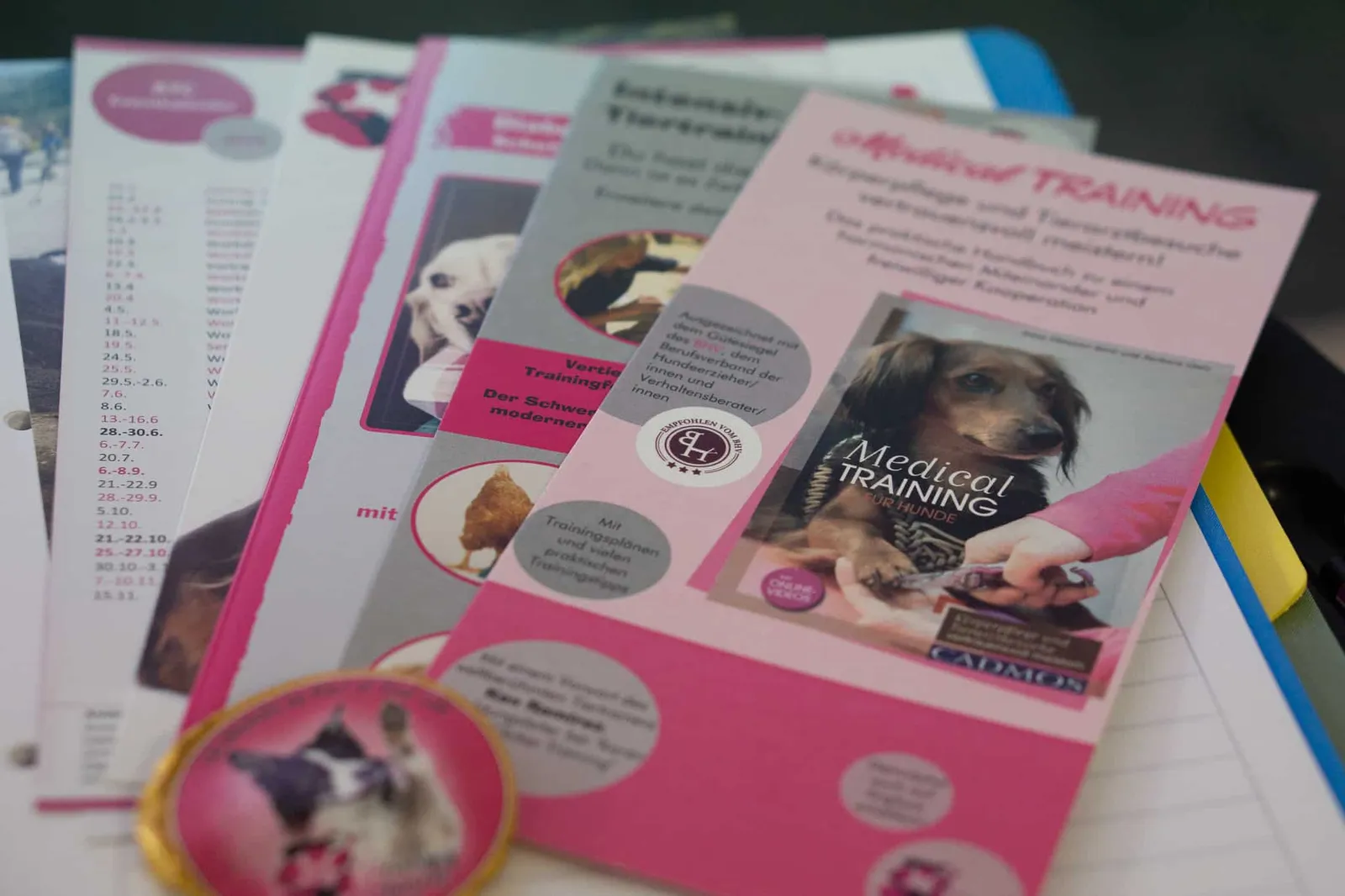
The Toolbox
What we need for training is relatively simple. We need a marker signal!
The requirements are:
- Hands should be free
- It shouldn't be too loud
The best options are therefore a marker word or a whistle. The clicker can be too loud for many dogs, and you also don't have both hands free.
Fantastic treats are used as reinforcers, and environmental reinforcers are also brought in as an additional reward, such as ending the session or leaving the vet's practice. Performance and situation should always be taken into account, and for special progress, a jackpot reward is in order ;)
Grooming measures are never self-rewarding, so you should always work with reinforcers.
Elke Grablechner
Brushing can certainly be self-rewarding for some animals. Medical treatments, but also grooming measures, are usually unpleasant or even painful. As a result, no habituation effect occurs in the animal. To achieve reliable cooperation, it is important to work with particularly good reinforcers.
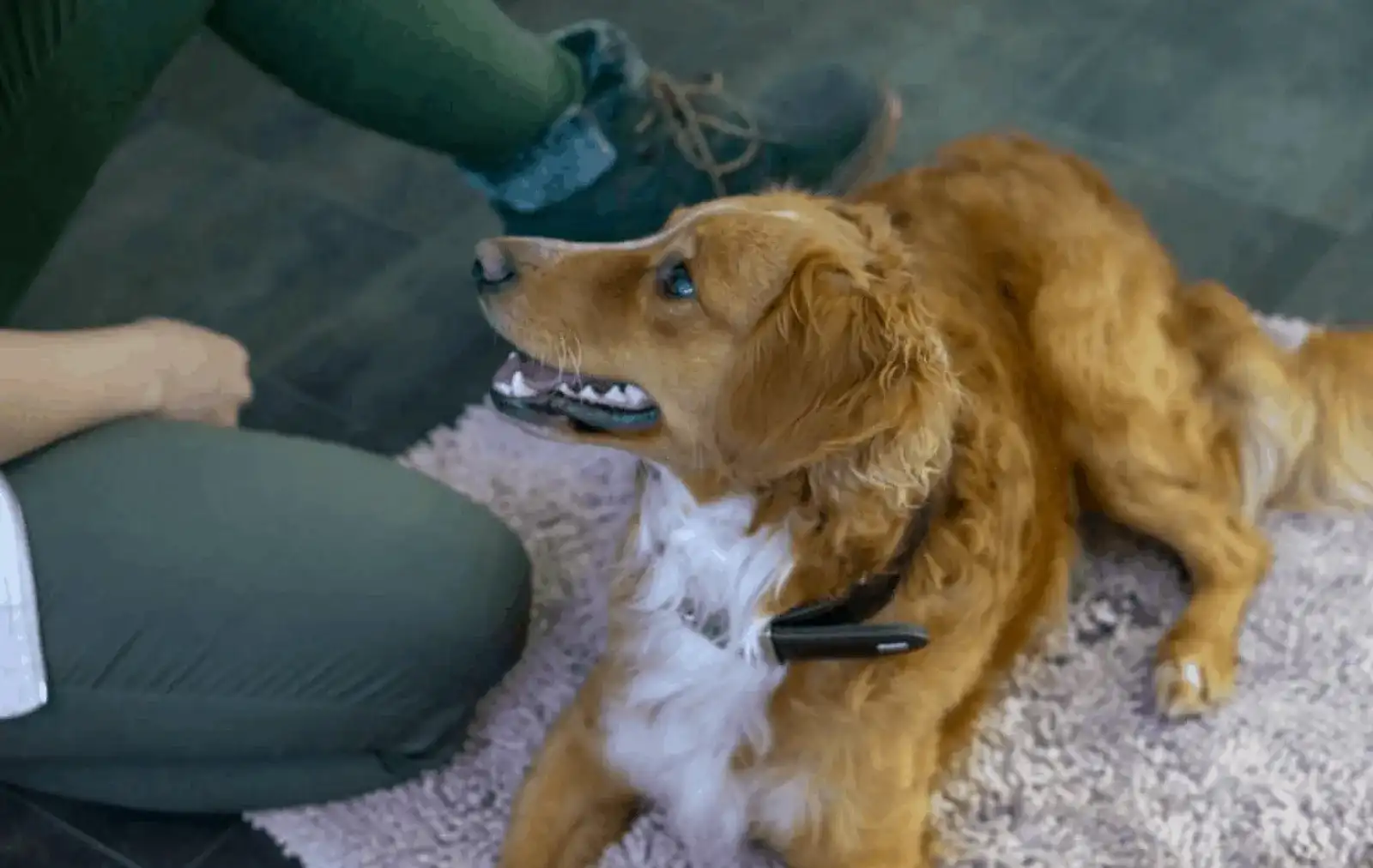
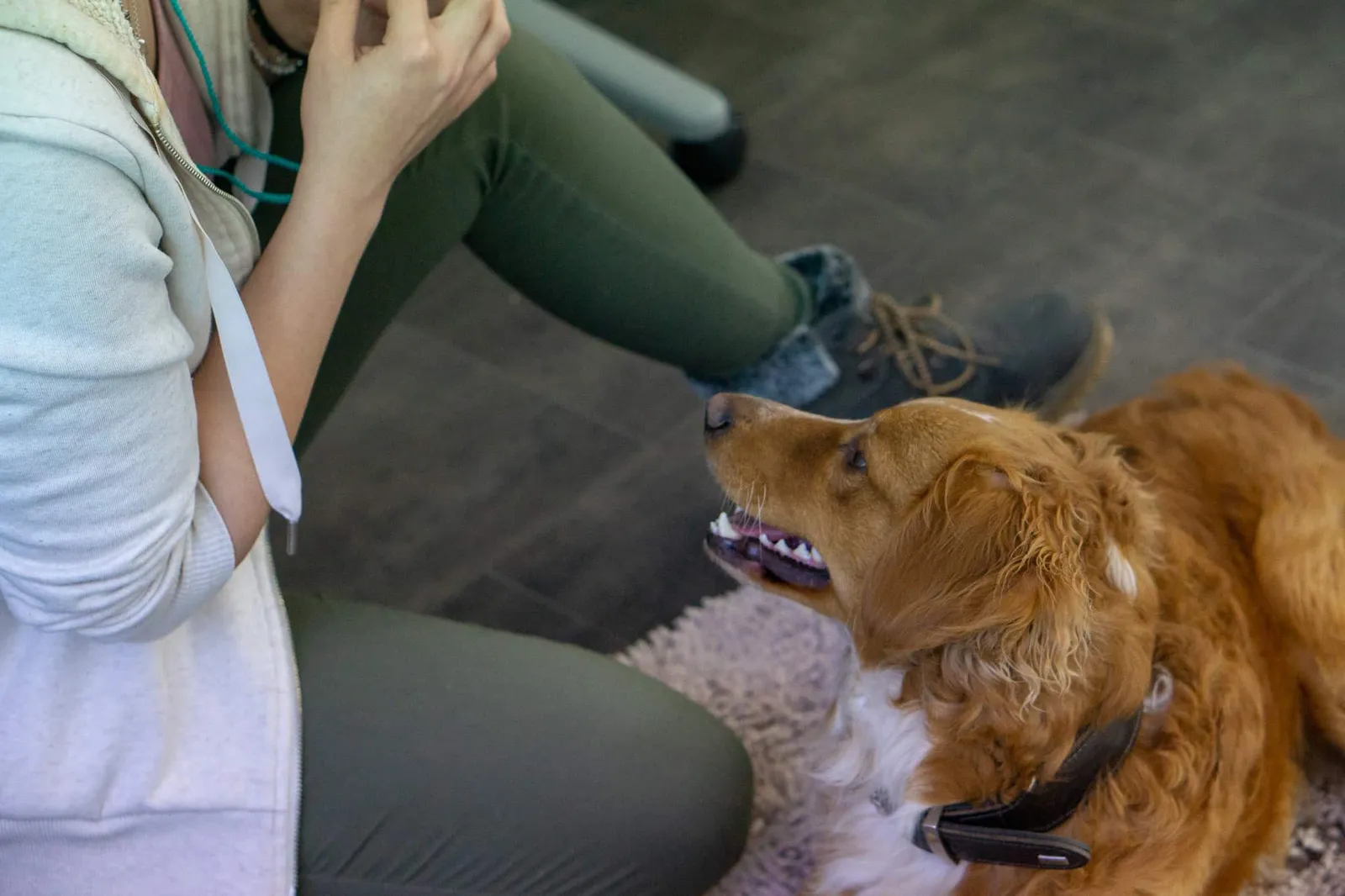
Then the first task is already waiting for the participants with dogs: establishing a calm marker! And faster than expected, both two- and four-legged participants understand what it's about and relax.
Elke also gives us tips on how to build up a conditioned relaxation response. A dedicated blanket, scents, music, chews, or a massage can all be great supports in this.
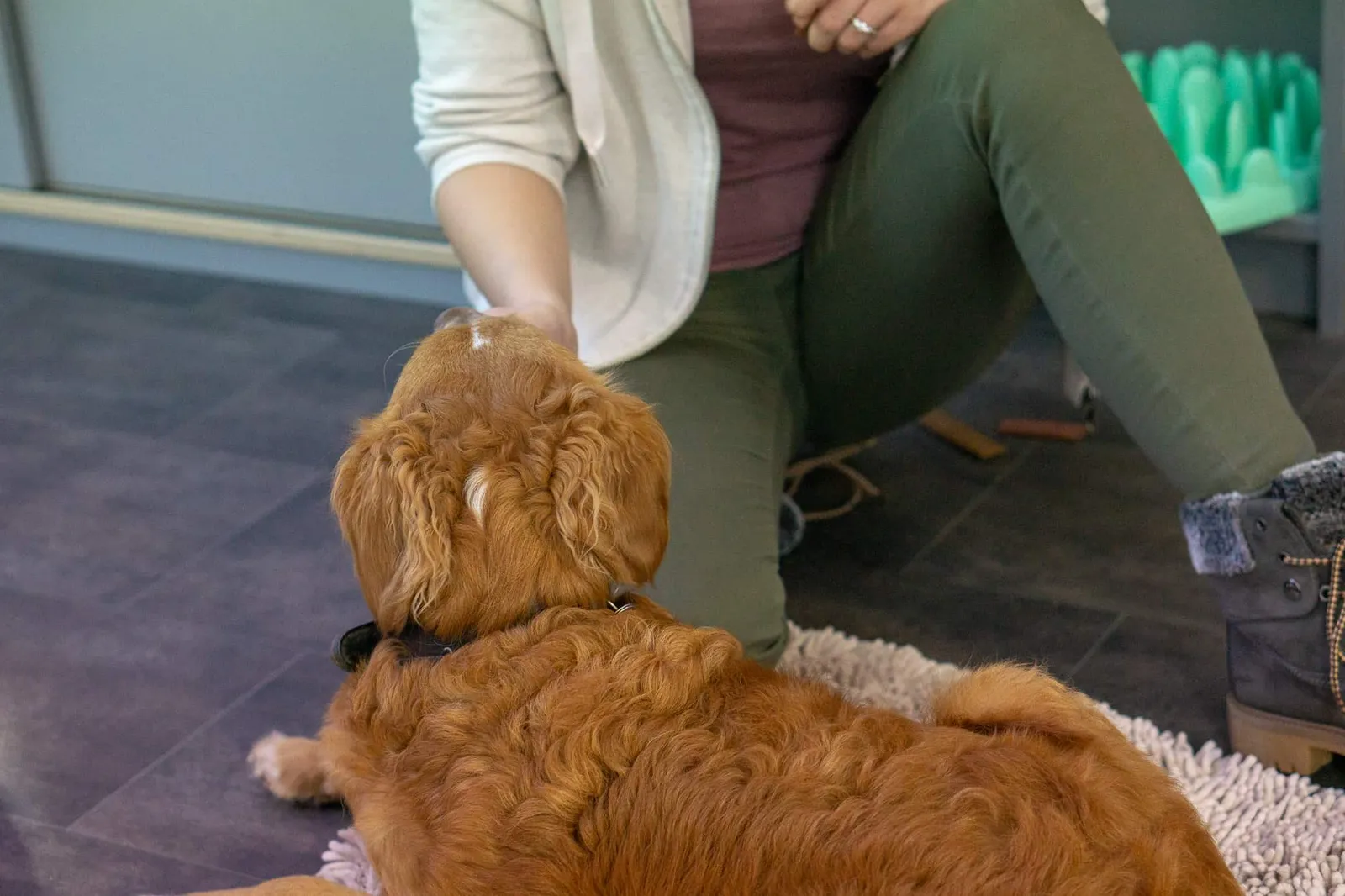
Pillar 1: Respect
The animal's self-determination and freedom of choice results in stress avoidance and thereby strengthens the bond & trust. This honesty towards our furry partner leads both to better preventive healthcare and to saving time. And training additionally provides fun & stimulation, in our case, with the dog.
IBB Signals
IBB = I am ready
Gives the animal the opportunity to signal its consent to a treatment/grooming measure.
Recognising these signals shows respect for our animal partner. It gives them the chance to have a say in what happens to their own body and how they interact with their environment. The option to say "No" promotes willingness to cooperate. This way the dog is more likely to show readiness for the procedure, even though it knows it might be uncomfortable.
Pillar 2: Trust
Trust is often exhausted
by the very act of drawing on it.Bertolt Brecht
The Trust Account
The trust account between our furry companions and us should be well stocked to balance out withdrawals as best as possible. Deposits include cuddles, feeding, playing, going for walks… depending on the dog's personal preferences. Withdrawals are of course negative (and can also be unintentional), such as being left alone or a visit to the vet.
Calming signals should be noticed and acted upon. That is, in training we might take a step back, ask for less, and bring in more fun again. But calming signals are not always a reason to stop the training session! It might also come down to our own body language: do we have a gentle gaze? A calm voice? Do we move considerately? Are we radiating a confident mood?
Honesty
A painful truth is better than a lie.
Thomas Mann
A precious gift that cannot be expected from cheap training.
Animal Training Center
Pillar 3: Training
Announcements
We inform our dog what touches or treatments are coming, either verbally or with the help of an object. Here the dog has the opportunity to say no or send their IBB signals.
Building the Training
It makes sense to build towards the goal in mini individual steps. Shaping is based on keeping the steps for the animal as small and simple as possible.
Additionally, establishing various targets (chin target, paw target) can be very helpful for some grooming measures.
A general important principle in Medical Training is that we reward the calm holding of the IBB signal for every behaviour. If the animals move, flinch… it can quickly become uncomfortable and even dangerous (injections, etc.).
Example: "Applying Eye Drops"
First, we build up the chin target over several sessions. The head should be rested either on a towel, on a lap, or for example directly in the hand.
Once that works well and the dog keeps its muzzle on the target for longer, we simply look the dog in the eyes, then mark & reward this.
In the following session we begin to build positive associations with the drops in the bottle: only the animal's presence near it and/or showing interest in it is marked and rewarded.
In the next training session we try to establish a hand near the face as something positive.
The following day we already make contact with the eye area.
Until we finally reach the point of actually putting in the drops.
Taking small steps may mean we get there more slowly, but the result is truly "sustainable".
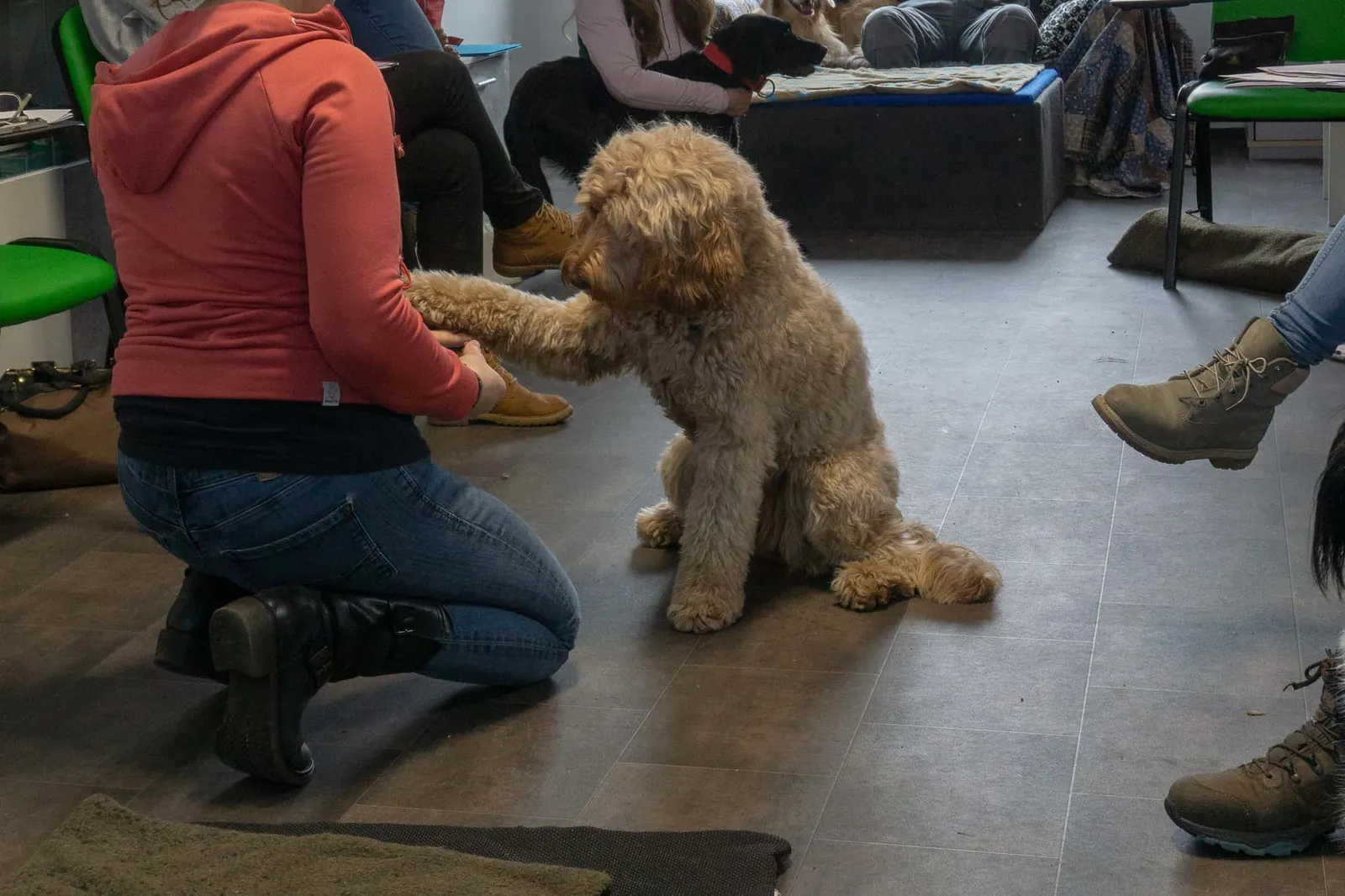
Generalisation
Once certain exercises are working well, we should not only practise in the living room but start to generalise. It makes sense to practise in different locations, or to bring in other people. We can also start by varying the surfaces, different smells, different times of day,...
And when we're ready, we ask the vet whether we can pop in for a practice visit: no actual treatment, just training.
Summary: Medical Training
- Nurture the trust account
- Apply training techniques carefully
- Training plan
- Shaping rules
- Use a marker signal
- Short sessions, keep it light
- Generalisation
- Keep a training diary
- High-value rewards that are NOT phased out
- Keep it simple
Elke Grablechner from the Animal Training Center presented a wonderful overview of Medical Training at this seminar. Normally this material is covered in a two-day workshop. Even so, we came away with a fantastic insight into the topic, received helpful tips, and had countless questions answered patiently.
Our hosts holistic vet Verena Senoner and dog trainer Alexander Minnich looked after all the participants and their four-legged companions with great warmth at their Forum Waldegg. Everything was taken care of. The seminar room was perfectly equipped, and I think I can speak for everyone present:
We felt completely at ease and truly welcomed!